Tech
US Attacks Iran: What Happened, Why, and What’s Next

Introduction
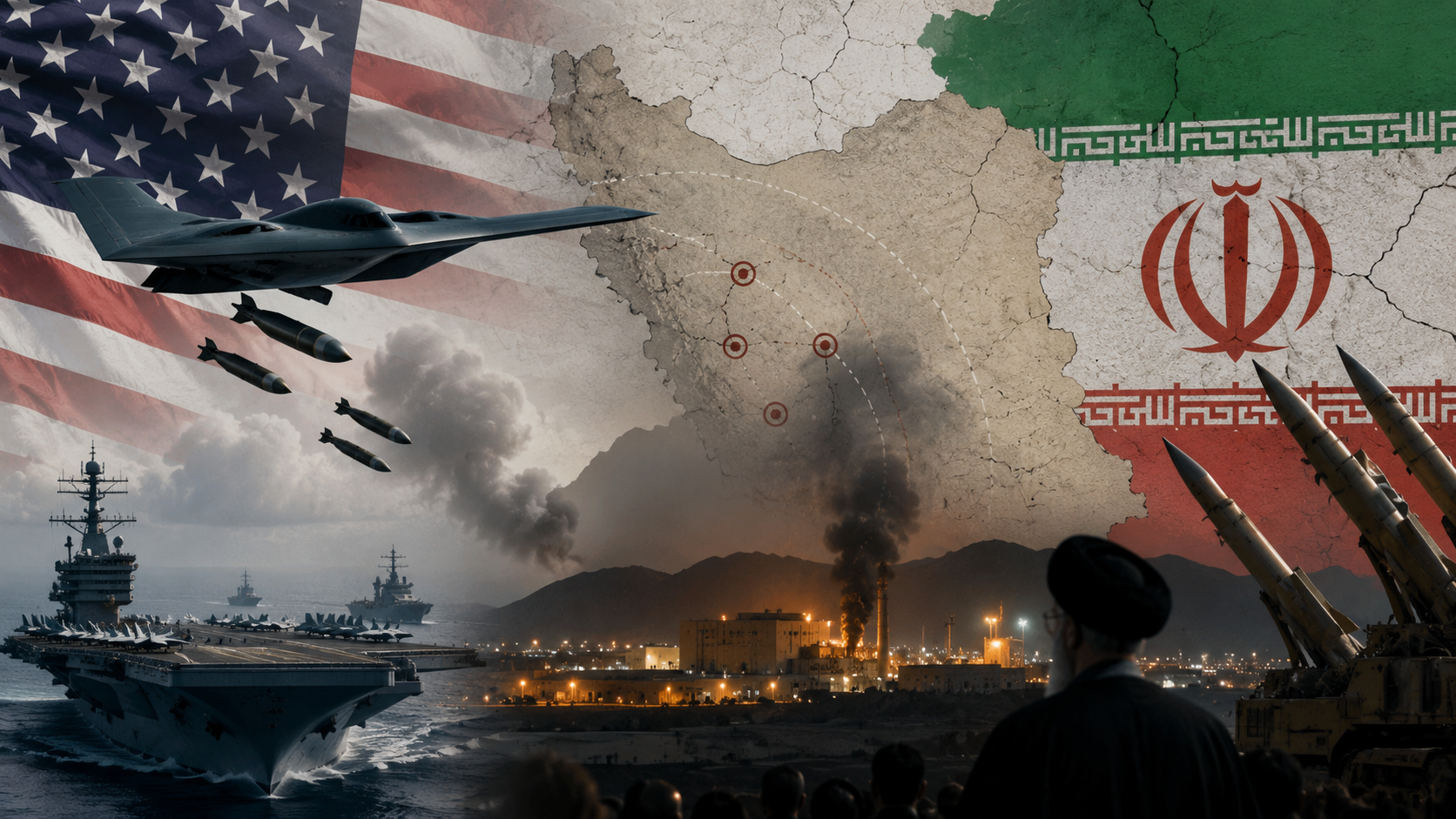
If you’ve typed “US attacks Iran” into a search bar recently, you’re probably trying to untangle a story that has moved fast and changed shape more than once. The United States has carried out two distinct rounds of direct military strikes against Iran within about a year of each other. The first, in June 2025, hit three Iranian nuclear sites and ended within days. The second, beginning in February 2026, was far bigger, killed Iran’s top leader, and dragged on for nearly four months before the two sides moved toward a peace agreement.
Each event has its own causes, its own contested damage assessments, and its own aftermath, and it’s easy to lose the thread between them. This guide lays out what actually happened, why the United States and Iran ended up here, how Iran responded each time, and what the situation looks like as of mid-June 2026.
Direct Answer: Has the US Attacked Iran?
Yes. The United States has struck Iran twice in roughly a year. In June 2025, US bombers and a submarine hit three Iranian nuclear sites in Operation Midnight Hammer, ending a 12-day war. In February 2026, the US joined Israel in a much larger campaign that killed Iran’s Supreme Leader and set off nearly four months of fighting. A peace deal reached in June 2026 is meant to end that war, though it had not yet been formally signed as of this writing.
Why Is the US Attacking Iran? The Background You Need
Decades of Mutual Distrust
US-Iran hostility goes back to the 1979 Iranian Revolution, when a pro-Western monarchy was replaced by an anti-Western Islamic republic and the two countries cut diplomatic ties. A hostage crisis that same year, decades of US sanctions, and Iran’s support for armed groups across the Middle East, including Hezbollah in Lebanon and Hamas in Gaza, kept the relationship adversarial for nearly half a century. Israel, meanwhile, has viewed Iran as its primary security threat for about twenty years, citing Iranian officials’ repeated calls for Israel’s destruction.
Iran’s Nuclear Program and a Collapsed Deal
The most immediate trigger for recent events is Iran’s nuclear program. In 2015, Iran and six world powers signed the Joint Comprehensive Plan of Action, commonly called the JCPOA or the Iran nuclear deal. It capped how much uranium Iran could enrich and how much it could stockpile, in exchange for relief from international sanctions. In 2018, the Trump administration withdrew the United States from that agreement and reimposed sanctions. Iran responded over the following years by enriching uranium to 60 percent purity, far beyond the deal’s 3.67 percent limit and well above what’s needed for civilian power plants, though still short of the roughly 90 percent purity needed for a weapon. By 2025, the International Atomic Energy Agency, the UN’s nuclear watchdog known as the IAEA, said Iran had accumulated enough 60-percent material that, if enriched further, could supply several nuclear weapons. The IAEA also noted that Iran had limited inspectors’ access to its facilities since 2021, making it harder to verify what the program was actually for.
The June 2025 Strikes: Operation Midnight Hammer
How the Twelve-Day War Began
On June 13, 2025, Israel launched a surprise campaign of its own, code-named Operation Rising Lion, hitting Iran’s main enrichment facility at Natanz, killing several nuclear scientists, and killing senior commanders in Iran’s Islamic Revolutionary Guard Corps. Iran responded with missile and drone strikes on Israeli cities. For about a week, the United States stayed on the sidelines diplomatically while continuing indirect talks with Iran that had been underway since April. Iran canceled a planned round of those talks once the Israeli strikes began.
What US Forces Hit, and How
On the evening of June 21, 2025 (early morning of June 22 in Iran), the United States entered the fight directly. B-2 stealth bombers dropped bunker-buster bombs and a submarine fired cruise missiles at three Iranian nuclear sites: the underground Fordow enrichment plant, the Natanz facility already damaged by Israel, and a nuclear complex at Isfahan. US fighter jets also flew into Iranian airspace to draw out air defenses. President Trump announced that the facilities had been “completely and totally obliterated,” and the Pentagon’s top general said initial assessments showed all three sites had suffered extremely severe damage.
Did the Strikes Destroy Iran’s Nuclear Program? Competing Assessments
This is where the story gets genuinely uncertain, and it’s worth being upfront about that uncertainty rather than picking a side. US officials initially said the strikes had destroyed the Natanz site and set Iran’s program back roughly two years. A leaked early Defense Intelligence Agency assessment reportedly concluded the damage was less severe, delaying the program by only a few months. Israeli intelligence assessed the sites as damaged but not destroyed, and some reports suggested Iran had moved equipment and part of its enriched uranium stockpile before the attack. Iran itself first described the damage as minor, then later acknowledged significant harm. The IAEA, for its part, confirmed extensive physical damage at each site but said it could not verify the location or condition of Iran’s uranium stockpile once inspectors lost access. None of these sources fully agree, and independent nuclear experts have said outright that airstrikes alone are unlikely to eliminate a nuclear program permanently, even if they set it back.
Iran’s Response and the June 2025 Ceasefire
On June 23, 2025, Iran fired 14 missiles at Al Udeid Air Base in Qatar, a major US military installation. The strike caused no casualties, and Iran reportedly gave advance notice through diplomatic channels, a sign it was managing the response carefully to avoid a wider war. Trump called the move restrained and said he appreciated Iran’s communication. A ceasefire took effect on June 24, brokered by the United States and Qatar, ending what became known as the Twelve-Day War. Despite scattered violations in the ceasefire’s first hours that killed civilians on both sides, it held for more than eight months.
The 2026 Iran War: A Larger and Deadlier Conflict
What Triggered the February 2026 Strikes
Through late 2025 and early 2026, the United States and Iran continued indirect negotiations over a new nuclear agreement, mediated by Oman. By late February 2026, Omani officials reportedly described real progress, with Iran showing willingness to make concessions. President Trump, however, said he was “not thrilled” with how the talks were going. On February 28, 2026, those negotiations collapsed, and Israel and the United States launched a joint operation, internally code-named Operation Epic Fury by the US side, that was on a different scale entirely from the previous year’s strikes.
The Death of Iran’s Supreme Leader
In roughly the first 12 hours, US and Israeli forces carried out close to 900 strikes across Iran, hitting missile systems, air defenses, military infrastructure, and Iran’s top leadership directly. Among the strikes was a targeted attack on the residence of Iran’s Supreme Leader, Ali Khamenei, who had led the country since 1989. Khamenei was killed, along with his daughter, daughter-in-law, grandchild, and son-in-law. More than 40 other senior Iranian officials reportedly died in the opening strikes as well. Trump described regime change as one of the operation’s explicit goals, alongside ending Iran’s nuclear and ballistic missile programs.
Iran’s Retaliation: Missiles, Drones, and the Strait of Hormuz
Iran’s response this time was far broader than the symbolic strike on Al Udeid in 2025. Over the following days and weeks, Iran launched hundreds of missiles and drones at Israel, at US military bases across the Gulf region, and at sites in Jordan and several Arab states that host American forces. A March 1 strike on a residential area in Beit Shemesh, Israel, killed nine civilians, among the deadliest single Iranian strikes of the war. Iran also closed the Strait of Hormuz, a narrow waterway between Iran and Oman that a large share of the world’s oil and natural gas shipments pass through, disrupting global energy markets and forcing tankers to reroute. By early March, the US military confirmed the deaths of at least seven American service members, the first significant US combat losses of the conflict.
A New Supreme Leader and a Fragile Ceasefire
With Khamenei dead, Iran’s Assembly of Experts, the clerical body responsible for choosing a new Supreme Leader, held an unusually fast selection process and announced on March 8 or 9, 2026, that Khamenei’s son, Mojtaba Khamenei, would succeed his father. This is a useful distinction many readers miss: Trump later said regime change had occurred, but he also said he distrusted Iran’s new leader. Critics of that framing point out that a son inheriting the same clerical position from his father, within the same governing structure, is different from the kind of overthrow originally described as the goal. Iran’s elected president, Masoud Pezeshkian, remained in office throughout, since the presidency and the Supreme Leader role are separate positions in Iran’s system, with the Supreme Leader holding the final word on military and nuclear matters.
Trump set a series of deadlines for Iran to accept terms amounting to unconditional surrender, threatening further strikes on energy infrastructure. On April 8, 2026, after Iran rejected an initial 45-day ceasefire framework and countered with its own 10-point peace proposal, Pakistan brokered a two-week ceasefire between the US and Iran. Pakistan, which shares a long border with Iran and has working relationships with both Washington and Tehran, became the principal mediator going forward, hosting a first round of talks in Islamabad in mid-April with a large US delegation. On April 21, Trump extended the ceasefire indefinitely while the US maintained a naval blockade pending a fuller agreement.
Where Things Stand Today (Mid-June 2026)
Negotiations continued through the spring over several unresolved issues: reopening the Strait of Hormuz to shipping, the future of Iran’s nuclear and missile programs, sanctions relief, reconstruction, and a longer-term peace framework. Tensions periodically flared even during the ceasefire, including Iranian drones being shot down near Hormuz in mid-June.
On June 14, 2026, Pakistan’s prime minister announced that the United States and Iran had reached an agreed text for a deal to end what he described as their nearly four-month war, including a permanent halt to military operations on “all fronts,” a phrase meant to cover Israel’s parallel conflict with Hezbollah in Lebanon as well. A signing ceremony was scheduled for June 19, 2026, in Switzerland. As of this writing, the agreement has been announced but not yet formally signed, and given how often this conflict has shifted direction, readers following the story closely should check current news for the latest developments rather than treating any single announcement as final.
On the nuclear question specifically, the picture remains genuinely unresolved. The IAEA has had no access to Iran’s declared enrichment facilities since before the 2026 strikes and says it cannot confirm whether Iran has resumed any enrichment activity or where its existing stockpile of enriched uranium is being kept. US Director of National Intelligence Tulsi Gabbard testified in March 2026 that Iran had not resumed enriching uranium, a claim Iran’s ambassador to the IAEA repeated weeks later. Independent nonproliferation researchers generally agree the strikes damaged Iran’s known infrastructure but caution that physical destruction of buildings doesn’t equal verified elimination of a nuclear program, especially without inspectors on the ground.
Is It Legal for the US to Attack Iran?
This is a genuinely contested legal question, and reasonable experts land on different sides of it. The United States has argued its strikes were lawful acts of self-defense under the UN Charter, citing Iran’s nuclear advances and, in 2026, the broader threat Iran’s conventional forces posed. Israel has used a similar argument, describing its 2025 strikes as a response to imminent danger after diplomacy had failed. Iran, along with the International Commission of Jurists and a number of international law scholars, has called the strikes unlawful acts of aggression against a sovereign state, since no attack from Iran had occurred before either round of strikes began. Legal scholars often compare this to Israel’s 1981 bombing of Iraq’s Osirak nuclear reactor, which the UN Security Council unanimously condemned as a violation of the UN Charter at the time, a precedent supporters of the 2025 and 2026 strikes argue no longer reflects current legal thinking on self-defense and proliferation risk, and which critics say still applies directly. There’s no neutral umpire that has settled this question, and it remains actively debated among international law specialists.
Timeline: How the Conflict Unfolded
- 2015 – Iran and world powers sign the JCPOA nuclear deal.
- 2018 – The United States withdraws from the JCPOA and reimposes sanctions.
- June 13, 2025 – Israel launches Operation Rising Lion, striking Iranian nuclear and military sites.
- June 21–22, 2025 – The US strikes Fordow, Natanz, and Isfahan in Operation Midnight Hammer.
- June 23, 2025 – Iran fires missiles at Al Udeid Air Base in Qatar; no casualties.
- June 24, 2025 – A US- and Qatar-brokered ceasefire ends the Twelve-Day War.
- February 28, 2026 – The US and Israel launch a much larger joint operation; Ali Khamenei is killed.
- March 1–8, 2026 – Iran retaliates broadly across the region; the Strait of Hormuz is closed; Mojtaba Khamenei is named the new Supreme Leader.
- April 8, 2026 – Pakistan brokers a two-week US-Iran ceasefire.
- April 21, 2026 – The ceasefire is extended indefinitely amid ongoing US naval blockade and negotiations.
- June 14, 2026 – The US and Iran announce an agreed peace deal text, with signing planned for June 19 in Switzerland.
Common Misunderstandings About the US-Iran Conflict
A few mix-ups show up constantly in casual conversation about this topic. First, this isn’t the first time the US and Iran have clashed militarily; the US sank or damaged several Iranian vessels in a 1988 naval confrontation and killed Iranian general Qasem Soleimani in a 2020 drone strike, so 2025 and 2026 extend a longer pattern rather than starting one.
Second, Israeli and US strikes are often treated as interchangeable in casual reporting, but they are distinct military and political decisions. Israel struck first in both 2025 and 2026, with the US joining afterward, and each country has stated its own (sometimes overlapping, sometimes different) objectives.
Third, the word “obliterated” gets repeated as settled fact more often than the evidence supports. As covered above, US, Israeli, Iranian, and IAEA assessments of the 2025 strikes’ effectiveness all differed, and that disagreement was never fully resolved before the 2026 war began.
Fourth, a ceasefire is not the same as a resolved conflict. Both the 2025 and 2026 ceasefires were violated within their early hours, and the second war began less than nine months after the first one supposedly ended.
Real-World Effects of the Conflict
Beyond the military details, this conflict has touched ordinary life in measurable ways. The Strait of Hormuz closure in 2026 disrupted a key global shipping route for oil and natural gas, forcing tankers to take longer, costlier paths and raising fears of higher energy prices worldwide. Commercial flights in and out of Israel and parts of the Middle East were grounded or rerouted for days at a time during periods of active strikes. In Lebanon, a parallel intensification of fighting between Israel and the Iran-backed group Hezbollah killed nearly 400 people, including dozens of children, and displaced more than half a million residents, according to Lebanese government figures, showing how the US-Iran conflict rippled into conflicts that weren’t directly about Iran’s nuclear program at all. Inside the United States, the strikes and Khamenei’s killing prompted protests outside the White House, with demonstrators on both sides of the issue.
Key Facts at a Glance
- The US struck Iran directly in June 2025 (Operation Midnight Hammer) and again starting February 2026.
- The 2025 strikes targeted nuclear facilities at Fordow, Natanz, and Isfahan; no direct casualties were reported from the US strikes themselves.
- A US- and Qatar-brokered ceasefire ended the 2025 Twelve-Day War on June 24, 2025, after Iran struck Al Udeid Air Base in Qatar.
- Human rights monitors estimated roughly 1,190 deaths in Iran and 28 civilian deaths in Israel during the 2025 war.
- The 2026 war began February 28, 2026, when US and Israeli strikes killed Iran’s Supreme Leader, Ali Khamenei.
- Iran’s Assembly of Experts named Khamenei’s son, Mojtaba Khamenei, the new Supreme Leader on March 8 or 9, 2026.
- At least seven US service members were killed in combat during the 2026 war.
- Iran closed the Strait of Hormuz in 2026, disrupting global oil and gas shipping.
- Pakistan brokered a ceasefire on April 8, 2026, later extended indefinitely.
- A peace deal was announced June 14, 2026, with signing planned for June 19, 2026, in Switzerland.
- The exact current status of Iran’s enriched uranium stockpile remains unverified by international inspectors.
Frequently Asked Questions
What is Operation Midnight Hammer?
Operation Midnight Hammer is the US military’s name for its June 21–22, 2025 strikes on three Iranian nuclear facilities, using stealth bombers and submarine-launched missiles.
Why did the US attack Iran in 2025?
The Trump administration said the goal was to destroy or severely degrade Iran’s nuclear program after diplomacy failed to produce a new deal, joining Israel’s military campaign that had begun a week earlier.
Did the US attack Iran again in 2026?
Yes. On February 28, 2026, after nuclear talks broke down, the US and Israel launched a much larger joint operation against Iran that killed its Supreme Leader and led to roughly four months of fighting.
Did the US kill Iran’s Supreme Leader?
Yes. Ali Khamenei was killed in a targeted strike on his residence on February 28, 2026, along with several family members, as part of the joint US-Israeli operation.
Who is Iran’s Supreme Leader now?
Mojtaba Khamenei, Ali Khamenei’s son, was selected by Iran’s Assembly of Experts and took office on March 8, 2026. Masoud Pezeshkian remains Iran’s elected president, a separate position.
Is the US still at war with Iran?
As of mid-June 2026, an indefinite ceasefire is in place and a peace deal has been announced, with formal signing scheduled for June 19, 2026. The agreement had not been signed as of this writing, so the situation could still change.
Did the strikes destroy Iran’s nuclear weapons program?
This isn’t settled. US officials say the program was severely set back; other intelligence assessments describe more limited damage; and international inspectors haven’t had access to verify the current state of Iran’s nuclear material since before the 2025 strikes.
Was the US legally justified in attacking Iran?
The US and Israel argue the strikes were lawful self-defense against an imminent nuclear and military threat. Iran and a number of international law scholars argue the strikes violated the UN Charter’s restrictions on the use of force against another country. Both positions have prominent backers, and no international body has issued a binding ruling on the question.
How did Iran retaliate against the US?
In 2025, Iran fired missiles at a US base in Qatar with advance notice and no casualties. In 2026, Iran’s retaliation was far broader, including strikes on Israel, US bases across the Gulf, and sites in Jordan, plus closing the Strait of Hormuz to shipping.
What is the Strait of Hormuz, and why does it matter?
It’s a narrow sea passage between Iran and Oman that connects the Persian Gulf to the open ocean. A large share of the world’s oil and natural gas exports pass through it, so closing it, as Iran did in 2026, can affect global energy prices and supply.
Key Takeaways
- The US has struck Iran twice in roughly a year: June 2025 (Operation Midnight Hammer) and starting February 2026 (a larger joint operation with Israel).
- Both attacks grew out of a long-running dispute over Iran’s nuclear program, which expanded after the US withdrew from the 2015 JCPOA deal in 2018.
- The 2026 strikes killed Iran’s Supreme Leader, Ali Khamenei, who was succeeded by his son, Mojtaba Khamenei.
- Assessments of how much damage the strikes did to Iran’s nuclear program differ sharply between US, Israeli, Iranian, and IAEA sources, and remain unverified by independent inspectors.
- Iran’s retaliation escalated significantly between 2025 and 2026, expanding from a single symbolic strike to a broader regional campaign that included closing the Strait of Hormuz.
- A peace deal was announced in mid-June 2026, with a signing ceremony planned for June 19 in Switzerland, though the agreement was not yet finalized as of this writing.
- The legality of the strikes under international law remains genuinely disputed among legal scholars and governments.
Conclusion
The phrase “US attacks Iran” now describes two separate events with different scales, different triggers, and different outcomes, connected by the same underlying dispute over Iran’s nuclear ambitions and the broader US-Israel-Iran rivalry. The 2025 strikes were narrow and ended within days. The 2026 war was broader, deadlier, and reshaped Iran’s leadership before winding down through months of fragile ceasefires and mediated talks. Whether the peace deal announced in June 2026 holds, and what it ultimately means for Iran’s nuclear program and the wider region, is still being written. Anyone following this story closely should keep checking current reporting, since the facts on the ground have changed direction more than once already.



Masgonzola: What It Is, Ingredients, Taste, Uses, and How It Differs From Gorgonzola

Neworldsmagazine: What It Is, Topics, Website, Content, and What Readers Should Know

Nidia del Carmen Ripoll Torrado: Biography, Family, Shakira Connection, and Life

Kane Brown: The Life and Career of Country Music’s Genre-Blending Star

Lionel Messi: Career, Records, and Where He Stands in 2026

Jason Beck: Detroit Tigers Beat Reporter and One of Baseball’s Most Trusted Voices
-
 Business3 months ago
Kane Brown: The Life and Career of Country Music’s Genre-Blending Star
-
 Sports3 months ago
Lionel Messi: Career, Records, and Where He Stands in 2026
-
 Lifestyle4 months ago
Jason Beck: Detroit Tigers Beat Reporter and One of Baseball’s Most Trusted Voices
-

 Sports3 months ago
Gordon Ramsay’s Brother: Everything Known About Ronnie Ramsay
-
 News3 months ago
NCIS: What the Show Is About, How It Works, and Why It’s Still On the Air
-

 News3 months ago
Amber Heard: Career, Legal History, and Where She Is Today
-

 News3 months ago
Trump Tariffs Explained: What They Are, How They Work, and What They Mean for Prices in 2026
-

 News3 months ago
Patrick Muldoon: The Life and Career of the Days of Our Lives and Starship Troopers Actor