
Lifestyle
The Emperor of Gladness by Ocean Vuong: Everything You Need to Know

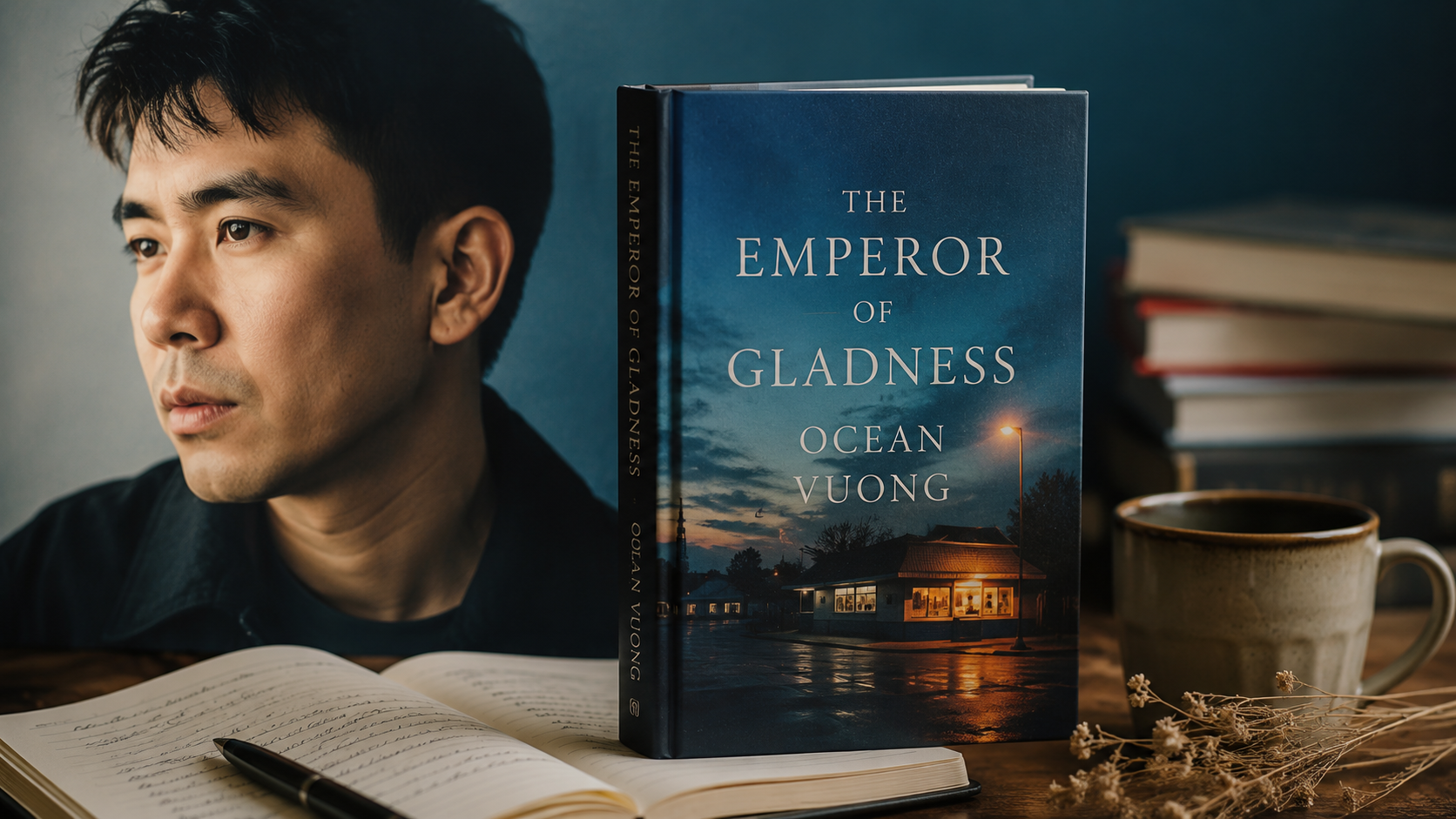
Some books arrive with quiet momentum and end up everywhere. Ocean Vuong’s second novel did exactly that. Released in May 2025, The Emperor of Gladness became an instant New York Times bestseller, an Oprah’s Book Club pick, and one of the most talked-about works of literary fiction in recent memory. For readers who loved Vuong’s debut novel or his poetry, it felt like both a continuation and an expansion. For new readers, it’s a striking introduction to one of contemporary American literature’s most distinctive voices.
So what is this book actually about — and why has it connected so deeply with so many different kinds of readers?
What Is The Emperor of Gladness?
The Direct Answer
The Emperor of Gladness is a 2025 literary novel by Vietnamese American writer Ocean Vuong, published by Penguin Press in the United States and Jonathan Cape in the UK. Set in the fictional post-industrial town of East Gladness, Connecticut, in 2009, the novel follows Hai, a 19-year-old Vietnamese American college dropout, whose chance encounter with an elderly Lithuanian woman named Grazina sets both of their lives on a different course. At its core, the book is about chosen family, working-class survival, and the quiet power of human connection.
Who Wrote The Emperor of Gladness?
Ocean Vuong was born in Saigon, Vietnam, and came to the United States as a child. He is widely regarded as one of the most gifted poets writing in English today — his collections Night Sky with Exit Wounds and Time Is a Mother established him as a major voice before he ever wrote a novel. He holds a MacArthur Fellowship (the so-called “genius grant”) and the American Book Award, and he splits his time between western Massachusetts and New York City.
His debut novel, On Earth We’re Briefly Gorgeous (2019), was a New York Times bestseller and drew from his own experiences growing up queer and Vietnamese American in working-class New England. The Emperor of Gladness shares that autobiographical DNA — Vuong has worked in the service industry and in elder care, and the novel’s emotional authenticity comes directly from those experiences. The dedication of the book, “In memory of Grazina J. Vitkus Verselis (1925–2014),” confirms that the elderly woman at the center of the story was, in fact, a real person from his life.
The Plot: What Happens in The Emperor of Gladness?
The novel opens on a single charged moment. Nineteen-year-old Hai stands at the edge of a bridge in East Gladness on a rainy summer night, ready to end his life. He hears a voice shout across the river — it belongs to Grazina Vitkus, an 80-year-old Lithuanian widow in the early stages of dementia, who has wandered outside.
That accidental encounter becomes the axis around which the entire novel turns. Grazina, who survived World War II as a refugee from Nazi-occupied Europe, offers Hai a place to stay in exchange for help with her daily medications. Hai accepts, and what begins as a practical arrangement slowly becomes something far more meaningful.
From there, the story expands outward. Hai starts working at HomeMarket, a fast-food chain, where he joins a ragtag group of coworkers who become, in their own way, a kind of community — his cousin Sony, a manager named BJ, a sharp-tongued cashier named Maureen, and a tattooed drifter called Russia, among others. These characters aren’t presented as symbols or archetypes. They’re specific, complicated, often funny people navigating the particular pressures of post-recession working-class America.
The novel is set in 2009, against the backdrop of economic collapse and an opioid crisis that’s already reshaping small-town New England. Hai himself is dealing with addiction. His mother believes he’s attending medical school in Boston; the gap between that fiction and his actual life becomes one of the novel’s many quietly devastating throughlines.
The Major Themes
Found Family
This is the novel’s central preoccupation. Vuong is interested in the kinds of bonds that form outside of blood relation — between a young man with nowhere to go and an old woman losing her grip on reality, between coworkers who would never have chosen each other, between people who are all, in their own ways, looking for somewhere to belong. The term “found family” can sometimes feel like a marketing shorthand, but Vuong treats it with real weight. These relationships are fragile, complicated, and genuinely earned.
Work and Class
The Emperor of Gladness has been praised as one of the best American novels about work in recent years. Critics at NPR and Fresh Air specifically noted that hard work is an underrepresented subject in literary fiction — the assumption being that labor is backdrop rather than story. Vuong pushes back on that. The rhythms of the HomeMarket shift, the small humiliations and small solidarities, the question of whether working hard actually leads anywhere — these aren’t incidental details. They’re the substance of the book.
Vuong has spoken openly about his intention to resist the “model minority” narrative, the rags-to-riches arc that American culture tends to expect from immigrant stories. As he put it in interviews, the more honest outcome for many people he grew up around was working the same job for 30 years, driving the same car, living in the same apartment — and that being, by any reasonable measure, a decent life worth honoring.
Memory, Dementia, and the Past
Grazina’s dementia is portrayed with unusual care. Her nocturnal episodes, during which she relives traumatic memories of wartime Lithuania, aren’t played for pathos or sentimentality. They’re frightening, often disorienting, and sometimes darkly comic. What they do is place two people — one at the beginning of his life, one losing access to hers — in an unexpected kind of intimacy. The past doesn’t stay past in this novel. It surfaces constantly, in both characters, in different forms.
The Immigrant Experience Without Uplift
Where Vuong’s debut was more directly autobiographical and personal in its narration, The Emperor of Gladness takes a wider view. The Vietnamese American characters here are surrounded by other kinds of displacement — a Lithuanian refugee, working-class white Americans who’ve also been left behind by economic shifts. Vuong isn’t writing an immigrant success story. He’s writing about what survival actually looks like when the promised upward arc doesn’t materialize.
Friendship as Resistance
One reading of the novel, offered by several critics, is that the characters’ loyalty to each other functions as a form of resistance — not political, but human. When BJ performs in an amateur wrestling match and gets booed, Hai and his coworkers show up anyway. When Hai’s life is at its lowest, it’s connection, not individual determination, that keeps him going. The novel seems to argue that this is not a small thing.
Literary Style: What Makes Vuong’s Writing Distinctive
Vuong came to fiction as a poet, and that background is inseparable from his prose. His sentences have a compression and precision that’s rare in literary fiction — reviewers at Brooklyn Rail and The New Yorker both noted that his paragraphs carry the structural density of poetry. Individual lines land with unusual weight.
At the same time, The Emperor of Gladness is more expansive than his debut. At 402 pages, it’s longer, takes in more characters, and moves across a wider social canvas. Some critics found the novel occasionally dense or slow to build, noting that the richness of the prose requires patience. Readers who come in expecting the compact emotional directness of On Earth We’re Briefly Gorgeous may need to adjust their expectations.
The novel also uses magical realism in places — a diamond embedded in a character’s hand as a war wound, a moment involving a writhing coyote outside the restaurant — that balance out the starker social realism elsewhere. These elements are deployed selectively, more as moments of heightened metaphor than as a consistent stylistic register.
Critical Reception and Awards
The Emperor of Gladness was one of the most anticipated novels of 2025 well before its release. The response, when it arrived, was largely enthusiastic:
- Named a best book of 2025 by TIME, The New Yorker, NPR, Harper’s Bazaar, USA Today, People, the Christian Science Monitor, and Kirkus Reviews
- Selected as an Oprah’s Book Club pick, with Oprah Winfrey calling it “stunning” and describing it as a heartfelt examination of people living on the margins of society
- Winner of the Nautilus Book Award
- Longlisted for the 2026 Andrew Carnegie Medal for Excellence in Fiction
- Shortlisted for the 2026 Dublin Literary Award
- Named one of the 100 must-read books of 2025 by TIME
Not all reviews were unconditional praise. World Literature Today offered a more critical assessment, suggesting that Vuong’s use of metaphor occasionally tips into excess, and that some subsidiary characters are stretched thin by the weight of thematic expectation. This is a minority view, but worth noting for readers who want a full picture.
How The Emperor of Gladness Compares to On Earth We’re Briefly Gorgeous
Vuong’s debut is narrated directly as a letter from a son to his mother, making it one of the most intimate novels of recent years. It’s compact, lyric, and deeply personal.
The Emperor of Gladness is more novelistic in the traditional sense — third-person narration, a larger ensemble, a wider temporal and social scope. It retains Vuong’s prose style and thematic concerns (immigration, class, queer identity, survival), but it’s a different kind of reading experience. Readers who found the debut emotionally overwhelming may find this one slightly more spacious; readers who loved its tight, confessional voice might miss that quality here.
Both novels are worth reading, and neither requires the other. That said, reading them in order gives useful context for understanding how Vuong’s artistic concerns have evolved.
Common Misconceptions About the Novel
It’s only an immigrant story. The novel features Vietnamese American characters prominently, but it’s equally concerned with Lithuanian wartime trauma, working-class white American experience, and the broader social fabric of post-industrial New England. Reducing it to a single cultural narrative misses what Vuong is doing.
It’s relentlessly bleak. The subject matter — suicide, addiction, dementia, poverty — sounds grim. But the novel is frequently funny, and its emotional texture is considerably more complex than despair. The Harvard Review noted that friendship in the novel renders “despair, addiction, unrelenting sadness, generational trauma, and poverty simply no match.” That’s not the conclusion of a bleak book.
It’s just like his debut. The two novels share a sensibility, but differ significantly in structure, voice, and scope. Expectations carried over from On Earth We’re Briefly Gorgeous don’t always translate directly.
It’s a traditional coming-of-age story. Hai does grow and change over the course of the novel, but the arc isn’t the familiar one of individual triumph. He doesn’t escape poverty, overcome addiction neatly, or reconcile with his mother in any tidy way. The change is subtler — and, many readers find, more honest.
Key Facts
- Published May 13, 2025 by Penguin Press (US) and Jonathan Cape (UK)
- Ocean Vuong’s second novel; his debut was On Earth We’re Briefly Gorgeous (2019)
- Set in the fictional town of East Gladness, Connecticut, in 2009
- The real Grazina Vitkus Verselis, to whom the novel is dedicated, lived from 1925 to 2014
- 402 pages; narrated in close third-person
- Selected as Oprah’s Book Club pick for 2025
- Shortlisted for the 2026 Dublin Literary Award
FAQ
What is The Emperor of Gladness about?
It follows Hai, a 19-year-old Vietnamese American college dropout in post-industrial Connecticut, who becomes the live-in caregiver for Grazina, an 80-year-old Lithuanian widow with dementia. The novel explores their unlikely friendship alongside Hai’s relationships with coworkers at a fast-food chain, tracing themes of chosen family, class, addiction, and survival.
Who is Ocean Vuong?
Ocean Vuong is a Vietnamese American poet and novelist, born in Saigon and raised in Connecticut. He’s the author of two poetry collections and two novels, and has received the MacArthur Fellowship and the American Book Award. He’s widely considered one of the most important literary voices of his generation.
Is The Emperor of Gladness a sequel to On Earth We’re Briefly Gorgeous?
No. It’s a standalone novel with different characters and a different setting. The two books share thematic concerns and Vuong’s distinctive prose style, but no prior reading is required.
Is the book suitable for all readers?
The novel deals with suicide, addiction, dementia, poverty, and trauma. It’s written for adult readers. People who are sensitive to these subjects should be aware that they appear throughout, though not gratuitously.
Why is it called The Emperor of Gladness?
The title is never explained directly within the novel. Critics have noted that it echoes Wallace Stevens’s poem “The Emperor of Ice-Cream,” which meditates on sensuous pleasure and death. In the context of the novel, “gladness” seems to function as something fragile and irreducible — something that persists despite, or even because of, the surrounding hardship.
Is the story based on real events?
Substantially, yes. Vuong has spoken about working in elder care and the service industry, and the novel is dedicated to the real Grazina — a Lithuanian immigrant woman he actually cared for. The fictional town of East Gladness is modeled on real post-industrial Connecticut towns.
What awards has the novel won?
It won the Nautilus Book Award, was shortlisted for the 2026 Dublin Literary Award, and longlisted for the 2026 Andrew Carnegie Medal for Excellence in Fiction. It also appeared on numerous year-end best-of lists from major publications.
Key Takeaways
- The Emperor of Gladness is Ocean Vuong’s second novel, published in May 2025 to widespread critical acclaim
- The novel centers on an unlikely friendship between a suicidal 19-year-old Vietnamese American man and an elderly Lithuanian woman with dementia
- Major themes include chosen family, working-class labor, immigrant experience without the expected uplift narrative, addiction, and the nature of friendship as survival
- Vuong’s prose is rooted in his background as a poet — dense, precise, and often striking at the sentence level
- The book is based partly on Vuong’s own experiences in elder care; the real woman who inspired Grazina is honored in the dedication
- It became an Oprah’s Book Club pick and instant New York Times bestseller upon release
- The novel differs from On Earth We’re Briefly Gorgeous in structure and scope but shares Vuong’s core preoccupations
- Readers should expect a challenging, rewarding literary experience rather than a quick or easy read
The Emperor of Gladness is a novel that takes seriously the people society tends to overlook — the working poor, the addicted, the elderly and confused, the immigrant who didn’t make it to prosperity. Vuong doesn’t sentimentalize them or offer easy consolation. What he offers instead is attention — close, unflinching, and finally tender — and that turns out to be enough.
Introduction
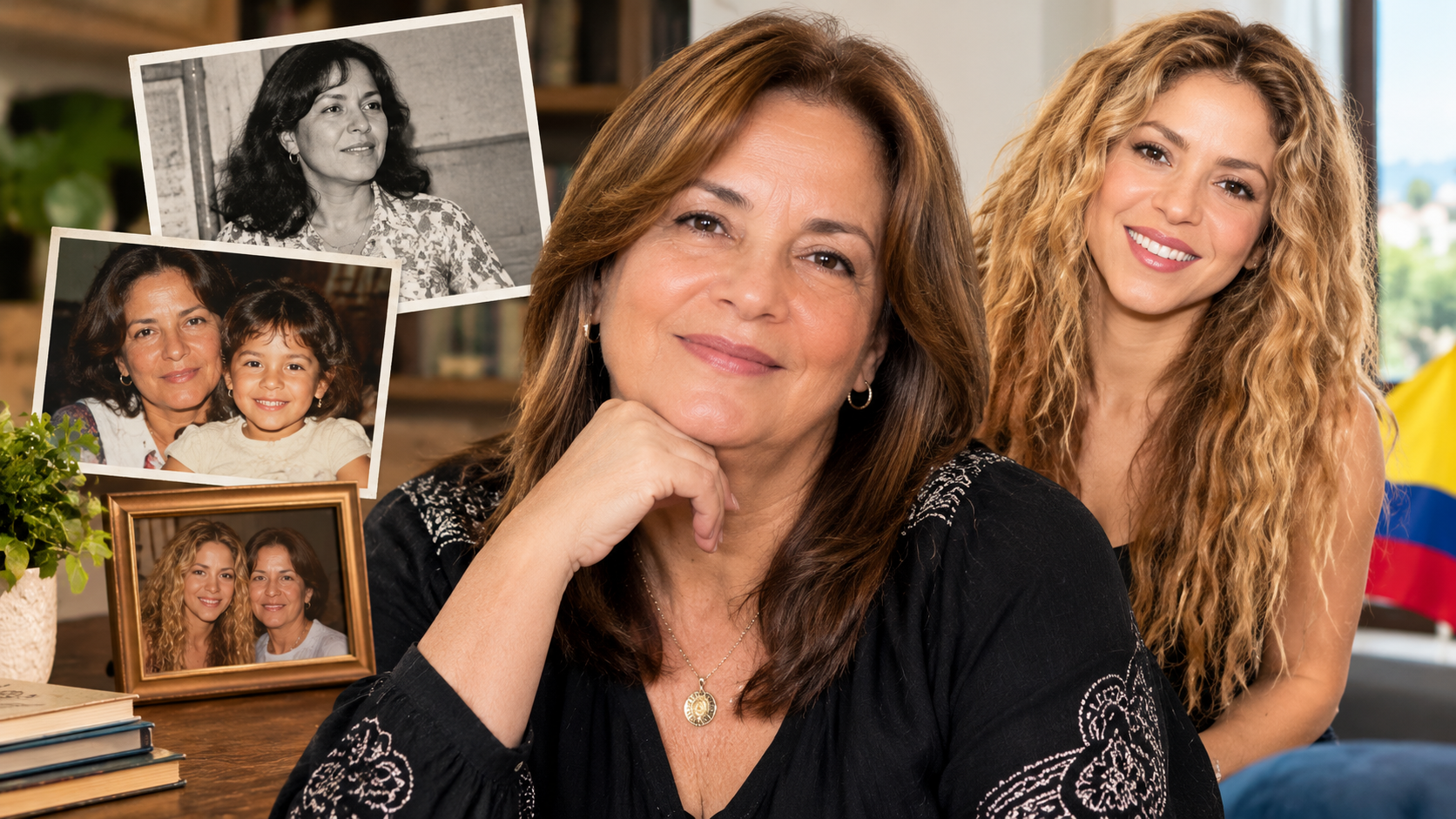
The name Nidia del Carmen Ripoll Torrado is closely connected with one of the biggest names in international music: Shakira. Nidia is the mother of Colombian singer, songwriter, dancer, and performer Shakira Isabel Mebarak Ripoll. Although she has lived a much quieter life than her daughter, public interest in her has grown because people want to understand Shakira’s family background, cultural roots, upbringing, and the people who supported her before worldwide fame.
Nidia has generally stayed away from celebrity life. She has occasionally spoken with journalists, appeared with her daughter at public events, and been seen supporting Shakira during important moments. Recent public appearances also show that she remains a visible part of her daughter’s family life. In February 2025, for example, Nidia was seen enjoying Shakira’s concert in Barranquilla and singing along to “Antología.”
Her story is therefore less about a personal career in entertainment and more about family, heritage, motherhood, and her connection to one of Colombia’s best-known cultural figures.
Direct Answer
Nidia del Carmen Ripoll Torrado is Shakira’s mother and the wife of William Mebarak Chadid. She is Colombian and has deep family connections to the Caribbean city of Barranquilla. Nidia has largely remained outside the entertainment spotlight, but she has supported Shakira throughout her life and has appeared publicly with her family on several occasions. Her family background is also an important part of understanding Shakira’s Colombian, Spanish, and broader multicultural heritage.
Who Is Nidia del Carmen Ripoll Torrado?
Nidia del Carmen Ripoll Torrado is best known publicly as the mother of Shakira.
Shakira was born in Barranquilla, Colombia, on February 2, 1977, to Nidia and William Mebarak Chadid. Major biographical sources identify Nidia as her mother and William as her father.
Unlike her daughter, Nidia did not build a public career as a performer. She has generally maintained a private family life, although her connection to Shakira has naturally brought media attention.
That distinction matters. Much of the information available online about Nidia focuses on her role as Shakira’s mother rather than on an independent public career.
She has nevertheless become an interesting figure for people researching Shakira’s family because her background helps explain the cultural influences surrounding the singer’s childhood.
Nidia del Carmen Ripoll Torrado and Shakira
The strongest reason people search for Nidia’s name is her relationship with Shakira.
Shakira’s full birth name is Shakira Isabel Mebarak Ripoll, which incorporates the family name Ripoll from her mother. Her parents are identified as William Mebarak Chadid and Nidia del Carmen Ripoll Torrado.
Shakira grew up in Barranquilla, a major Caribbean city with a strong musical and multicultural identity. Her childhood environment exposed her to different cultural traditions, something that later became a recognizable part of her artistic identity.
Nidia’s influence is often discussed in terms of family support rather than formal management or business involvement.
That difference is important. There is plenty of documentation about Shakira’s professional career, but far less reliable information about Nidia’s personal life. Claims that attempt to describe every detail of Nidia’s career or private activities should therefore be treated more cautiously than well-established facts about her relationship with Shakira.
Where Was Nidia del Carmen Ripoll Torrado Born?
Most secondary biographies identify Barranquilla, Colombia, as Nidia’s birthplace. Barranquilla is located on Colombia’s Caribbean coast and has played an important role in the country’s music and cultural history.
However, her exact birth date is less consistently documented across online sources.
Several biography websites give February 7, 1950, while another Colombian report gave February 10, 1950. A FamilySearch genealogical record, meanwhile, lists a Nidia del Carmen Ripoll Torrado as born in 1940 and deceased in 2023, creating a significant conflict with the more commonly repeated 1950 birth year.
For that reason, a responsible biography should not present a precise birth date as certain without a stronger primary record.
What can be stated more confidently is that Nidia is Colombian, has longstanding ties to Barranquilla, and is the mother of Shakira.
Nidia’s Family Background
Nidia’s family name connects her to the Ripoll and Torrado families of Colombia.
A genealogical record identifies her parents as Tomás Eduardo Ripoll Jiménez and Josefina Torrado Núñez. The same record places the family in the Atlántico region of Colombia and connects earlier generations to Piojó and Barranquilla.
Genealogical research published in Colombia also traces the Ripoll family through earlier generations in the region. One account connects Nidia’s family line with Ábrego and other parts of northern Colombia.
This history helps explain why Shakira’s family identity is often described as culturally diverse.
Spanish and Catalan Roots
Nidia’s surname, Ripoll, is associated with Catalan heritage, and sources discussing Shakira’s maternal family describe Catalan or Spanish roots.
A publication from the Government of Catalonia’s tourism resources, for example, identifies Shakira as the daughter of Nidia del Carmen Ripoll Torrado and specifically describes Nidia as having Catalan ancestry.
This is useful context because Shakira has maintained connections with Spain and has incorporated multiple cultural influences into her music and public identity.
A Note About Conflicting Heritage Claims
Some online biographies describe Nidia’s background using a mixture of Lebanese, Catalan, Spanish, and Italian ancestry. Other genealogical material provides a more specific Colombian family line through the Ripoll and Torrado families.
These claims should not automatically be treated as equivalent.
The strongest evidence supports Nidia’s Colombian identity and her maternal family connection to Spanish/Catalan heritage. Claims about additional ancestry should be checked against genealogical records rather than repeated simply because they appear on celebrity biography websites.
Who Is Nidia’s Husband?
Nidia del Carmen Ripoll Torrado is married to William Mebarak Chadid, Shakira’s father.
William Mebarak is a Colombian writer and businessman of Lebanese heritage. His family history is an important part of Shakira’s multicultural background.
Nidia and William became the parents of Shakira, who grew up in Barranquilla.
William had children from a previous marriage, meaning Shakira grew up with older half-siblings through her father. This is one reason descriptions of Shakira’s family can sometimes appear confusing.
The key distinction is that Shakira is the biological daughter of Nidia del Carmen Ripoll Torrado and William Mebarak Chadid, while William also had children from his earlier family.
Did Nidia Have Other Children?
Public biographies commonly describe Shakira as Nidia and William’s only child together.
At the same time, William Mebarak had children from a previous marriage. As a result, Shakira grew up with older half-siblings on her father’s side.
This family structure is sometimes incorrectly simplified in online biographies.
It is more accurate to say:
- Nidia is Shakira’s mother.
- William is Shakira’s father.
- Shakira is the couple’s daughter.
- William had children from a previous marriage.
- Therefore, Shakira has older half-siblings through her father.
This distinction helps explain why sources sometimes use different numbers when describing Shakira’s siblings.
Nidia’s Role in Shakira’s Childhood
The influence of parents on a future celebrity is difficult to measure precisely, especially when the parent is not a public figure.
Still, Nidia’s importance to Shakira’s family story is clear.
Shakira’s early years were spent in Barranquilla, and her family environment exposed her to a mixture of Latin American and Middle Eastern cultural influences.
Shakira’s father contributed Lebanese heritage and cultural traditions from his family, while her mother represented the Colombian side of the family with Ripoll and Torrado ancestry.
That combination became part of the environment in which Shakira developed.
Rather than viewing her mother’s influence as a single event that “created” Shakira’s career, it is more accurate to see Nidia as one part of the family environment that supported Shakira while she developed her interests in music and performance.
Nidia and Shakira’s Early Artistic Development
Many online biographies make strong claims about Nidia being directly responsible for discovering Shakira’s talent or teaching her specific dance styles.
Some of these details are difficult to verify through strong primary sources.
What is well established is that Shakira began writing and performing at a very young age. Biographical accounts describe her as becoming interested in songwriting during childhood, and she later entered the professional music industry as a teenager.
Nidia’s role is better understood as that of a parent supporting a talented child rather than as a documented professional manager or music producer.
That distinction makes the biography more credible.
Nidia’s Public Life
For most of her life, Nidia has remained outside the center of celebrity culture.
She does not have the extensive media archive associated with Shakira. Instead, she usually appears in photographs or news reports because she is with her daughter or husband.
One example came in 2014, when Europa Press filmed Nidia and William leaving Shakira’s home. They spoke briefly about Shakira’s birthday and expressed pride in her success.
Another period of media attention occurred in 2022, following Shakira’s separation from former footballer Gerard Piqué.
Nidia spoke with reporters about her daughter and her family during that period. Telemundo reported that she responded to questions about the separation and about her husband’s health.
These moments illustrate something important about Nidia’s public profile: she is visible primarily through family events rather than through a personal media career.
Nidia During William Mebarak’s Health Problems
Nidia also received attention during a difficult period for the Mebarak family in 2022.
William Mebarak experienced serious health problems and was hospitalized in Barcelona. European media documented Nidia visiting him and responding briefly to questions from reporters.
The family’s situation attracted additional attention because Shakira was also dealing with major changes in her personal life at the time.
Nidia’s appearances during this period showed her in a family-support role rather than as a celebrity seeking media attention.
That distinction is consistent with how she has generally appeared in public over the years.
Did Nidia Move to Miami With Shakira?
In 2023, Shakira and her children moved from Spain to Miami.
Reports at the time indicated that Nidia and William had remained in Spain because of William’s health situation, but later left Spain as the family transition continued. Europa Press reported in April 2023 that Nidia and William were no longer in Spain and could be with Shakira in Miami.
A September 2026 report likewise described Nidia and William as having moved from Spain to Miami following the family’s relocation.
Because family living arrangements can change, older reports should not be used to make absolute claims about where Nidia currently lives without a recent, reliable source.
Nidia’s Appearance at Shakira’s Barranquilla Concert
One of the clearest recent public appearances involving Nidia came during Shakira’s return to Barranquilla.
In February 2025, Nidia was seen attending Shakira’s concert at the Estadio Metropolitano Roberto Meléndez. Reports highlighted her singing along to “Antología”, one of Shakira’s well-known songs.
The moment attracted attention because it offered a rare public glimpse of the relationship between the singer and her mother.
Rather than being a formal appearance, it was simply a family member enjoying a major performance by her daughter.
That makes the moment particularly useful for understanding Nidia’s public image: she is generally portrayed as a supportive mother rather than a celebrity in her own right.
Nidia and Shakira’s Family in 2025
Nidia also appeared in a video shared by Shakira in August 2025.
El Heraldo reported that Shakira posted a video featuring her mother and explained the benefits of her newly launched hair-care line.
The appearance was not an interview or a major public event. It was a casual family moment shared with Shakira’s audience.
Such appearances are useful because they show that Nidia continues to have a presence in her daughter’s life even though she remains largely private.
Does Nidia del Carmen Ripoll Torrado Have Social Media?
There is no strong evidence that Nidia maintains a major independent public social-media presence comparable to Shakira.
Most online photographs and videos of her come through:
- Shakira’s social accounts
- Entertainment news organizations
- Family-event coverage
- Photographs from public appearances
That limited online presence fits with her long-standing preference for remaining away from the spotlight.
Readers should be cautious with social-media accounts claiming to represent Nidia unless the account can be independently verified.
Is Nidia a Dentist?
A number of celebrity biography websites describe Nidia as a former dentist and claim that she studied dentistry at Universidad del Norte.
However, these details are not as strongly documented in the sources available for this article as her relationship with Shakira and William.
Several sites repeat the claim that she trained as a dentist and later stepped away from the profession to focus on family life.
Because those accounts appear largely to repeat one another rather than cite an accessible university or professional record, the claim should be presented as reported, not as an independently verified fact.
This is a good example of why celebrity biographies need source checking.
Nidia del Carmen Ripoll Torrado’s Net Worth
There is no reliable public figure for Nidia’s personal net worth.
Celebrity websites sometimes publish estimated net-worth figures for relatives of famous people. These estimates often lack financial documentation and can be little more than speculation.
Nidia’s personal finances are private.
It is therefore more accurate to say that her net worth is not publicly established than to attach a specific dollar amount to her name.
Shakira’s wealth and business interests are a separate matter and should not be attributed automatically to her mother.
Why People Search for Nidia del Carmen Ripoll Torrado
Search interest in Nidia generally comes from questions about Shakira’s family.
Common searches include:
- Who is Nidia del Carmen Ripoll Torrado?
- Is Nidia Shakira’s mother?
- How old is Nidia Ripoll?
- Where was Shakira’s mother born?
- Who is Shakira’s mother?
- Who is Nidia Ripoll’s husband?
- Does Nidia have other children?
- Where does Shakira’s mother live?
- What is Nidia Ripoll’s nationality?
- What is Nidia’s ancestry?
These questions are understandable because Shakira is a globally recognized artist while Nidia has maintained a comparatively private life.
Common Misconceptions About Nidia del Carmen Ripoll Torrado
Misconception 1: Nidia is a celebrity herself
Nidia is publicly known largely because she is Shakira’s mother. She has not built a comparable entertainment career.
Misconception 2: Every detail on celebrity biography sites is verified
It is not.
Birth dates, professions, net-worth estimates, family counts, and ancestry claims can differ between websites.
Misconception 3: Nidia’s exact birth date is certain
There is a conflict among public sources. Some list February 7, 1950; another Colombian report gives February 10, 1950, while a genealogical record gives a different birth year altogether.
A responsible article should acknowledge that discrepancy.
Misconception 4: Nidia managed Shakira’s entire career
There is not enough reliable evidence to make that claim.
She was Shakira’s mother and an important family supporter, but that is different from being the artist’s professional manager.
Misconception 5: Nidia’s net worth can be calculated from Shakira’s wealth
It cannot.
A daughter’s wealth does not establish her mother’s personal finances.
A Simple Way to Research Nidia’s Biography
When researching a relatively private person connected to a major celebrity, use a source-checking process.
Step 1: Confirm the Relationship
Check reliable biographical sources identifying Nidia as Shakira’s mother.
Step 2: Separate Family Facts From Online Claims
Her relationship with Shakira is well established. Claims about career, education, net worth, or personal history may require additional verification.
Step 3: Compare Multiple Sources
If several websites give exactly the same information, check whether they independently sourced it or simply copied one another.
Step 4: Prefer Contemporary Reporting
News coverage of Nidia’s actual public appearances can provide stronger evidence about specific events than generic biography websites.
Step 5: Acknowledge Conflicts
When credible-looking sources disagree, do not silently choose one version. Explain the discrepancy.
This approach produces a more trustworthy biography.
Key Facts About Nidia del Carmen Ripoll Torrado
- Full name: Nidia del Carmen Ripoll Torrado
- Nationality: Colombian
- Family connection: Mother of Shakira
- Husband: William Mebarak Chadid
- Daughter: Shakira Isabel Mebarak Ripoll
- Family base: Strongly associated with Barranquilla, Colombia
- Maternal family: Ripoll and Torrado family lines in Colombia
- Public profile: Primarily known through her daughter
- Entertainment career: No major public entertainment career
- Social media: No major independently verified public profile identified
- Birth information: Public sources disagree on the exact date and year
- Recent public appearance: Seen supporting Shakira at a Barranquilla concert in February 2025
- 2025 family appearance: Featured in a video shared by Shakira in August 2025
Frequently Asked Questions
Who is Nidia del Carmen Ripoll Torrado?
Nidia del Carmen Ripoll Torrado is the mother of Colombian singer Shakira and the wife of William Mebarak Chadid. She has largely lived outside the entertainment spotlight.
Is Nidia del Carmen Ripoll Torrado Shakira’s mother?
Yes. Shakira’s biographical records identify Nidia del Carmen Ripoll Torrado as her mother and William Mebarak Chadid as her father.
Where is Nidia del Carmen Ripoll Torrado from?
Nidia is Colombian and is strongly associated with Barranquilla, Colombia, where Shakira was also born and raised.
Who is Nidia Ripoll’s husband?
Her husband is William Mebarak Chadid, Shakira’s father.
Does Nidia have other children besides Shakira?
Shakira is the biological daughter of Nidia and William. William also had children from a previous marriage, so Shakira has older half-siblings through her father.
What is Nidia Ripoll’s nationality?
She is Colombian.
What is Nidia Ripoll’s age?
Her exact age is difficult to establish with certainty because published sources disagree about her birth year. Several secondary biographies give 1950, while a genealogical record gives 1940.
What does Nidia Ripoll do?
Nidia is primarily known publicly as Shakira’s mother. Some secondary sources describe her as a former dentist, but this career detail is not as strongly documented as her family relationship and should be treated cautiously.
Is Nidia Ripoll active on social media?
She does not appear to maintain a major independently verified public social-media presence. Most public images of her come through Shakira or entertainment media.
Did Nidia move to Miami with Shakira?
Reports in 2023 indicated that Nidia and William left Spain after Shakira and her children moved to Miami. A later 2026 report also described the parents as being in Miami.
Was Nidia Ripoll at Shakira’s Barranquilla concert?
Yes. Reports from February 2025 showed Nidia attending Shakira’s concert in Barranquilla, where she was seen singing along to “Antología.”
What is Nidia Ripoll’s net worth?
There is no reliable public figure establishing Nidia’s personal net worth. Online estimates should not be treated as verified financial information.
What is Nidia Ripoll’s ancestry?
Her family is associated with Colombian, Spanish, and Catalan roots. Some online sources make broader ancestry claims, but those should be checked against genealogical records rather than accepted automatically.
Key Takeaways
- Nidia del Carmen Ripoll Torrado is Shakira’s mother.
- She is Colombian and closely associated with Barranquilla.
- Her husband is William Mebarak Chadid, Shakira’s father.
- Nidia has generally maintained a private life rather than pursuing celebrity status.
- Her family history contributes to the multicultural background associated with Shakira.
- Public sources disagree about Nidia’s exact birth date and year, so those details should be presented cautiously.
- Some websites describe her as a former dentist, but that claim has weaker documentation than her family relationships.
- There is no reliable public basis for assigning her a specific personal net worth.
- Nidia has continued to appear publicly in support of Shakira, including at her 2025 Barranquilla concert.
- Her public identity is best understood through her family, heritage, and role as Shakira’s mother rather than through an independent entertainment career.
Conclusion
Nidia del Carmen Ripoll Torrado is an important part of Shakira’s family story, even though she has spent most of her life away from the spotlight. As Shakira’s mother and William Mebarak Chadid’s wife, Nidia belongs to a family whose Colombian, Spanish, Catalan, and Lebanese connections have helped shape the cultural background surrounding one of the world’s most recognizable Latin music artists.
Her own public story is much quieter than her daughter’s. Nidia has not built a global entertainment career, and reliable information about many aspects of her private life remains limited. That makes careful sourcing especially important.
What is clear is that Nidia has remained a supportive presence in Shakira’s life. She has appeared alongside her daughter during major family moments, spoken briefly with reporters when circumstances required it, and continued to attend important events. Her appearance at Shakira’s Barranquilla concert in 2025 was a particularly visible example of that relationship.
The most useful way to understand Nidia del Carmen Ripoll Torrado is therefore not to treat her as a conventional celebrity biography subject. She is better understood as a private Colombian woman whose family history, marriage, motherhood, and relationship with Shakira have made her publicly interesting. Where reliable evidence exists, it provides a meaningful picture of her life; where sources conflict, the uncertainty should remain visible rather than being replaced with unsupported certainty.

Quick Answer
“Online rape academy” refers to a March 2026 CNN investigation that exposed online communities where men shared advice, images, and videos related to drug-facilitated sexual assault, largely targeting unsuspecting partners. The investigation, part of CNN’s As Equals series on gender inequality, connected these communities to a pornography website and an encrypted messaging group, and it prompted platform takedowns and law enforcement scrutiny in multiple countries. This article summarizes what was found and focuses on awareness and support rather than operational details.
What Did CNN’s Investigation Uncover?
CNN journalists spent months investigating online spaces where men discussed drugging and sexually assaulting women, often their own partners, while they were unconscious. The investigation found that participants shared images and videos of assaults, treating the material as a kind of currency within the group, and discussed ways to avoid detection by law enforcement and by the people they had harmed.
The reporting connected these communities to a pornography website hosting large volumes of related content, along with an encrypted messaging group with hundreds of participants from around the world. Following the investigation, authorities in the Netherlands opened a preliminary probe, and the pornography site involved was ultimately taken offline. CNN’s reporting also drew a direct line between this online activity and a well-known criminal case in France, in which a man was convicted of repeatedly drugging his wife and inviting other men to assault her over an extended period.
What Is Drug-Facilitated Sexual Assault?
Drug-facilitated sexual assault refers to sexual assault carried out after a perpetrator has intentionally impaired a victim’s ability to resist or consent, typically through alcohol, sedatives, or other substances administered without the victim’s knowledge. It’s a recognized and serious category of sexual violence, distinct from assaults that don’t involve deliberate incapacitation, though both are crimes.
Experts who spoke with CNN noted that some sedative medications are more tightly controlled than others, which has reportedly pushed some perpetrators toward substances that are easier to obtain, including certain prescription sleep medications, when misused outside of their intended medical purpose.
This article intentionally does not detail specific substances, dosages, or methods associated with facilitating assault. That information provides no protective value and could cause real harm if treated as a reference.
Why Did This Story Get National and International Attention?
The investigation resonated with the public in part because it followed extensive coverage of a French criminal case in which a man’s own wife discovered, through police evidence, that she had been repeatedly drugged and assaulted by her husband and other men over nearly a decade, largely without her knowledge at the time it was happening. That case drew global attention to how drug-facilitated assault can go undetected by victims for extended periods, and CNN’s investigation extended that conversation by examining how such abuse is discussed, shared, and in some cases treated as content online.
The investigation also raised broader questions about how encrypted platforms and loosely moderated websites can be used to organize and distribute material connected to serious crimes, and what responsibility technology companies bear for content shared on their platforms.
How Did Platforms and Authorities Respond?
After CNN’s reporting was published, several developments followed:
- The pornography website connected to the investigation was taken offline after Dutch authorities opened a preliminary investigation.
- A messaging platform involved stated that content promoting sexual violence violates its policies and said such content is removed when identified.
- Advocacy groups and lawmakers called for stronger platform regulation and closer cooperation between technology companies and law enforcement.
- Reports following the investigation noted that similar communities have continued to resurface elsewhere, highlighting the ongoing difficulty of fully shutting down this kind of activity online.
Common Misconceptions About the Investigation
Misconception: 62 million men were part of this network. This claim circulated widely on social media after the investigation but misrepresents CNN’s reporting. The 62 million figure referred to the total number of visits to an entire pornography website in a single month, not the number of people involved in the specific groups CNN investigated, which numbered in the hundreds.
Misconception: This was a single, centralized “academy” with formal structure. “Rape academy” is a phrase used to describe the loosely connected online spaces CNN investigated, not a formally organized institution. The term captures how these communities functioned, informally teaching and normalizing this behavior, rather than describing an official organization.
Misconception: Drug-facilitated sexual assault only happens between strangers. The cases at the center of this investigation, and the French case that preceded it, both involved assaults committed by intimate partners. Drug-facilitated assault by someone the victim knows and trusts is common, not rare.
Key Facts
- CNN’s investigation was published in March 2026 as part of its As Equals gender inequality series.
- It examined online communities sharing advice, images, and videos tied to drug-facilitated sexual assault.
- The reporting connected these communities to a pornography website and an encrypted messaging group.
- Following the investigation, the website was taken offline and Dutch authorities opened a preliminary investigation.
- A widely circulated claim that “62 million men” were involved misrepresented CNN’s actual findings.
- The investigation built on public attention from a high-profile French criminal case involving drug-facilitated assault by an intimate partner.
FAQ
What does “online rape academy” refer to?
It’s a phrase associated with CNN’s March 2026 investigation into online communities where men shared advice and material related to drugging and sexually assaulting their partners.
Is the website involved still online?
No. The pornography site connected to the investigation was taken offline following the report and a preliminary investigation by Dutch authorities, though similar content has reportedly resurfaced on other platforms since.
How common is drug-facilitated sexual assault?
It’s a recognized and serious form of sexual violence, and research and advocacy groups indicate it’s frequently committed by someone the victim knows, including intimate partners, rather than only by strangers.
What should someone do if they suspect they’ve been drugged and assaulted?
Seeking immediate medical care is important, since some substances used in drug-facilitated assault leave the body quickly, which can affect the ability to test for them later. Medical providers can also connect survivors with law enforcement and support resources if the survivor chooses to pursue that path.
How are tech companies responding to this kind of content?
Platforms named in the investigation have stated that content promoting sexual violence violates their policies and is removed when detected, though reports indicate similar communities have continued to appear on other platforms since the investigation.
Key Takeaways
- CNN’s investigation exposed online communities sharing advice and material tied to drug-facilitated sexual assault.
- The reporting led to a website being taken offline and a preliminary investigation by Dutch authorities.
- A widely shared “62 million men” claim significantly misrepresented the scope of CNN’s actual findings.
- Drug-facilitated sexual assault is frequently committed by someone the victim knows, not only by strangers.
- Advocacy groups continue to push for stronger platform accountability, since similar communities have resurfaced since the investigation.
Conclusion
CNN’s investigation brought public attention to how online spaces can be used to organize, normalize, and share material connected to drug-facilitated sexual assault. While platforms and authorities have taken some action in response, reports suggest similar communities continue to exist elsewhere, underscoring that this remains an active and evolving problem rather than one that’s been fully resolved.
Quick Answer
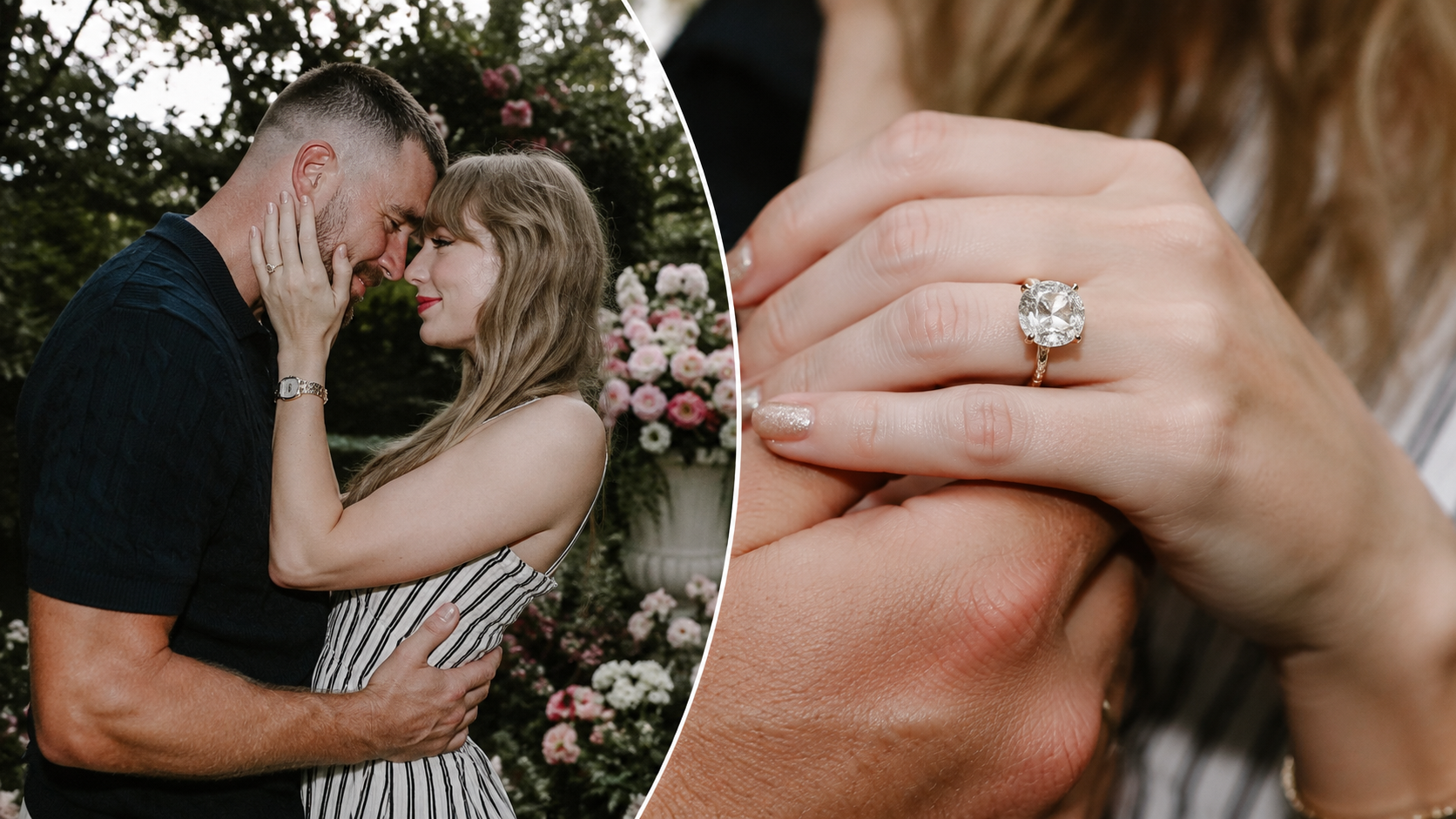
Taylor Swift’s engagement ring, given to her by Travis Kelce when he proposed in August 2025, features a large elongated diamond in an antique cushion-cut or old mine-cut style, estimated between roughly 7 and 13 carats depending on the expert. It’s set in hand-engraved 18-karat yellow gold with a collet-style setting and diamond accents. Kelce co-designed the ring with New York jeweler Kindred Lubeck of Artifex Fine Jewelry, and estimates of its value range widely, from around $250,000 up to $1 million.
When Did Taylor Swift Get Engaged?
Taylor Swift announced her engagement to NFL tight end Travis Kelce on August 26, 2025. She shared the news along with a close-up photo of the ring, which quickly became one of the most discussed pieces of jewelry of the year.
What Kind of Diamond Is on Taylor Swift’s Ring?
The center stone is widely described by jewelry experts as an elongated old mine-cut diamond, sometimes also referred to as an antique cushion cut because of how similar the two styles look. These two cuts share soft, rounded corners and a pillow-like silhouette, but they aren’t technically identical.
Old Mine Cut vs. Cushion Cut
Old mine-cut diamonds were the dominant diamond shape from the early 1700s through the late 1800s, according to the Gemological Institute of America. They tend to have a small table, a larger culet, and a high crown, along with wider, chunkier facets compared to a modern cushion cut. Modern cushion-cut diamonds, by contrast, are cut to maximize brilliance under today’s lighting and tend to sparkle more intensely.
Jewelry experts who examined photos of Swift’s ring generally agree it looks like an antique or old mine-cut style diamond, even if it isn’t necessarily a genuine centuries-old stone. The elongated shape and visible culet give it that distinctive vintage character.
How Big Is the Diamond?
Estimates of the diamond’s size vary depending on the expert. Some jewelers have estimated it at around 7 to 8 carats, while others have suggested it could be as large as 13 carats. One jeweler speculated the size might be a nod to Swift’s well-known affinity for the number 13. Because the stone hasn’t been officially measured or confirmed by Swift or Kelce, these figures remain estimates based on photos.
What Is the Ring’s Setting Like?
The ring features a collet setting, a style similar to a bezel setting where a thin rim of metal wraps around the stone’s girdle, paired with four corner prongs for extra security. The band is crafted from 18-karat yellow gold and includes a hand-engraved pattern on either side of the stone, along with smaller diamond accents along the shoulders of the setting. Some experts have also described the band as a mini split shank, meaning it splits slightly as it approaches the center stone.
Who Designed the Ring?
The ring was co-designed by Travis Kelce and jeweler Kindred Lubeck of Artifex Fine Jewelry, a New York-based jewelry studio. Rather than choosing a piece from an established luxury brand, the couple opted for a custom, one-of-a-kind design, which is part of why the ring has drawn so much attention from jewelry experts and fans alike.
How Much Is the Ring Worth?
Estimates of the ring’s value differ significantly depending on who’s evaluating it and which carat estimate they’re using. Some jewelers have placed its worth at over $250,000, while others estimate it could be valued between $500,000 and $1 million. Without an official appraisal released publicly, all of these figures remain informed estimates rather than confirmed numbers.
Why Has the Ring Become So Influential in Bridal Jewelry Trends?
Jewelers say Swift’s ring has noticeably shaped what couples are asking for when shopping for engagement rings. Elongated cushion cuts and old mine cuts, along with wide, tapered bands featuring detailed engraving, have become significantly more popular requests since the engagement was announced. Some jewelers describe this as a natural evolution from the popularity of oval-cut diamonds in recent years, combined with renewed interest in vintage-inspired designs following Swift’s engagement.
Common Misconceptions About the Ring
Misconception: The diamond’s exact carat weight is officially confirmed. No official carat weight, color, or clarity grade has been publicly confirmed by Swift, Kelce, or the ring’s designers. All figures circulating in media reports are estimates from outside jewelry experts based on photographs.
Misconception: It’s a cushion cut, full stop. Many outlets describe the diamond simply as a cushion cut, but jewelry experts generally believe it’s more accurately an old mine-cut diamond, a related but distinct antique style that only resembles a modern cushion cut at a glance.
Misconception: The ring came from a major luxury jewelry brand. The ring wasn’t purchased from a well-known luxury retailer. It was custom designed by Kelce in collaboration with jeweler Kindred Lubeck of Artifex Fine Jewelry.
Key Facts
- Taylor Swift announced her engagement to Travis Kelce on August 26, 2025.
- The ring features an elongated old mine-cut or antique cushion-cut diamond.
- Carat estimates range from roughly 7 to 13 carats, depending on the expert.
- The ring is set in hand-engraved 18-karat yellow gold with a collet setting and diamond accents.
- It was custom designed by Travis Kelce and jeweler Kindred Lubeck of Artifex Fine Jewelry.
- Value estimates range from around $250,000 to as much as $1 million.
FAQ
What cut is Taylor Swift’s engagement ring?
It’s widely believed to be an elongated old mine-cut diamond, a vintage style closely related to but technically distinct from a modern cushion cut.
How many carats is Taylor Swift’s engagement ring?
Estimates vary between about 7 and 13 carats, since no official carat weight has been publicly confirmed.
Who designed Taylor Swift’s engagement ring?
Travis Kelce co-designed the ring with jeweler Kindred Lubeck of Artifex Fine Jewelry in New York.
How much did Taylor Swift’s engagement ring cost?
Estimates range widely, from around $250,000 to as much as $1 million, based on outside jewelers’ assessments of its size and craftsmanship rather than a confirmed price.
What metal is the ring made of?
The band is crafted from 18-karat yellow gold and features hand engraving along with smaller diamond accents.
Key Takeaways
- Taylor Swift’s engagement ring features a large, elongated old mine-cut or antique cushion-cut diamond.
- It’s set in 18-karat yellow gold with a collet setting, hand engraving, and diamond accents.
- Travis Kelce co-designed the ring with jeweler Kindred Lubeck of Artifex Fine Jewelry.
- Carat weight and price estimates vary by expert, since no official figures have been released.
- The ring has influenced bridal jewelry trends, driving renewed interest in elongated cushion and old mine cuts.
Conclusion
Taylor Swift’s engagement ring stands out less for a single confirmed statistic and more for its distinctive, custom-designed character, blending an antique-style diamond with modern craftsmanship. While exact figures on carat weight and value remain estimates from outside experts, the ring’s vintage-inspired design has clearly resonated widely, shaping what many couples are now looking for in their own engagement ring choices.


Masgonzola: What It Is, Ingredients, Taste, Uses, and How It Differs From Gorgonzola

Neworldsmagazine: What It Is, Topics, Website, Content, and What Readers Should Know

Nidia del Carmen Ripoll Torrado: Biography, Family, Shakira Connection, and Life

Kane Brown: The Life and Career of Country Music’s Genre-Blending Star

Lionel Messi: Career, Records, and Where He Stands in 2026

Jason Beck: Detroit Tigers Beat Reporter and One of Baseball’s Most Trusted Voices
-
 Business3 months ago
Kane Brown: The Life and Career of Country Music’s Genre-Blending Star
-
 Sports3 months ago
Lionel Messi: Career, Records, and Where He Stands in 2026
-
 Lifestyle4 months ago
Jason Beck: Detroit Tigers Beat Reporter and One of Baseball’s Most Trusted Voices
-
 Sports3 months ago
Gordon Ramsay’s Brother: Everything Known About Ronnie Ramsay
-

 News3 months ago
NCIS: What the Show Is About, How It Works, and Why It’s Still On the Air
-

 News3 months ago
Amber Heard: Career, Legal History, and Where She Is Today
-

 News3 months ago
Trump Tariffs Explained: What They Are, How They Work, and What They Mean for Prices in 2026
-

 News3 months ago
Patrick Muldoon: The Life and Career of the Days of Our Lives and Starship Troopers Actor