
Business
Kane Brown: The Life and Career of Country Music’s Genre-Blending Star


Direct Answer
Kane Brown is an American country singer and songwriter, born October 21, 1993, who built his early fanbase by posting cover songs online before signing with RCA Nashville in 2016. He became the first artist to simultaneously top all five major Billboard country charts and is known for blending country with R&B, hip-hop, and pop influences across hits like “Heaven,” “What Ifs,” and “Miles on It.”
Who Is Kane Brown?
Most country stars come up through Nashville showcases, songwriting rounds, or years of bar gigs. Kane Brown’s path looked different. He built an audience by filming himself singing cover songs in ordinary places, including, by his own account, the back room of the hardware store where he worked, and posting the videos online.
People search his name for a mix of reasons: fans looking up his biggest songs, listeners curious about his background and mixed heritage, and readers wanting to understand how someone without a traditional industry path became one of country music’s most commercially successful artists.
This article covers his early life, how he broke into music, his major albums and chart achievements, his sound, his family, and what he’s been working on more recently.
Early Life and Background
Kane Allen Brown was born on October 21, 1993, in Chattanooga, Tennessee. He was raised primarily by his mother, Tabatha Brown, in the Chattanooga area and in rural northwest Georgia, moving among towns including Rossville, Fort Oglethorpe, and Lafayette before the family settled in Red Bank, Tennessee. His childhood included periods of housing instability. Brown has a white mother and a Black father with Cherokee heritage, giving him a mixed racial and cultural background that later shaped both his personal story and how he was covered in country music press, a genre historically dominated by white artists.
He has a younger sister, Heidi Swafford. Brown has spoken publicly about his father’s incarceration, which began when Brown was a young child.
How Kane Brown Got His Start in Music
Brown was drawn to R&B growing up, but a turning point came in 11th grade, when he won a school talent show singing Chris Young’s “Gettin’ You Home.” That performance nudged him toward country music. He also sang in a school choir alongside future American Idol contestant Lauren Alaina.
Following Alaina’s success, Brown auditioned for both American Idol and The X Factor USA. He was selected for The X Factor in 2013 but left the show after producers wanted to place him in a boy band rather than pursue him as a solo country artist.
Instead of continuing through the traditional talent-show pipeline, Brown started posting cover songs online in 2014, performing versions of tracks by artists like Brantley Gilbert, Alan Jackson, and Billy Currington. His cover of Lee Brice’s “I Don’t Dance” was one of his early videos to gain wide attention, and his following grew quickly on Facebook and YouTube.
Signing With RCA Nashville and Early Success
Brown’s online following translated into real momentum. His debut EP, Closer, released independently in June 2015, reached the Top Ten of the Billboard Country Albums chart before he had a record deal. He followed it with the single “Used to Love You Sober” that October.
Brown signed with RCA Nashville in early 2016. That single was included on his major-label EP debut, Chapter 1, released in March 2016. Later that same year, in December, he released his self-titled debut studio album, which included the singles “Ain’t No Stopping Us Now” and “Thunder in the Rain.” The album topped the country albums chart for more than 13 weeks.
Chart History and Major Milestones
Brown’s debut album produced two of his signature songs: “What Ifs,” a duet with Lauren Alaina, and “Heaven.” Both went on to become some of the most-streamed country songs of all time. In October 2017, Brown became the first artist in Billboard history to simultaneously hold the number one spot on all five major country charts: Top Country Albums, Hot Country Songs, Country Airplay, Country Digital Song Sales, and Country Streaming Songs.
His second studio album, Experiment, arrived in November 2018 and debuted at number one on the all-genre Billboard 200, making him the first country artist in more than 24 years to top that chart with a sophomore release. The album produced additional number one Country Airplay hits, including “Good as You” and “Homesick.”
Brown continued building his catalog with the 2020 EP Mixtape, Vol. 1, which earned an ACM Award nomination for Album of the Year and won an ACM Video of the Year award for “Worldwide Beautiful.” His 2022 album Different Man leaned further into genre-blending production, mixing R&B textures with traditional country songwriting, and reached number two on the country albums chart. His fourth studio album, The High Road, was released in January 2025 and included the international hit “Miles on It,” a collaboration with Marshmello that became his 12th number one single at country radio.
What Makes Kane Brown’s Sound Different
Brown’s music doesn’t fit neatly into traditional country boundaries, and that’s largely by design. His songs blend country storytelling with R&B vocal phrasing, hip-hop-influenced rhythms, and pop production choices. This mix shows up in his collaborations, which span genres far outside typical country crossover territory, including projects with Marshmello, Khalid, Camila Cabello, Becky G, and H.E.R.
Rather than treating these collaborations as one-off pop experiments, Brown has folded genre-blending into his core sound across multiple albums, which is part of why critics and outlets like The New York Times have described him as an artist who didn’t fit the traditional country mold and built his own version of one instead.
Family Life
Brown married Katelyn Jae, a singer and television personality, on October 12, 2018, after getting engaged in April 2017. The couple has three children: daughter Kingsley Rose, born in October 2019; daughter Kodi Jane, born in December 2021; and son Krewe, born in June 2024. Katelyn has appeared alongside Brown in music projects, including the duet “Thank God.”
Awards and Recognition
Brown was named to Time’s 100 most influential people in the world in 2021. He has been nominated for ACM Entertainer of the Year in both 2023 and 2024 and has won multiple American Music Awards. He was also named CMT Artist of the Year in 2021. Beyond music industry honors, Brown has been recognized for humanitarian work with the Boys & Girls Club, including the Country Radio Seminar Humanitarian Award and the organization’s Champion of Youth Award.
Common Misconceptions About Kane Brown
“He came up through a typical Nashville route.” Brown’s break came from self-recorded cover videos posted online, not industry showcases or years of songwriting rounds, which was unusual for a mainstream country star at the time.
“He’s strictly a traditional country artist.” His catalog blends R&B, hip-hop, and pop influences throughout, and several of his biggest collaborations sit outside conventional country boundaries.
“His TV and film work is a separate career from music.” His limited acting appearances, including a 2023 episode of Fire Country and a 2025 appearance on Nashville 911, have generally tied back to his music, such as using his song “Riot” in connection with the Fire Country appearance.
Key Facts About Kane Brown
- Born October 21, 1993, in Chattanooga, Tennessee.
- Built his early fanbase posting cover songs online starting in 2014.
- Signed with RCA Nashville in early 2016.
- Became the first artist to simultaneously top all five major Billboard country charts in October 2017.
- Experiment (2018) was the first country album by a male artist to top the Billboard 200 in more than 24 years.
- Married Katelyn Jae in October 2018; the couple has three children.
- Named to Time’s 100 most influential people in 2021.
- Released his fourth studio album, The High Road, in January 2025.
Frequently Asked Questions
What is Kane Brown known for?
He’s known for blending country music with R&B, hip-hop, and pop influences, and for hits including “Heaven,” “What Ifs,” and “Miles on It.”
How did Kane Brown become famous?
He built an online following by posting cover songs starting in 2014, which led to a record deal with RCA Nashville in 2016.
Is Kane Brown married?
Yes. He married Katelyn Jae on October 12, 2018, and the couple has three children together.
What was Kane Brown’s first big hit?
“What Ifs,” a duet with Lauren Alaina from his 2016 self-titled debut album, was one of his first major breakthrough hits, alongside “Heaven” from the same album.
Has Kane Brown acted in television?
Yes, though in a limited way. He appeared in a 2023 episode of Fire Country and had a cameo in a 2025 episode of Nashville 911.
What genre does Kane Brown play?
He’s classified as a country artist, but his music consistently incorporates R&B, hip-hop, and pop elements, making his sound more genre-blended than traditional country radio staples.
Key Takeaways
- Kane Brown built his career from viral cover videos rather than a traditional Nashville path.
- He made chart history in 2017 as the first artist to simultaneously top all five major Billboard country charts.
- His albums, from his 2016 debut through 2025’s The High Road, consistently blend country with R&B, hip-hop, and pop.
- He’s married to Katelyn Jae, and the couple has three children.
- His genre-blending approach and collaborations with artists like Marshmello and H.E.R. have helped distinguish him from more traditional country peers.
Conclusion
Kane Brown’s career reflects a shift in how country artists can build an audience, starting online rather than through the genre’s traditional gatekeepers, and turning that following into chart records that reshaped what a mainstream country breakthrough could look like. Nearly a decade after “What Ifs” first climbed the charts, his catalog continues to blend genres in ways that keep him distinct from more conventional country radio staples, while his family life and community work have become as much a part of his public story as his music.
Direct Answer
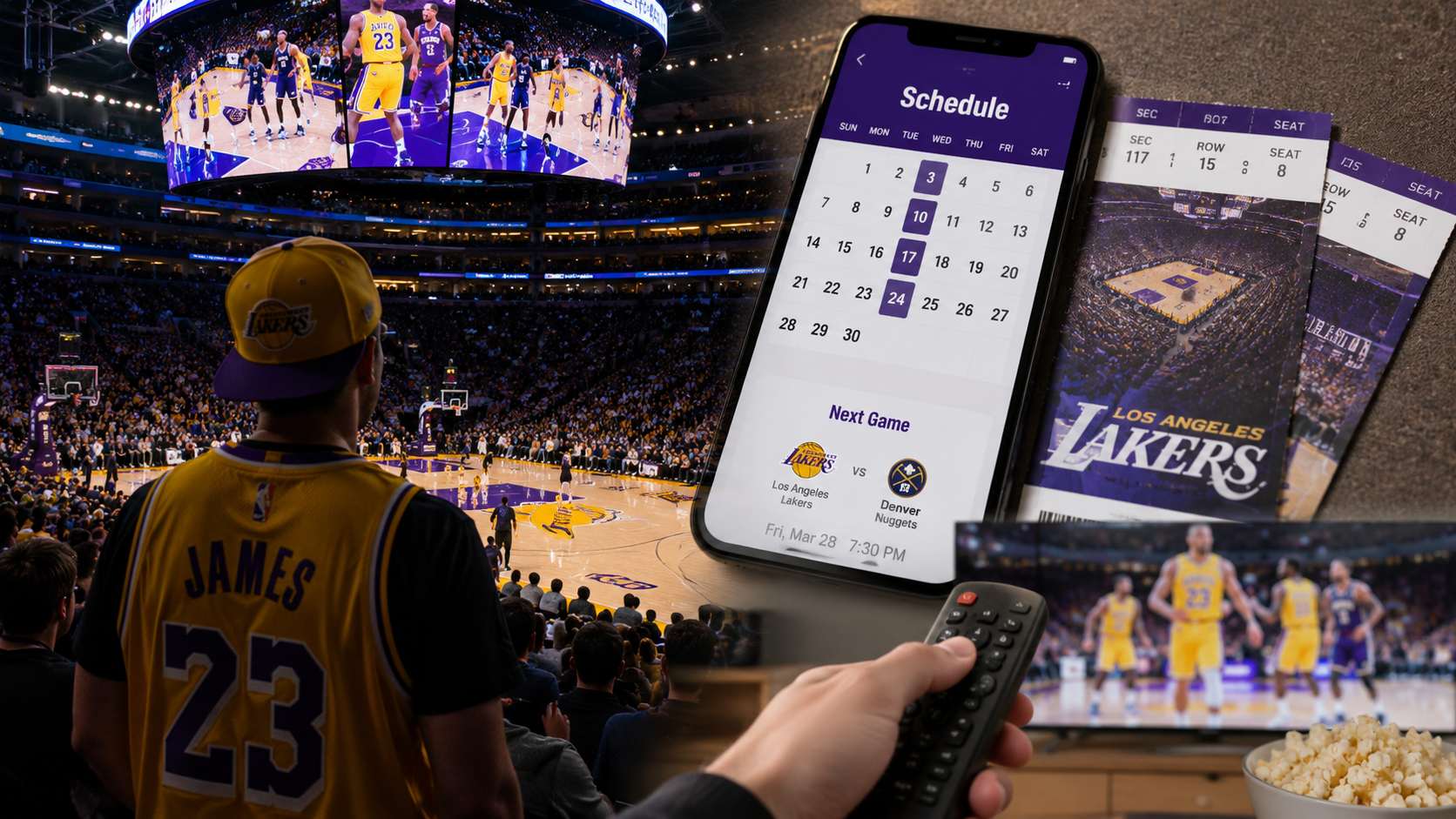
A Lakers game refers to any regular-season, preseason, or playoff contest played by the Los Angeles Lakers of the NBA. Home games are played at Crypto.com Arena in downtown Los Angeles. The 2026-27 season is set to open on October 30, 2026, following an offseason that reshaped the roster around guard Luka Doncic after LeBron James’s departure from the team.
Why People Search for “Lakers Game”
Not everyone typing “Lakers game” into a search bar wants the same thing. Some are checking tonight’s tip-off time before heading out the door. Others are trying to figure out how to stream a game that isn’t on local television. Some just want to know where the team stands after a trade or a tough loss.
This guide covers the practical side of following a Lakers game — schedule, tickets, streaming — along with context on where the team stands heading into the next season, so you’re not left guessing whether the information you find elsewhere is current.
When Do the Lakers Play?
The Lakers follow the same basic NBA calendar as every other team: preseason games in early October, an 82-game regular season running from late October through mid-April, and playoff games in the spring for teams that qualify.
The 2026-27 regular season is scheduled to begin on October 30, 2026. Before that, the team typically plays in NBA Summer League and the California Classic during July, followed by a handful of preseason exhibition games in October. Summer League and preseason games don’t count in the standings, but they’re often the first real look at new additions to the roster.
During the regular season, the Lakers usually play two to four games per week, mixing home dates at Crypto.com Arena with road trips around the league. The NBA releases its full season schedule in August, and the Lakers’ official team website posts an updated calendar as soon as it’s available.
Where Do the Lakers Play Home Games?
Home games are played at Crypto.com Arena in downtown Los Angeles, in the L.A. Live entertainment district. The arena has been the Lakers’ home since 1999 and also hosts the Los Angeles Clippers, Los Angeles Kings, and Los Angeles Sparks. It seats roughly 19,000 fans for basketball games.
How to Watch a Lakers Game
There are a few standard ways fans catch a Lakers game, depending on where they live and whether the game is nationally televised.
Local television: Most Lakers games that aren’t picked up by a national network air on the team’s regional broadcast partner for viewers within the designated home television territory.
National broadcasts: A portion of Lakers games each season are selected for national coverage on networks like ESPN, ABC, TNT, or NBA TV, particularly for marquee matchups or nationally significant storylines.
Streaming services: NBA League Pass offers out-of-market games for fans outside the Lakers’ local broadcast territory. Games that air nationally are typically also available through the streaming apps tied to the broadcasting network.
In person: Tickets for home games at Crypto.com Arena are sold through the Lakers’ official website, Ticketmaster, and verified resale marketplaces such as StubHub or SeatGeek. Prices vary widely depending on the opponent, day of the week, and how close the seats are to the court.
How to Get Lakers Tickets
Buying tickets to a Lakers game usually comes down to a few considerations:
- Check the schedule first. Marquee opponents and weekend games tend to sell out faster and cost more.
- Compare primary and resale markets. The Lakers’ official ticket partner sets face-value pricing, while resale sites reflect real-time demand, which can run higher or occasionally lower than face value.
- Consider seating location carefully. Upper-level seats at Crypto.com Arena are significantly cheaper than lower-bowl or courtside seats, and the difference in game-day experience is substantial.
- Watch for season-long ticket plans. The team sells partial and full season ticket packages that can offer better per-game value for fans who attend regularly.
Current Team Context: The 2026-27 Lakers
Following the 2025-26 season, the Lakers went through one of the more significant roster shifts in recent franchise history. LeBron James informed the team he intended to move on after eight seasons in Los Angeles, closing out an era built around him and shifting the franchise’s direction toward guard Luka Doncic as the roster’s central figure.
The front office responded with an active offseason. The Lakers acquired center Walker Kessler from the Utah Jazz in a sign-and-trade, adding a rim protector and rebounder the roster had lacked. They also added guard Quentin Grimes, guard Collin Sexton, and forward Sandro Mamukelashvili, while re-signing guard Austin Reaves to a long-term deal. The team later traded center Deandre Ayton to the Washington Wizards for guard Jaden Hardy and additional draft assets, trimming salary and adding future flexibility.
Recap: How the Lakers’ 2025-26 Season Ended
The Lakers made the playoffs in the 2025-26 season and defeated the Houston Rockets in a six-game first-round series. Their run ended in the second round, where they were swept by the Oklahoma City Thunder, who went on to reach the Western Conference Finals before losing to the San Antonio Spurs. The New York Knicks won the 2026 NBA Finals over the Spurs, their first championship in 53 years.
That early playoff exit, combined with LeBron James’s departure, set up the roster overhaul that defined the Lakers’ 2026 offseason.
Common Mistakes Fans Make When Following the Lakers
Assuming every game is on local TV. National broadcast games are pulled from local coverage and shown only through the national network, which can catch fans off guard if they don’t check the schedule ahead of time.
Buying tickets without checking the seating chart. Crypto.com Arena’s layout means some “lower level” seats are far from center court, so it helps to check a seating map rather than relying on section names alone.
Confusing preseason and Summer League games with the regular season. These games don’t count in the standings and often feature a different mix of players, especially rookies and fringe roster players trying to make the team.
Overpaying on resale sites for non-premium games. Ticket prices on resale marketplaces fluctuate based on real-time demand, and prices for less marquee matchups sometimes drop below face value close to game time.
Key Facts About Lakers Games
- Home games are played at Crypto.com Arena in downtown Los Angeles.
- The Lakers have played at Crypto.com Arena (originally Staples Center) since 1999.
- The 2026-27 regular season is scheduled to begin on October 30, 2026.
- The team is being rebuilt around guard Luka Doncic following LeBron James’s departure.
- Walker Kessler, Quentin Grimes, Collin Sexton, and Sandro Mamukelashvili joined the roster in the 2026 offseason.
- Austin Reaves was re-signed to a long-term contract during the same offseason.
- The Lakers reached the second round of the 2026 NBA playoffs before being swept by the Oklahoma City Thunder.
Frequently Asked Questions
How can I find out when the next Lakers game is?
The most reliable sources are the Lakers’ official website and the NBA’s official schedule page, both of which update in real time with game times and broadcast information.
Where do the Lakers play their home games?
All Lakers home games are played at Crypto.com Arena in downtown Los Angeles.
How do I watch a Lakers game if I don’t live in Los Angeles?
NBA League Pass carries out-of-market games for fans outside the team’s local broadcast territory, and nationally televised games are available through the broadcasting network’s own streaming app.
Are Lakers tickets available on the day of the game?
Yes, in most cases. Both the primary ticket marketplace and resale sites typically have same-day availability, though prices and seat selection narrow as the game approaches.
When does the Lakers season start?
The 2026-27 regular season is scheduled to begin on October 30, 2026, following preseason games in October and Summer League play in July.
Who is the Lakers’ star player heading into the new season?
Luka Doncic is the centerpiece of the roster following LeBron James’s departure, with the front office building the supporting cast around him during the 2026 offseason.
Key Takeaways
- A Lakers game can mean a preseason, regular-season, or playoff contest, and each has a different broadcast and ticketing setup.
- Home games are always played at Crypto.com Arena in downtown Los Angeles.
- The Lakers’ 2026-27 season opens October 30, 2026, after a roster rebuild centered on Luka Doncic.
- The team’s 2025-26 season ended with a second-round playoff sweep at the hands of Oklahoma City.
- Ticket prices and broadcast availability vary significantly depending on the opponent and whether the game airs nationally.
Conclusion
Following a Lakers game, whether from the arena or a couch across the country, comes down to knowing where to look for accurate scheduling and broadcast details, since both change from season to season and even week to week. With the team heading into a new era built around Luka Doncic after LeBron James’s exit, this season carries more uncertainty than most recent Lakers years, which makes checking the schedule and roster news before each game more useful than relying on last year’s assumptions.
Direct Answer
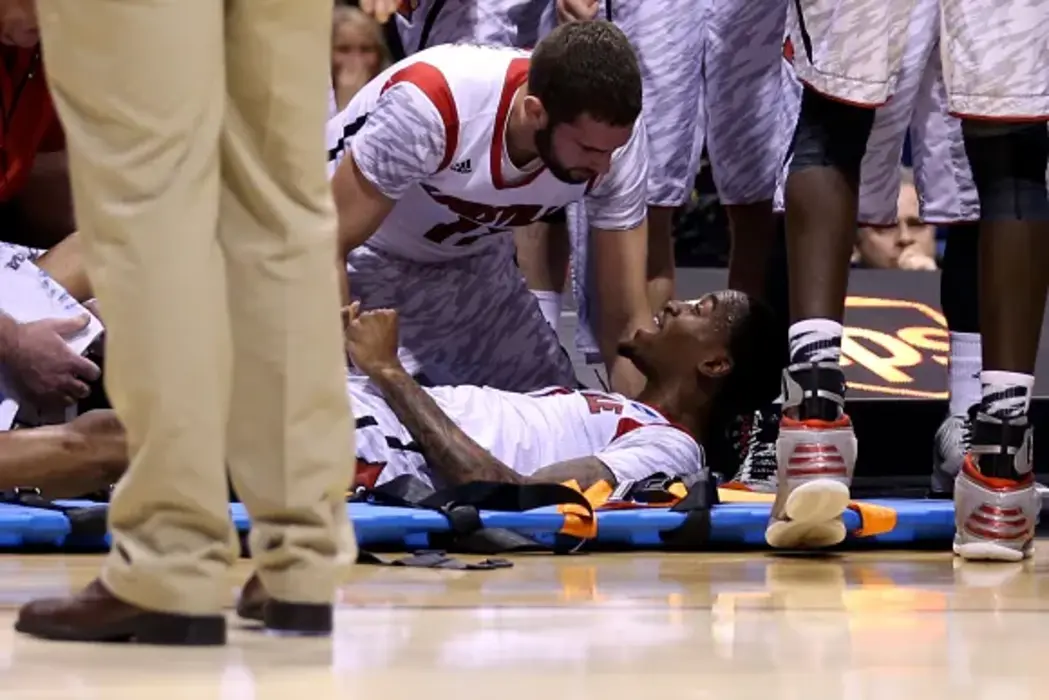
Kevin Ware suffered a severe open leg fracture on March 31, 2013, during Louisville’s Elite Eight game against Duke in the NCAA tournament. His right tibia broke in two places and pierced through the skin after he landed awkwardly while trying to block a three-point shot. He had surgery that day to insert a rod in his leg, and Louisville went on to win the national championship that season.
What Happened to Kevin Ware
Kevin Ware was a sophomore guard for the Louisville Cardinals when the injury happened, during a Midwest Regional final against Duke in Indianapolis. With just over six minutes left in the first half, Ware jumped to contest a three-point shot attempt by Duke’s Tyler Thornton. When he came down, his right leg buckled under him at an unnatural angle.
The impact caused an open fracture, meaning the broken bone tore through the skin. The bone protruded several inches out of his shin, visible to players, coaches, and the television audience. Reaction across the arena was immediate. Louisville coach Rick Pitino was seen wiping away tears, and several players broke down crying on the court.
CBS, which was broadcasting the game, stopped showing replays of the injury shortly after it happened once it became clear how graphic the footage was. Even so, the moment spread quickly online, and it became one of the top trending topics on Twitter worldwide within hours.
Why the Injury Drew So Much Attention
Compound fractures — the medical term for a break where bone breaks through the skin — are not common in basketball. Most injuries in the sport involve ligaments, tendons, or simple fractures that stay contained under the skin. A visible open fracture, especially one caught live on national television, is rare enough that it stood out immediately to anyone watching, including medical professionals.
Doctors who commented publicly afterward noted that seeing a bone protrude through the skin during a basketball play is highly unusual. That rarity, combined with the emotional reactions from Ware’s teammates and coaching staff, is a large part of why the moment became so widely discussed well beyond typical sports coverage.
There was also the detail of what Ware reportedly said while lying on the court. According to multiple accounts, he repeated that he was fine and told his teammates to win the game while medical staff attended to him. That combination of a visibly severe injury and a composed response from the player added to how the story was remembered afterward.
The Medical Response and Surgery
After being tended to on the court for several minutes, Ware was placed on a stretcher and taken by ambulance to a nearby hospital. Surgeons cleaned the wound to reduce infection risk and then operated to place a rod in his leg, a standard approach for stabilizing a broken tibia. Pitino said the leg had broken in two separate spots and that Ware would need about a year to recover fully.
Louisville’s basketball program stayed closely involved during Ware’s recovery. Pitino visited the hospital later that same day, bringing the regional championship trophy the team had just won by beating Duke.
How the Team Responded on the Court
Louisville was in the middle of the game when the injury happened, and the team had to regroup quickly. The Cardinals went scoreless for more than three minutes immediately after the injury before settling back into their rhythm, eventually taking a 35-32 lead at halftime. They finished the game with an 85-63 win over Duke, advancing further in the tournament.
Rather than treating the injury as a setback, the team used it as a rallying point for the rest of their tournament run. Louisville went on to win the national championship that year, and Ware was present for the celebration despite not playing again that season.
Kevin Ware’s Recovery and Basketball Career Afterward
Ware’s road back to playing basketball took longer than a single offseason. He returned to Louisville the following season but appeared in only nine games, averaging 1.7 points, before taking a medical redshirt. He then transferred away from Louisville.
His career didn’t end there. Ware landed at Georgia State, where he was named Most Valuable Player of the 2015 Sun Belt Conference tournament after helping lead the team to a conference championship and a trip back to the NCAA tournament, this time as a player rather than a spectator recovering from surgery.
After college, Ware continued playing professionally overseas, including stints with teams in the Czech Republic, Finland, Greece, Canada, England, Serbia, and Iraq. His path after the injury showed that a serious compound fracture, while severe, didn’t have to end a competitive playing career, even if it changed its trajectory.
Common Misconceptions About the Injury
Misconception: The injury ended his basketball career. It didn’t. Ware missed significant time and never fully regained his role at Louisville, but he went on to have a productive college career at Georgia State and played professionally for years afterward.
Misconception: This kind of injury is common in basketball. Open fractures are rare in the sport. Most basketball injuries involve joints, ligaments, or fractures that don’t break the skin. The visibility and severity of Ware’s injury is exactly what made it stand out.
Misconception: The broadcast showed the injury repeatedly on purpose. CBS did replay the moment briefly before deciding to stop, once it became clear how graphic it was. Networks generally pull back from replaying serious injuries once the severity becomes apparent.
Key Facts
- The injury happened on March 31, 2013, during an Elite Eight game between Louisville and Duke.
- Ware’s right tibia broke in two places and protruded through the skin.
- He underwent surgery the same day to have a rod placed in his leg.
- Louisville won the game 85-63 and went on to win the national championship that season.
- Ware later played for Georgia State, where he was named a conference tournament MVP, and continued a professional career overseas for nearly a decade afterward.
FAQ
What kind of injury did Kevin Ware suffer?
He suffered an open (compound) fracture of his right tibia, meaning the broken bone broke through the skin, during a game against Duke in the 2013 NCAA tournament.
How did Kevin Ware get injured?
He landed awkwardly on his right leg after jumping to contest a three-point shot attempt by Duke’s Tyler Thornton.
Did Kevin Ware play basketball again after the injury?
Yes. After a lengthy recovery and a brief, limited return at Louisville, he transferred to Georgia State, where he had a strong college career, and later played professionally in several countries.
Did Louisville win the game after Ware’s injury?
Yes. Louisville beat Duke 85-63 and went on to win the NCAA national championship that season.
Why was the injury shown on TV, and why did CBS stop replaying it?
CBS aired the moment as part of its live broadcast and initially replayed it before deciding the footage was too graphic to continue showing, a decision consistent with how networks typically handle serious on-air injuries.
Key Takeaways
- Kevin Ware’s leg injury during the 2013 Elite Eight game against Duke was a rare, visible compound fracture that shocked players, coaches, and viewers.
- He had surgery the same day and faced roughly a year of recovery.
- Louisville won that game and the national championship that season, with Ware’s injury becoming a rallying point for the team.
- Ware eventually returned to competitive basketball, finding success at Georgia State before playing professionally overseas for years.
- The injury remains one of the more widely remembered moments in NCAA tournament history, largely because of how rare and visible it was.
Conclusion
Kevin Ware’s Basketball Injury during the 2013 NCAA tournament remains one of the more memorable moments in college basketball, not because of what it meant for a single game, but because of how it unfolded in front of a national audience and how Ware responded to it. What often gets lost in the shock of the moment is the rest of the story: a long recovery, a transfer, and a second act to his playing career that took him from a Sun Belt Conference MVP award to professional basketball on three continents.

Direct Answer
Marketing consulting is a professional service where an outside expert analyzes a company’s marketing efforts and recommends changes to improve results, without necessarily executing the work themselves. Consultants typically review a business’s target audience, messaging, channels, and budget, then deliver a strategy or action plan the internal team can follow. Engagements range from a single audit to ongoing advisory support over several months.
Why Businesses Look for Marketing Consultants
Most companies don’t start looking for a marketing consultant because things are going well. They start looking because something isn’t adding up: ad spend keeps rising but leads don’t, a rebrand didn’t move the needle, or a founder has too many channels running and no way to tell which ones are actually working.
A marketing consultant’s job is to step outside that day-to-day noise and look at the whole picture. Because they aren’t buried in the daily execution, they can often spot the gap between what a business thinks is happening and what its numbers actually show.
This is different from hiring an agency. An agency is usually paid to do the marketing — running ads, writing content, managing social accounts. A consultant is paid to think through the marketing — diagnosing problems, setting direction, and sometimes training the internal team to carry it forward. Some professionals do both, but the distinction matters when you’re deciding what kind of help you actually need.
What a Marketing Consultant Actually Does
The work varies by engagement, but most marketing consulting projects touch on a few recurring areas:
Audience and positioning. Who is the business actually trying to reach, and does its messaging speak to that person’s real problem? A surprising number of marketing issues trace back to unclear answers here.
Channel strategy. Which platforms and tactics make sense given the budget, the audience, and the sales cycle. A consultant will often push back on channels a business “should” be on if the data doesn’t support it.
Budget allocation. Where money is going versus where it’s producing results. This often involves auditing ad accounts, email performance, or content output against actual conversions, not just impressions or likes.
Measurement and reporting. Setting up a way to actually track whether marketing is working — a lot of businesses run campaigns for months without a clear system for knowing if they’re profitable.
Team and process. Whether the in-house team or existing vendors are structured to execute the plan, and where gaps exist.
A consultant might address one of these areas or all of them, depending on the size of the engagement.
How Marketing Consulting Engagements Typically Work
Most engagements follow a similar shape, even though the specifics vary by consultant.
- Discovery. The consultant reviews existing materials — past campaigns, analytics, current marketing plans — and usually interviews stakeholders to understand goals and constraints.
- Audit. They assess what’s currently working and what isn’t, often benchmarking against competitors or industry norms.
- Strategy or recommendations. This is usually delivered as a written plan: what to change, in what order, and why. Good consultants tie each recommendation to a business outcome rather than a vague goal like “increase engagement.”
- Implementation support (optional). Some consultants stop at the strategy document. Others stay on to help execute, coach the internal team, or check in periodically as the plan rolls out.
- Review. For longer engagements, there’s usually a checkpoint to assess whether the strategy is producing results and needs adjusting.
A short audit might take two to four weeks. A full strategy engagement with implementation support can run three to twelve months.
Benefits of Working With a Marketing Consultant
- An outside perspective. Internal teams get attached to campaigns they built; a consultant has no such attachment and can say plainly what isn’t working.
- Specialized expertise on demand. A business might need deep SEO knowledge for three months and never again — hiring a full-time employee for that doesn’t make sense, but a consultant does.
- Faster diagnosis. Experienced consultants have seen the same problems across many businesses and can often identify the issue faster than a team troubleshooting it for the first time.
- Accountability. A written strategy with clear recommendations gives a business something concrete to measure progress against.
Limitations and Risks to Consider
Marketing consulting isn’t a guaranteed fix, and it’s worth going in with realistic expectations.
Results depend on execution. A consultant can hand over an excellent strategy, but if the internal team doesn’t implement it — or implements it poorly — the strategy won’t help. This is one of the most common reasons consulting engagements underdeliver.
Quality varies widely. “Marketing consultant” isn’t a licensed or regulated title in most places. Anyone can call themselves one, which means the range of skill and honesty in the field is wide. Due diligence matters more here than in regulated professions.
Generic advice happens. Some consultants apply the same playbook to every client regardless of industry or business model. A strategy that worked for an e-commerce brand won’t necessarily translate to a B2B software company.
Cost versus scope mismatch. Consulting fees range from a few hundred dollars for a short audit to five or six figures for a long strategic engagement. It’s worth clarifying upfront what’s actually included before assuming a bigger price tag means a bigger result.
No guarantees. Legitimate consultants describe likely outcomes based on data and experience. Anyone promising a specific revenue increase or guaranteed result before doing any discovery work is a signal to slow down, not speed up.
Common Mistakes Businesses Make When Hiring a Consultant
Hiring before defining the problem. Going in with “we need marketing help” instead of a specific question — like “our conversion rate is falling” or “we don’t know which channel drives sales” — makes it hard to evaluate whether the engagement worked.
Skipping references. Testimonials on a website are easy to write and hard to verify. Asking to speak directly with a past client, or checking for a verifiable track record, is a normal and reasonable request.
Confusing a consultant with a magic fix. Marketing consulting improves the odds of good decisions; it doesn’t replace product quality, pricing, or operational fundamentals. If the underlying business has a problem the market has already noticed, no marketing strategy will fully offset it.
Not clarifying deliverables. “Strategy consulting” can mean a ten-page PDF or a fully built-out implementation plan with weekly check-ins. Get this in writing before starting.
Ignoring credentials that don’t hold up to a quick check.A consultant’s claimed background, past clients, or results should be verifiable — through LinkedIn, direct references, or public case studies — rather than only found in the consultant’s own marketing materials.
Real-World Example
Consider a small e-commerce brand spending heavily on social media ads with declining returns. A marketing consultant brought in for an audit might find that the ad targeting is fine, but the product page the ads point to loads slowly and has no clear reason to buy listed above the fold. The recommendation isn’t “spend more on ads” — it’s “fix the page the ads are sending traffic to.” This is a common pattern: the visible problem (ad performance) and the actual problem (page conversion) aren’t always the same thing, and an outside audit is often what surfaces the gap.
Key Facts
- Marketing consulting is not a licensed profession in most countries — credentials and reputation should be independently verified.
- Engagements can be one-time audits or ongoing advisory relationships lasting months.
- Consultants typically charge by project, by hour, or on retainer; pricing varies enormously by experience and scope.
- A consultant’s recommendations are only as useful as the business’s ability and willingness to implement them.
- Good consultants tie recommendations to measurable outcomes, not vague goals.
FAQ
What does a marketing consultant do?
They analyze a business’s marketing performance and recommend a strategy to improve results, covering areas like audience targeting, channel selection, budget, and measurement.
How is a marketing consultant different from an agency?
A consultant typically advises and plans; an agency typically executes. Some professionals offer both, but it’s worth clarifying which you’re hiring for.
How much does marketing consulting cost?
It varies widely — from a few hundred dollars for a short audit to tens of thousands for an extended strategic engagement. Cost usually reflects scope and the consultant’s experience, not a fixed industry rate.
Is marketing consulting worth it for a small business?
It can be, particularly for a specific problem (like unclear channel performance) rather than as a general catch-all. Small businesses often get the most value from a focused, short-term engagement rather than an open-ended one.
How do I know if a marketing consultant is legitimate?
Ask for direct references you can contact, look for a verifiable public track record, and be cautious of anyone who guarantees specific results before doing any discovery work.
What should I prepare before hiring one?
A clear statement of the problem you’re trying to solve, access to your existing marketing data, and a rough sense of budget and timeline.
Key Takeaways
- Marketing consulting means outside analysis and strategy, not necessarily hands-on execution.
- Engagements typically move through discovery, audit, strategy, and sometimes implementation support.
- The value depends heavily on how well a business implements the recommendations it receives.
- Verify a consultant’s track record independently rather than relying only on their own marketing materials.
- No consultant can guarantee results — be cautious of anyone who claims otherwise before doing real discovery work.
Conclusion
Marketing consulting is most useful when a business has a specific, well-defined problem and needs an outside perspective to diagnose it accurately. It’s less useful as a vague fix for “marketing isn’t working” without a clearer sense of what that means. Whether the engagement is a short audit or a longer strategic partnership, the businesses that get the most value tend to be the ones that come in with a clear question, verify who they’re hiring, and follow through on the recommendations they receive.


Prince Harry: Titles, Family History, and Life After Stepping Back From Royal Duties

Astros News: A Complete Guide to Staying Current on Houston’s Season

Amber Heard: Career, Legal History, and Where She Is Today

USA Today Comics: What They Are, How to Read Them, and Why They Still Matter

Why Is Grammy Awards Trending? Here’s What’s Behind the Buzz

Jason Beck: Detroit Tigers Beat Reporter and One of Baseball’s Most Trusted Voices
-
 Travel3 weeks ago
USA Today Comics: What They Are, How to Read Them, and Why They Still Matter
-
 News3 weeks ago
Why Is Grammy Awards Trending? Here’s What’s Behind the Buzz
-
 Lifestyle3 weeks ago
Jason Beck: Detroit Tigers Beat Reporter and One of Baseball’s Most Trusted Voices
-

 Business4 weeks ago
UFC Octagon Explained: Dimensions, Design, and Why It Looks the Way It Does
-

 Lifestyle4 weeks ago
Venezuela Ladies: Understanding Venezuelan Women, Their Culture, and What to Know Before Connecting With Them
-

 Business3 weeks ago
Trump D.C.: What’s Happening With the President’s Washington Policies
-

 News2 weeks ago
White House CBS Legal Warning: What Happened With the Trump Interview Dispute
-

 Tech1 month ago
US Attacks Iran: What Happened, Why, and What’s Next