Health
Chicago Dog: What Makes This Classic Hot Dog Different

Introduction
Order a hot dog in most cities and you’ll get bread, meat, and whatever condiments happen to be on the counter. Order a Chicago dog and you’re stepping into something with actual rules. Ask for ketchup on one in the wrong place, and you might get a look instead of a bottle. People search for information on this topic because they want to know what genuinely separates it from a regular hot dog, why certain toppings are considered essential while others are considered a mistake, and where the tradition actually came from. This article covers all of that in detail.
Direct Answer
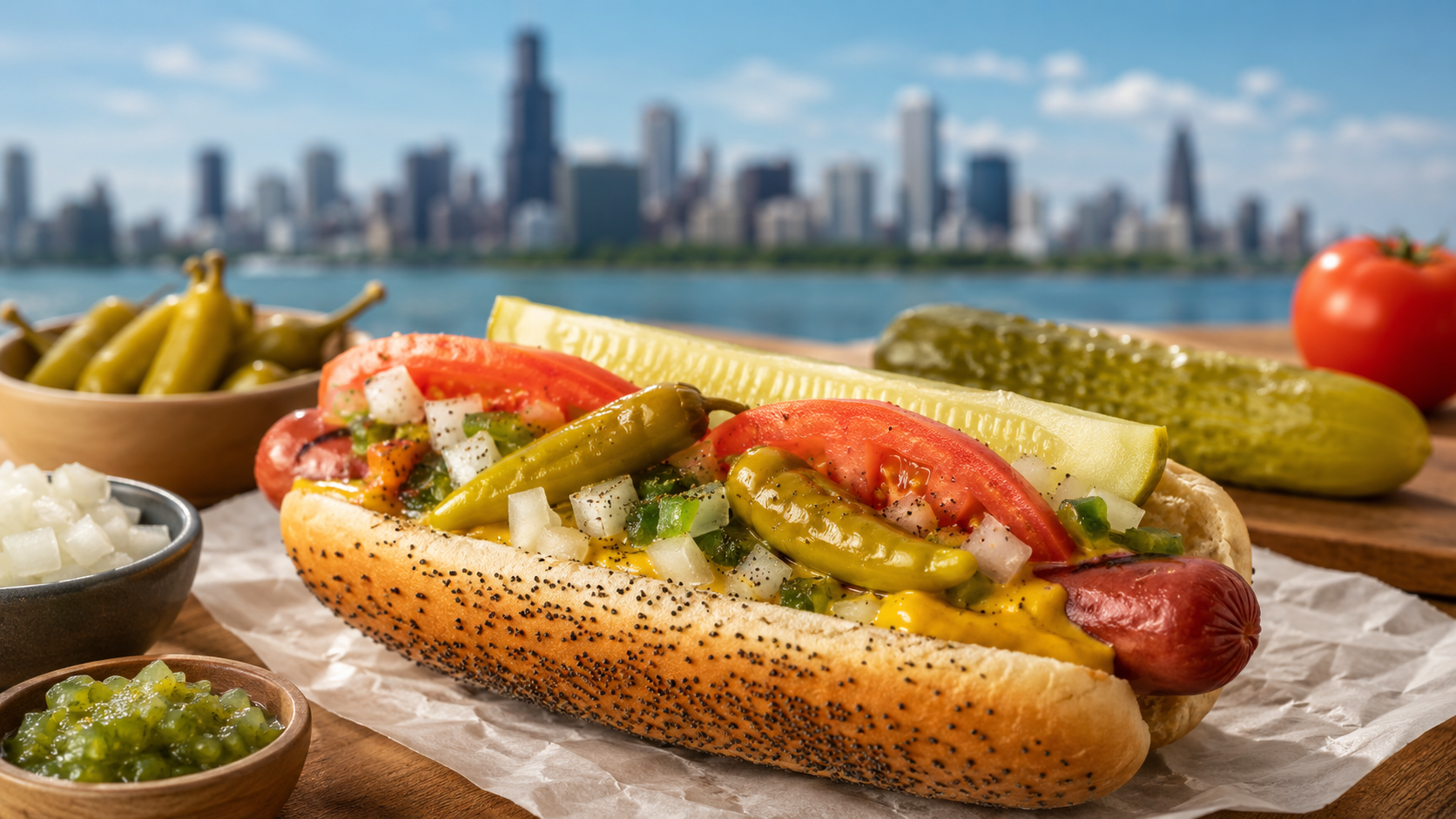
A Chicago dog is a specific style of hot dog served on a poppy seed bun and topped with yellow mustard, chopped white onions, bright green relish, a dill pickle spear, tomato slices, pickled sport peppers, and a dash of celery salt. Ketchup is traditionally left off entirely. The combination is meant to balance sweet, sour, salty, and spicy flavors in a single bite.
What Defines a Chicago Dog
The term refers to more than just a hot dog served in Chicago. It describes a specific, widely recognized combination of ingredients and preparation style that originated in the city and has since become a recognizable food category on its own, served in restaurants and hot dog stands well beyond Chicago’s borders.
What makes it distinct isn’t the sausage itself so much as the full assembly. A standard all-beef hot dog becomes a Chicago dog only when it’s built with the traditional toppings in roughly the traditional order, served on the correct type of bun.
The Bun
A proper Chicago dog uses a steamed poppy seed bun, not a plain hot dog bun. The poppy seeds are a small but recognizable detail that signals authenticity to anyone familiar with the style.
The Sausage
The hot dog itself is typically an all-beef frankfurter, often natural-casing, which gives it a distinct snap when bitten into. This isn’t unique to Chicago dogs specifically, but it’s a consistent feature of the traditional version.
The Toppings
This is where the Chicago dog really sets itself apart. The traditional topping list includes:
- Yellow mustard
- Chopped white onions
- Bright green sweet pickle relish
- A dill pickle spear
- Tomato slices or wedges
- Pickled sport peppers
- A dash of celery salt
Each topping serves a specific role in the overall flavor, which is part of why the combination has stayed consistent for decades rather than becoming a loose, “add whatever you like” style of hot dog.
Why Ketchup Is Left Off
This is probably the most talked-about detail of the Chicago dog, and it often confuses people who aren’t familiar with the tradition. Ketchup isn’t banned by any actual rule, but it’s widely considered a departure from the traditional preparation, especially among longtime Chicago hot dog vendors.
The reasoning usually comes down to flavor balance. The relish, tomato, and pickled peppers already provide sweetness, acidity, and a bit of heat. Adding ketchup, which is also sweet and acidic, is seen by many traditionalists as redundant or as overpowering the other toppings rather than complementing them. It’s worth noting this is a matter of culinary tradition and personal preference, not an official food safety or legal issue.
History and Background
The Chicago dog’s roots trace back to hot dog stands that became common in the city in the early 20th century, particularly during periods when affordable, filling street food was in high demand. Over time, a fairly consistent combination of toppings became associated with the city’s hot dog stands, eventually solidifying into what’s now recognized as the standard Chicago dog.
The tradition grew alongside Chicago’s broader food cart and diner culture, and by the mid-20th century, the full topping combination — mustard, onion, relish, pickle, tomato, sport peppers, and celery salt, all without ketchup — had become closely associated with the city’s identity.
Why the Chicago Dog Matters in Food Culture
Beyond being a regional specialty, the Chicago dog is often used as an example of how a specific combination of simple, inexpensive ingredients can become a defined culinary tradition with real cultural weight. It shows up in conversations about American regional food identity alongside items like the Philly cheesesteak or New York-style pizza, each tied closely to a specific city’s food history.
For many people, ordering a Chicago dog the traditional way is also a way of engaging with the city’s food culture directly, rather than treating a hot dog as an interchangeable fast food item.
Step-by-Step: Building a Traditional Chicago Dog
- Start with a steamed poppy seed bun. Steaming keeps it soft without making it soggy.
- Add the all-beef hot dog. A natural-casing frankfurter is the traditional choice.
- Apply yellow mustard first, typically in a line down the length of the hot dog.
- Add chopped white onions evenly across the top.
- Add bright green relish, a distinctive and recognizable feature of the style.
- Place a dill pickle spear alongside the hot dog, usually along one side of the bun.
- Add tomato slices or wedges, often tucked between the hot dog and the top of the bun.
- Add pickled sport peppers for a mild, tangy heat.
- Finish with a dash of celery salt.
- Skip the ketchup, in keeping with tradition.
Common Mistakes and Misconceptions
Assuming any hot dog with lots of toppings counts as a Chicago dog. The specific combination matters. A hot dog piled with random condiments isn’t the same as the traditional Chicago-style build.
Believing ketchup is officially forbidden by law or health code. It isn’t. Leaving it off is a matter of culinary tradition, not regulation.
Confusing it with a Chicago-style Italian beef sandwich. These are two different Chicago food traditions. The Italian beef sandwich uses thin-sliced roast beef on a roll, not a hot dog at all.
Thinking any relish will do. Traditional Chicago dogs use a specific bright green relish, which is part of what gives the finished hot dog its recognizable look.
Assuming the bun doesn’t matter. The poppy seed bun is a defining detail, not an optional extra.
Real-World Example
Picture a hot dog stand with a simple steel counter and a hand-written menu. A customer orders “one, dragged through the garden,” a common phrase in Chicago hot dog culture meaning a dog loaded with all the traditional vegetable toppings. The vendor steams a poppy seed bun, adds the all-beef hot dog, and quickly layers on mustard, onion, relish, a pickle spear, tomato, sport peppers, and celery salt, all without reaching for a ketchup bottle. That fast, practiced assembly is a good example of how deeply the format is embedded in everyday food culture in the city.
Key Facts
- A Chicago dog is traditionally served without ketchup.
- The standard toppings include mustard, onion, relish, pickle, tomato, sport peppers, and celery salt.
- The bun is typically a steamed poppy seed bun.
- The hot dog itself is usually an all-beef, natural-casing frankfurter.
- The phrase “dragged through the garden” refers to a hot dog loaded with the full traditional topping set.
Frequently Asked Questions
What is a Chicago dog?
It’s a specific style of hot dog topped with mustard, onion, relish, a pickle spear, tomato, sport peppers, and celery salt, served on a poppy seed bun without ketchup.
How is a Chicago dog different from a regular hot dog? The difference comes from the specific, consistent combination of toppings and the poppy seed bun, rather than an open-ended selection of condiments.
Why is ketchup left off a Chicago dog? Tradition holds that the existing toppings already provide enough sweetness and acidity, and adding ketchup is seen as unnecessary or as overwhelming the other flavors.
Is skipping ketchup a rule or just a preference? It’s a strong culinary tradition rather than an official rule. There’s no law against adding ketchup, but it’s generally discouraged among traditionalists.
Are there variations of the Chicago dog?
Yes. While the classic version is fairly consistent, some vendors and home cooks adjust ingredients slightly, such as the amount of onion or the type of pepper used.
What are the alternatives to a Chicago dog?
Other regional hot dog styles include the New York-style dog, often topped with sauerkraut and mustard, and the Coney dog, typically topped with a meat-based chili sauce.
What should someone know before ordering one for the first time?
It helps to know that a traditional Chicago dog comes fully loaded by default, so ordering it “the classic way” usually means accepting all the standard toppings rather than customizing them.
Key Takeaways
- A Chicago dog is defined by a specific set of toppings, not just being a hot dog sold in Chicago.
- Traditional toppings include mustard, onion, relish, pickle, tomato, sport peppers, and celery salt.
- Ketchup is traditionally omitted, based on flavor balance rather than any official rule.
- The poppy seed bun and all-beef, natural-casing hot dog are both defining features of the style.
- The format reflects a broader tradition of city-specific American food identities.
Conclusion
The Chicago dog stands out because it isn’t just a hot dog with extra toppings thrown on top. It’s a specific, consistent combination that’s been refined over decades into something recognizable anywhere it’s served correctly. Understanding the reasoning behind each element, from the poppy seed bun to the deliberate absence of ketchup, makes it easier to see why this particular hot dog has held onto such a distinct identity in American food culture.

Introduction
If you have come across the phrase pravi celer, you may wonder whether it is a special vegetable, a traditional Balkan ingredient, or a particular type of celery that is different from what is sold in supermarkets.
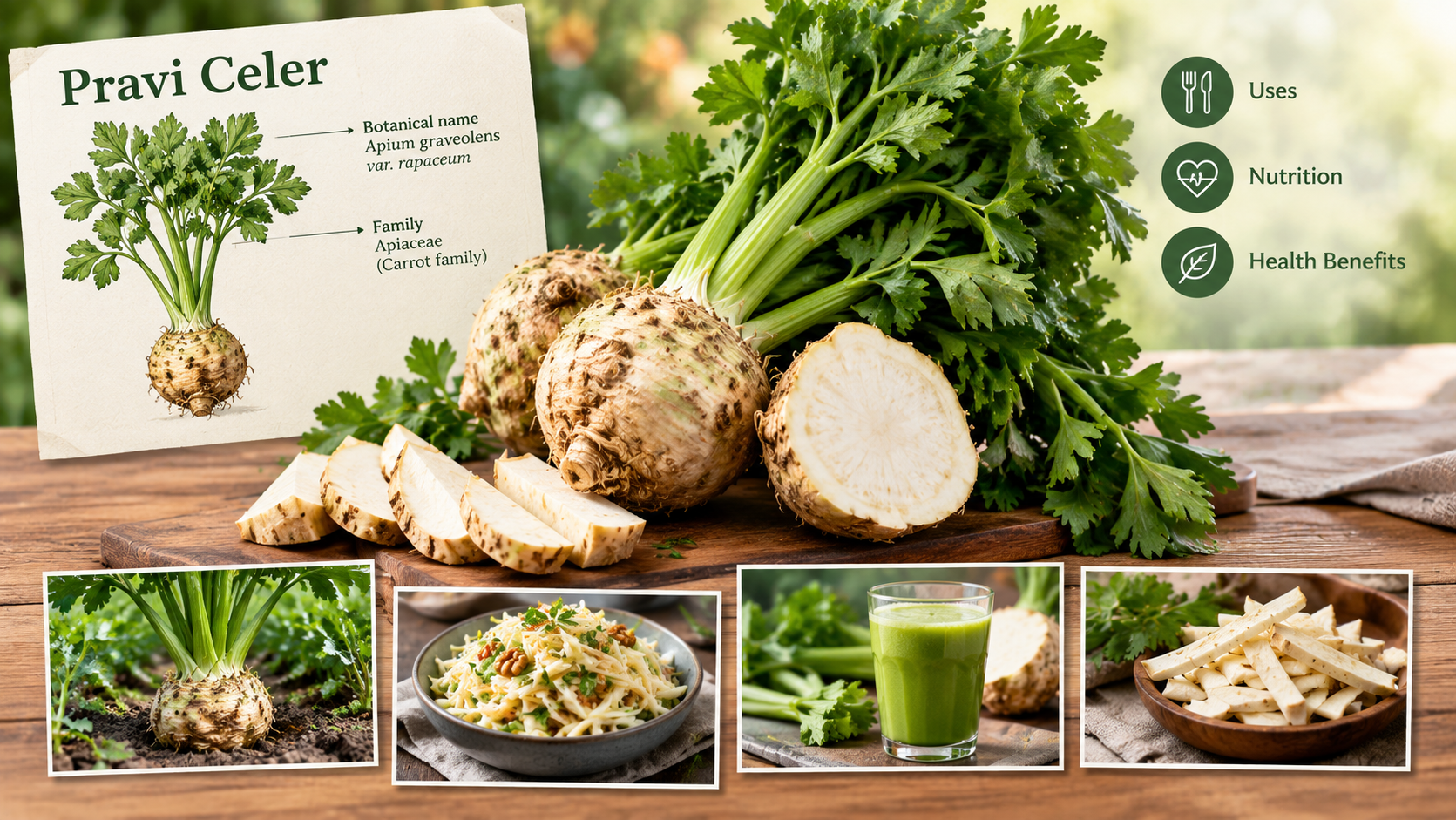
The answer is simpler than many recent online descriptions suggest. Pravi celer is generally understood as a South Slavic expression meaning “true celery” or “real celery.” It is associated with the celery plant known botanically as Apium graveolens, a member of the Apiaceae family.
The confusion comes from the fact that celery exists in several cultivated forms. Some are grown mainly for their crisp stalks, some for their leaves, and others for an enlarged edible root known as celeriac. As a result, the same botanical species can look very different depending on the form being discussed.
Understanding this distinction makes it easier to interpret recipes, gardening information, nutrition claims, and references to traditional Balkan food.
What Is Pravi Celer?
Pravi celer is a South Slavic term that can be translated as “true celery” or “real celery.” It generally refers to celery associated with the species Apium graveolens, rather than identifying a separate modern vegetable or newly discovered superfood.
The accepted species Apium graveolens belongs to the Apiaceae family, the same plant family that includes carrots, parsley, fennel, and several other aromatic plants. Kew’s Plants of the World Online recognizes Apium graveolens as an accepted species.
The exact meaning of pravi celer can depend on context. In a recipe, it may refer broadly to celery. In another context, a writer may specifically be discussing celery root, leaf celery, or stalk celery.
That is why it is better to identify the plant form and edible part instead of assuming that pravi celer is the scientific name of one unique variety.
What Does “Pravi Celer” Mean?
The phrase consists of two words:
- Pravi — commonly conveys the meaning “true,” “real,” or “genuine.”
- Celer — refers to celery.
Together, pravi celer can therefore be translated naturally as “true celery” or “real celery.”
The expression is particularly associated with South Slavic language and food terminology, including Croatian, Serbian, and Bosnian contexts. Recent botanical discussions also identify pravi celer as a common name connected with Apium graveolens.
This linguistic meaning is useful because it explains why the phrase can appear unfamiliar to English-speaking readers even though the underlying plant is familiar.
Is Pravi Celer a Different Plant From Regular Celery?
No. Pravi celer should not automatically be treated as a separate species from ordinary celery.
The botanical species involved is Apium graveolens. Kew recognizes this species as accepted and places it in the Apiaceae family. Its native range extends across parts of Macaronesia, North Africa, Europe, and western Asia.
What creates the apparent difference is cultivation.
Over time, growers have selected celery plants for different characteristics. One type may develop thick, crisp stalks, while another is valued for leaves or an enlarged underground portion.
This means two celery plants can look dramatically different while still belonging to the same species.
Pravi Celer vs. Common Celery
| Feature | Pravi Celer | Common English “Celery” |
| Basic meaning | True or real celery | Celery |
| Botanical species | Apium graveolens | Apium graveolens |
| Plant family | Apiaceae | Apiaceae |
| May refer to | Different celery forms depending on context | Usually stalk celery |
| Main edible parts | Stalks, leaves, seeds, or root depending on form | Mainly stalks and leaves |
| Separate species? | No | No |
| “Superfood” status | Not a scientific classification | Not a scientific classification |
The important point is that the phrase itself does not prove that one celery is more nutritious, natural, organic, or superior to another.
The Botanical Identity of Pravi Celer
The scientific name associated with true celery is Apium graveolens L.
According to Kew, it is an accepted species in the family Apiaceae. It is described as a biennial plant that grows mainly in temperate environments.
The plant has the characteristic strong celery aroma that most people recognize. Botanical descriptions also report an erect herb with grooved stems, divided leaves, and small flowers arranged in umbels.
Its natural range is broader than the Balkans. Kew records the species across areas extending from Macaronesia and North Africa through Europe toward western Asia, with records that include Pakistan and other parts of the region.
So although the term pravi celer has a strong South Slavic linguistic connection, the plant itself is not restricted to southeastern Europe.
What Are the Main Types of Celery?
One reason pravi celer can be confusing is that celery is not limited to the familiar bunch of green stalks.
1. Stalk Celery
This is the form most people recognize from supermarkets.
It is cultivated primarily for its fleshy leaf stalks. The stalks can be eaten raw, chopped into salads, added to soups, or used as a base for sauces and stocks.
Its texture is usually crisp, while its flavor is fresh, aromatic, and slightly bitter.
2. Leaf Celery
Leaf celery is valued more for its aromatic foliage and thinner stalks.
The leaves can be used much like an herb. They can add flavor to soups, sauces, stocks, stews, and vegetable dishes without requiring large quantities.
This form is particularly useful when the goal is to add celery flavor rather than texture.
3. Celeriac
Celeriac is also called celery root.
It is cultivated for its enlarged edible base rather than for long, thick stalks. The outside can look rough and knobby, while the inside is pale and firm.
Celeriac has a distinct celery aroma but a more earthy and substantial texture. It can be boiled, roasted, mashed, added to soups, or grated into salads.
Kew treats Apium graveolens as the accepted species and lists Apium graveolens var. rapaceum as a synonym rather than a separate accepted species.
This is one reason it is inaccurate to say that pravi celer always means celery root.
Why Do Some Sources Equate Pravi Celer With Celeriac?
The confusion usually comes from culinary usage.
In parts of Europe, celery root plays a major role in traditional cooking. A recipe may use the word “celery” while actually expecting the large root form rather than the crisp green stalk familiar to many English-speaking shoppers.
For example, imagine a recipe for a winter vegetable soup that asks for a large celery root. If someone translates the ingredient loosely as pravi celer, a reader might assume that the recipe calls for ordinary stalk celery.
The result would still contain celery flavor, but the texture and cooking characteristics would be different.
Therefore, when you see pravi celer, look at the surrounding description:
- Long green stalks usually indicate stalk celery.
- A rough, large edible base indicates celeriac.
- A recipe emphasizing leaves may be using leaf celery.
- Small aromatic seeds indicate celery seed as a seasoning.
Context is often more useful than the phrase alone.
What Does Pravi Celer Look Like?
There is no single appearance that can be assigned to every use of pravi celer.
Stalk celery generally has upright green stalks with leaves at the top. The stalks may be broad and fleshy or thinner depending on the cultivar and growing conditions.
Leaf celery tends to emphasize foliage and aromatic flavor.
Celeriac looks completely different. Its edible base is rounded and rough, with a pale interior beneath the outer skin.
The broader species can also look different from supermarket produce when it is grown in less intensively selected forms. Kew botanical descriptions characterize Apium graveolens as an aromatic herb with grooved stems and divided leaves.
How Is Pravi Celer Used in Cooking?
Celery is one of those vegetables that can play either a supporting or a central role in a dish.
Soups and Broths
Celery stalks and leaves are commonly used to add aroma to soups and broths.
Instead of making celery the main ingredient, cooks often combine it with onions, carrots, herbs, and other vegetables to create a deeper flavor base.
Salads
Fresh stalk celery contributes crunch and a distinctive flavor to salads.
It works well when sliced thinly or chopped into small pieces so that its strong taste does not overpower the other ingredients.
Stews
Celery can be added to slow-cooked dishes where its aroma becomes softer and blends with other ingredients.
Celeriac is particularly useful when a recipe needs a firm vegetable that can withstand longer cooking.
Roasted or Mashed Celeriac
Celery root can be roasted or mashed. Its earthy taste makes it useful as an alternative to, or companion for, other root vegetables.
Seasoning
Celery leaves and seeds can provide concentrated flavor.
Celery seed is especially aromatic, so recipes typically use much smaller quantities than they would of fresh stalks.
Nutritional Value of Pravi Celer
Because pravi celer generally refers to celery rather than a unique nutritional product, its nutritional properties should be discussed as properties of celery and its particular edible form.
Celery is a water-rich, relatively low-calorie vegetable. It also supplies nutrients and plant compounds, although the exact nutritional profile varies with the plant part and serving size.
The phrase pravi celer does not establish that a particular celery product contains unusually high levels of nutrients.
This distinction is important because several online pages describe pravi celer as though it were a special “superfood.” There is no need to make that claim to recognize celery as a useful vegetable.
What Nutrients Does Celery Provide?
Depending on the form and serving, celery can contribute:
- Water
- Dietary fiber
- Vitamin K
- Vitamin C
- Folate
- Potassium
- Various plant compounds
Celeriac has a different nutritional profile from raw stalk celery because it is a different cultivated form used for a different part of the plant.
For a precise nutritional calculation, the best approach is to identify the specific food—raw celery stalk, cooked celeriac, celery leaves, or celery seed—rather than treating all of them as identical.
Does Pravi Celer Have Health Benefits?
Celery can be part of a healthy diet, but it is better to avoid turning ordinary nutrition into exaggerated health claims.
Eating vegetables regularly is associated with a generally healthy dietary pattern, and celery can contribute water, fiber, micronutrients, and plant compounds.
However, pravi celer is not a medically proven cure or treatment simply because it is called “true celery.”
Claims that it detoxes the body, cures disease, dramatically burns fat, or produces special effects beyond normal nutrition should be treated cautiously unless supported by strong clinical evidence.
Hydration
Because celery contains a high proportion of water, it can contribute to overall fluid intake when eaten as part of a normal diet.
That does not mean celery replaces drinking water when someone is dehydrated.
Fiber
Celery contributes dietary fiber, particularly when eaten in a form that retains the plant’s structure.
Fiber supports normal digestive function and contributes to a balanced diet.
Vitamins and Minerals
Celery can contribute nutrients such as vitamin K and potassium. The actual amount depends on serving size and preparation.
A varied diet remains more important than relying on one vegetable for a particular nutrient.
Is Pravi Celer Safe to Eat?
For most people, celery is an ordinary edible vegetable. However, celery can cause allergic reactions in some people.
This issue receives particular attention in Europe, where celery is included among the 14 allergens that must be clearly declared when used as an ingredient in foods covered by EU food-information rules.
If someone has a known celery allergy, they should avoid the relevant food and follow medical advice.
Celery Allergy
An allergic reaction can range from mild symptoms to a serious reaction.
People with a known food allergy should not assume that cooking, juicing, drying, or changing the form of celery automatically makes it safe.
If an allergic reaction is suspected, appropriate medical care should be sought.
What About Celery Juice?
Celery juice is still a celery product. Turning celery into juice does not transform it into a medicine.
Juicing can also change the physical structure of the food and may reduce the amount of fiber consumed compared with eating the whole vegetable.
Therefore, celery juice should be viewed as a food rather than a treatment for disease.
How to Choose the Right Form of Celery
The best form depends on what you want to cook.
Choose stalk celery when:
- You want crunch.
- You are preparing salads.
- You need a soup or stock ingredient.
- You want fresh celery sticks.
Choose celeriac when:
- You want a root vegetable.
- You are making a hearty soup.
- You want to roast or mash celery root.
- You need a firm vegetable for slow cooking.
Choose leaf celery when:
- You want concentrated celery aroma.
- You are preparing stocks or sauces.
- You want to use celery as an herb.
The phrase pravi celer alone does not always tell you which of these forms you are buying.
How to Grow Pravi Celer
If pravi celer is being used to describe Apium graveolens, the growing requirements are broadly those of celery.
Celery generally performs best under suitable cool or temperate conditions and requires reliable moisture.
Step 1: Choose the Form
Decide whether you want:
- Stalk celery
- Leaf celery
- Celeriac
Seed selection should match the part of the plant you want to harvest.
Step 2: Prepare Moist, Fertile Soil
Celery benefits from fertile soil with consistent moisture.
The plant should not be allowed to repeatedly dry out because irregular water availability can affect growth and quality.
Step 3: Provide Suitable Light
Celery generally needs adequate light for healthy growth, although very hot conditions can make cultivation more challenging.
In warmer climates, planting schedules may need to be adjusted so the crop develops during more favorable temperatures.
Step 4: Maintain Consistent Watering
Regular moisture is one of the key practical requirements.
Rather than allowing the soil to become very dry and then heavily watering it, aim for more consistent moisture.
Step 5: Harvest According to the Type
Stalk celery is harvested for its usable stalks, while celeriac is grown longer to develop its enlarged base.
The harvest timing therefore depends on the specific cultivated form.
Common Misconceptions About Pravi Celer
Myth 1: Pravi Celer Is a Newly Discovered Superfood
There is no sound botanical basis for treating pravi celer as a newly discovered species.
The phrase is associated with Apium graveolens, an established celery species recognized by Kew.
Myth 2: Pravi Celer Always Means Celeriac
Not necessarily.
Celeriac is one cultivated form of Apium graveolens. The phrase pravi celer can be broader than celery root.
Myth 3: It Is Automatically Organic
The name says nothing about farming methods.
Organic status depends on how a crop was grown and whether it meets the relevant certification or regulatory requirements.
Myth 4: It Is Automatically More Nutritious Than Normal Celery
There is no reason to assume that.
Nutrition depends on the particular form, plant part, serving size, growing conditions, freshness, and preparation.
Myth 5: Celery Juice Is a Medical Treatment
Celery juice is food, not a proven cure for disease.
Health claims should be evaluated according to clinical evidence rather than social-media popularity.
Real-World Examples
Example 1: Reading a Balkan Recipe
Suppose a recipe uses pravi celer alongside carrots and onions for a soup.
The surrounding ingredients suggest that celery is being used as an aromatic vegetable. You should check whether the recipe illustration or ingredient description calls for stalks, leaves, or a root.
Example 2: Shopping for Celery Root
You visit a European market and find a rough, round vegetable labeled with a celery-related local name.
The appearance tells you that it is likely celeriac rather than the long green stalk celery commonly sold elsewhere.
Example 3: Reading a Wellness Article
You find an article claiming that pravi celer is a special celery variety with dramatically greater health benefits than ordinary celery.
Instead of accepting the claim, check whether the article provides a recognized botanical classification or reliable scientific evidence.
The name alone does not establish superior nutritional value.
Key Facts About Pravi Celer
- Pravi celer generally means “true celery” or “real celery.”
- It is associated with the South Slavic language context.
- The botanical species associated with the term is Apium graveolens.
- Apium graveolens belongs to the Apiaceae family.
- Kew recognizes Apium graveolens as an accepted species.
- Celery can be cultivated for stalks, leaves, or an enlarged edible root.
- Celeriac is a form of celery grown mainly for its enlarged base.
- Pravi celer does not automatically mean organic or wild celery.
- The phrase does not establish that the food is a special “superfood.”
- Celery can be used in soups, salads, sauces, stocks, stews, and other dishes.
- Celery is a recognized food allergen in the European Union.
- The exact meaning of the phrase should be interpreted from the culinary or botanical context.
Frequently Asked Questions
What is pravi celer?
Pravi celer is a South Slavic term generally translated as “true celery” or “real celery.” It is associated with the celery species Apium graveolens.
Is pravi celer the same as celery?
In general, yes. The phrase refers to celery rather than a completely separate plant species. The specific cultivated form can vary.
Is pravi celer the same as celery root?
Not necessarily. Celery root, or celeriac, is one cultivated form of Apium graveolens. The broader term pravi celer can refer to celery more generally.
What is the scientific name of pravi celer?
The species associated with the term is Apium graveolens L. Kew currently recognizes this as an accepted species.
What family does pravi celer belong to?
It belongs to the Apiaceae family, which also includes carrots, parsley, fennel, and other related plants.
Is pravi celer a new vegetable?
No. The term does not identify a newly discovered vegetable. It is a regional expression associated with celery.
What can you use pravi celer for?
Depending on the form, celery can be used in soups, stocks, salads, sauces, stews, roasted dishes, mashed preparations, and as a seasoning.
Is pravi celer healthy?
Celery can be a nutritious part of a balanced diet. It provides water, fiber, and several nutrients. However, the term pravi celer does not mean that it has special medicinal properties.
Is celery safe for everyone?
No food is suitable for everyone. Celery can cause allergic reactions in some people and is recognized as a priority allergen for food labeling in the European Union.
Can you grow pravi celer at home?
Yes, celery can be grown at home when suitable growing conditions are provided. It generally needs fertile soil, adequate light, and consistent moisture.
Why does pravi celer sometimes mean celery root online?
Some culinary traditions place greater emphasis on celeriac, which can lead writers or translators to use the phrase in a narrower sense. Botanically, however, celeriac is only one cultivated form associated with Apium graveolens.
Does pravi celer mean organic celery?
No. “Pravi” means “true” or “real” in this context; it does not certify an agricultural method.
Key Takeaways
- Pravi celer means “true celery” or “real celery.”
- It is best understood as a regional food and plant term, not the name of a newly discovered superfood.
- The botanical species associated with it is Apium graveolens.
- Celery belongs to the Apiaceae family.
- The species includes cultivated forms used for stalks, leaves, and enlarged roots.
- Celeriac is related to pravi celer but should not automatically be treated as its only meaning.
- The phrase itself does not prove that a product is organic, medicinal, or nutritionally superior.
- Celery has many practical culinary uses, from soups and stocks to salads and roasted root dishes.
- People with celery allergies need to take the ingredient seriously.
- The surrounding recipe, product label, or botanical context is the best way to determine exactly what pravi celer means in a particular situation.
Conclusion
Pravi celer is best understood as “true celery” or “real celery,” a South Slavic term associated with Apium graveolens. It is not, by itself, the scientific name of a rare new vegetable or a special superfood.
The most useful distinction is between the species and its different cultivated forms. Stalk celery, leaf celery, and celeriac can look and cook very differently, yet they are all connected to the same broader celery species.
That distinction also helps separate reliable information from exaggerated online claims. Celery can be a useful, flavorful vegetable with water, fiber, vitamins, minerals, and plant compounds, but its benefits should be discussed as part of normal nutrition rather than as evidence of a miracle food.
When you encounter the phrase pravi celer, check the context. A recipe, photograph, ingredient list, or botanical description can tell you whether the writer means stalk celery, leaves, celery root, or celery more generally. That simple step removes most of the confusion surrounding the term.
Introduction
If you have come across the term brasssmile, you may be wondering whether it refers to a dental product, a type of decorative tooth accessory, a brand, or simply an internet expression.
The term is not a standard clinical dental term such as dental crown, veneer, orthodontic appliance, or tooth bonding. That makes context especially important. Online names can sometimes describe a product, website, social-media trend, or dental accessory without telling you exactly what the item is made from or how it should be used.
For anyone researching brasssmile, the most useful approach is to separate the name from the underlying dental concept. If the term is being used in connection with brass-colored dental accessories, tooth jewelry, grills, or cosmetic dental products, safety depends on the actual material, fit, construction, and method of use—not simply on the name.
This distinction matters because something worn over or attached to teeth can affect oral hygiene, gums, enamel, and bite if it is poorly fitted or used incorrectly.
Direct Answer: What Is Brasssmile?
Brasssmile is not a recognized standard dental treatment or clinical dental term. The meaning of the term depends on the context in which it is used. It may be associated online with cosmetic or decorative dental concepts, but the name alone does not establish a specific material, manufacturer, treatment, or safety standard. Anyone considering a product described as brasssmile should identify the exact item, its materials, intended use, and manufacturer before putting it in or around the mouth.
What Does “Brasssmile” Mean?
The word appears to combine “brass” with “smile.” Brass is a metal alloy traditionally made primarily from copper and zinc, while a smile naturally relates to the teeth and mouth.
That combination can suggest a decorative dental appearance, but a name should not be treated as a technical product description.
For example, a product marketed with a name containing “brass” could theoretically refer to:
- A brass-colored accessory
- A decorative tooth covering
- A dental-fashion product
- A jewelry-related item
- A brand or website name
- An informal internet term
Without identifying the specific product or context, it would be inaccurate to claim that brasssmile refers to one particular dental device.
This is one of the most important points when researching unfamiliar health or dental terms online: a catchy name is not the same thing as a recognized medical definition.
Is Brasssmile a Dental Treatment?
No established dental treatment is formally known simply as “brasssmile.”
Modern dentistry uses recognized terms for procedures and appliances. These include:
- Dental crowns
- Veneers
- Dental bonding
- Dentures
- Bridges
- Orthodontic braces
- Clear aligners
- Dental implants
- Tooth whitening
- Professional dental cleaning
A dentist would normally describe a treatment according to its material, purpose, construction, and clinical function.
If someone uses “brasssmile” to describe a dental product, the exact product should therefore be identified before drawing conclusions about its function or safety.
Understanding Decorative Dental Accessories
One possible context for a term such as brasssmile is decorative dental wear.
Decorative dental accessories can include products worn over teeth to change their appearance. One familiar example is a grill, sometimes called a grillz or dental grill.
A grill is a removable decorative covering that fits over some or all of the visible teeth. It is primarily cosmetic rather than therapeutic.
These products can be made from different materials, including various metals and alloys. The material matters because not every metal is suitable for prolonged contact with oral tissues.
A product that merely looks brass-colored is not necessarily made from brass.
Likewise, something described as “brass” may contain several metals, coatings, or plating layers.
What Is Brass?
Brass is an alloy, meaning it is made by combining multiple elements.
Traditional brass primarily consists of:
- Copper
- Zinc
Different brass alloys can contain additional elements or have different proportions of copper and zinc.
This creates an important dental consideration.
Brass used for industrial, decorative, or household purposes should not automatically be assumed to be suitable for use inside the mouth.
A material’s suitability depends on its composition, surface treatment, corrosion behavior, manufacturing quality, and intended application.
Why Material Matters in the Mouth
The mouth is a difficult environment for materials because it contains saliva, moisture, changing temperatures, food particles, bacteria, and mechanical forces from chewing.
A material placed against teeth or gums may interact with this environment over time.
Potential concerns include:
Metal sensitivity
Some people are sensitive or allergic to particular metals.
Nickel is a well-known example of a metal that can cause allergic reactions in susceptible individuals.
The exact composition of an unfamiliar alloy should therefore be known before prolonged oral use.
Corrosion
Metal can corrode under certain conditions.
Corrosion may alter the surface of a material and can potentially affect its appearance and behavior.
The fact that a metal looks clean or polished does not prove that it is suitable for oral use.
Surface quality
A rough or poorly finished surface can create places where plaque and food particles accumulate.
This can make cleaning more difficult.
Chemical exposure
Some decorative products may use coatings, plating, adhesives, or other substances that were not designed for continuous contact with oral tissues.
That is why the complete construction of a product matters, not just its visible metal surface.
Brasssmile and Oral Hygiene
Anything that covers or sits tightly against teeth can make oral hygiene more difficult.
Plaque is a sticky bacterial film that naturally forms on teeth. If plaque remains undisturbed, it can contribute to tooth decay and gum disease.
A removable dental accessory can create additional surfaces around which food and plaque accumulate.
This does not mean every decorative dental accessory automatically causes dental disease. Proper design, fit, cleaning, and responsible use can affect the level of risk.
However, users should not treat decorative dental accessories as if they were harmless simply because they are removable.
Areas that require attention
If an accessory is worn over teeth, pay particular attention to:
- The gumline
- Spaces between teeth
- Areas underneath the accessory
- Contact points between teeth
- Surfaces where food becomes trapped
Regular brushing and cleaning between teeth remain important.
Can Brasssmile Damage Teeth?
The answer depends on what the term refers to.
A name by itself cannot establish whether a particular product damages teeth.
However, poorly designed or poorly fitted dental accessories can create problems.
Potential issues include:
- Plaque accumulation
- Gum irritation
- Tooth sensitivity
- Enamel wear from friction
- Changes in bite
- Food trapping
- Difficulty maintaining oral hygiene
- Damage caused by improper adhesives or attachments
A particularly important distinction is between temporary cosmetic wear and something permanently bonded or attached to a tooth.
Permanent dental work should be performed or supervised by a qualified dental professional.
Can It Affect Your Gums?
Yes, an ill-fitting object can irritate gum tissue.
Gums are soft tissue and can become inflamed when repeatedly exposed to pressure, friction, plaque, or other irritants.
Signs that an oral accessory may be causing a problem include:
- Red or swollen gums
- Bleeding during brushing
- Persistent soreness
- New sensitivity
- Pain while chewing
- Unusual mouth irritation
- Persistent bad breath
If these symptoms develop after using a dental accessory, stopping use and speaking with a dentist is a sensible step.
Is Brasssmile Safe?
There is no universal safety answer because “brasssmile” does not identify one standardized dental product.
Safety depends on several factors.
1. Material
What exactly is it made from?
A seller should be able to provide meaningful information about the material rather than simply using a vague term such as “metal.”
2. Fit
Does the accessory fit properly?
A poorly fitted item can move around, press against the gums, or interfere with the bite.
3. Manufacturing quality
Edges should be smooth and surfaces should be appropriately finished.
Poor manufacturing can create sharp edges or rough areas.
4. Hygiene
Can the product be cleaned properly?
If an accessory is difficult to clean, it may create additional oral-hygiene problems.
5. Intended use
Was it actually designed for use inside the mouth?
This question is often overlooked.
A decorative metal object that happens to fit over teeth is not automatically a dental-safe product.
How to Evaluate a Product Called Brasssmile
If you encounter a product using the brasssmile name, use a practical evaluation process before purchasing or wearing it.
Step 1: Identify the exact product
Find the manufacturer’s product page or packaging.
Determine whether it is:
- A grill
- Tooth jewelry
- A removable dental accessory
- A whitening product
- A dental-care product
- Something unrelated to dentistry
Step 2: Check the material
Look for a complete material description.
Avoid relying solely on vague terms such as:
- Premium metal
- Luxury alloy
- Gold color
- Brass finish
- Metallic material
These descriptions do not necessarily tell you what metals are actually present.
Step 3: Look for intended-use information
A reputable manufacturer should explain how the product is intended to be used.
Check whether it is designed specifically for oral use.
Step 4: Examine the fit
If it is a removable dental accessory, it should not cause significant pressure or interfere with normal jaw movement.
Do not force an object onto your teeth.
Step 5: Check cleaning instructions
Look for clear instructions on how to clean and store the item.
Step 6: Watch for symptoms
Stop using an unfamiliar oral accessory if you develop persistent pain, swelling, bleeding, irritation, or unusual sensitivity.
Step 7: Ask a dentist when uncertain
A dentist can inspect the teeth, gums, bite, and appliance together.
This is especially important for people who already have:
- Braces
- Crowns
- Veneers
- Dental implants
- Gum disease
- Tooth decay
- Significant tooth sensitivity
Brasssmile vs. Traditional Dental Treatments
It is useful to understand the difference between cosmetic dental accessories and actual dental treatment.
| Option | Main Purpose | Usually Permanent? | Professional Treatment? |
| Decorative grill | Cosmetic appearance | Usually removable | Not necessarily |
| Tooth jewelry | Cosmetic decoration | Usually temporary or bonded | Often recommended |
| Dental veneer | Change tooth shape/color | Yes | Yes |
| Dental crown | Restore/protect a damaged tooth | Yes | Yes |
| Dental bonding | Repair or reshape tooth | Semi-permanent | Yes |
| Tooth whitening | Reduce tooth discoloration | No | Professional or at-home depending on method |
| Clear aligner | Move teeth | Treatment-based | Yes |
This distinction is important because a decorative accessory should not be viewed as an alternative to treatment for damaged or diseased teeth.
Brasssmile and Dental Veneers Are Not the Same
Veneers are thin restorations placed over the front surface of teeth.
They are designed to alter the appearance of teeth and, depending on the situation, may address issues such as discoloration, shape, or minor cosmetic concerns.
A decorative metal accessory serves a completely different purpose.
Veneers are part of a dental treatment plan and require evaluation by a dental professional.
A decorative accessory does not automatically improve tooth health or function.
Brasssmile and Dental Crowns Are Not the Same
A crown covers a tooth to restore its structure and function.
Dentists may recommend crowns when a tooth has substantial structural damage, depending on the clinical situation.
A decorative covering placed over a healthy tooth is not equivalent to a dental crown.
This distinction is particularly important when online content uses words such as “cap,” “cover,” or “crown” loosely.
Possible Benefits of Decorative Dental Accessories
If brasssmile refers to a decorative dental accessory, its main potential benefit is cosmetic rather than medical.
Users may choose such products because they want:
- A distinctive appearance
- Temporary cosmetic styling
- Fashion expression
- Jewelry-like dental decoration
- A removable alternative to permanent cosmetic treatment
These are aesthetic goals.
They should not be confused with improving dental health.
Limitations and Risks
Decorative dental products also have limitations.
They do not treat dental disease
A decorative accessory cannot replace treatment for cavities, gum disease, infections, cracked teeth, or other oral-health conditions.
They may complicate cleaning
An object covering teeth can make normal brushing and interdental cleaning more difficult.
Poor fit can cause irritation
An accessory that moves or presses against tissue may create discomfort.
Materials may be unclear
If the manufacturer does not disclose the material composition, assessing potential sensitivity or compatibility becomes more difficult.
Cheap products may have inconsistent quality
Price is not a perfect measure of safety, but extremely low-cost products may deserve additional scrutiny when the item will be placed in the mouth.
Common Mistakes and Misconceptions
“If it is sold online, it must be safe for the mouth.”
False.
Products sold online can be intended for many different purposes. A product’s availability does not establish that it meets dental or medical standards.
“Brass is just another type of gold.”
False.
Brass and gold are different materials. Brass is primarily a copper-zinc alloy, while gold is a chemical element.
“A metal accessory cannot harm teeth.”
Not necessarily.
Fit, friction, hygiene, material composition, and how long the product is worn can all matter.
“More expensive means safer.”
Not always.
A higher price does not automatically establish appropriate materials or manufacturing quality.
“A grill is the same as a dental crown.”
False.
A decorative grill is primarily an accessory. A dental crown is a professionally designed restoration intended to restore or protect a tooth.
“If there is no pain, there is no problem.”
Not necessarily.
Some dental problems develop without obvious pain in their early stages. Regular dental examinations remain useful even when your mouth feels normal.
Real-World Examples
Example 1: Someone wants a temporary fashion accessory
A person sees a brass-colored tooth accessory online and wants to wear it occasionally.
The first questions should be whether it is specifically intended for oral use, what it is made from, and whether it fits without putting pressure on the gums.
Example 2: Someone has braces
A person with orthodontic brackets wants to wear a decorative tooth covering.
This situation deserves extra caution because an accessory could interfere with orthodontic hardware or make cleaning more difficult.
Consulting the orthodontist before use is the safer approach.
Example 3: Someone develops gum irritation
A person begins wearing an unfamiliar dental accessory and notices red, sore gums.
Continuing to wear the product simply because the irritation is mild is not a good strategy. Removing the potential irritant and seeking dental advice can help determine whether the product, fit, hygiene, or another condition is responsible.
Example 4: Someone wants whiter teeth
A person searches for brasssmile because they want a better-looking smile.
If the actual goal is tooth whitening, a metal accessory does not address the underlying issue. The person should instead investigate evidence-based whitening options with a dental professional.
Who Should Be Especially Careful?
People with existing oral-health conditions should be particularly cautious with unfamiliar dental accessories.
That includes people with:
- Active gum problems
- Untreated cavities
- Broken or cracked teeth
- Dental implants
- Crowns or bridges
- Veneers
- Orthodontic appliances
- Significant metal allergies or sensitivities
- Recent dental surgery
Children and teenagers also require additional consideration because their teeth and jaws are still developing.
A dental professional can determine whether a particular accessory is appropriate.
What Are the Alternatives?
The appropriate alternative depends on the reason someone is interested in brasssmile.
For a whiter smile
Professional or dentist-supervised whitening may be more appropriate.
For changing tooth shape
Dental bonding or veneers may be considered after a professional assessment.
For replacing a damaged tooth
A dentist may discuss crowns, bridges, implants, or other restorative options depending on the condition.
For cosmetic decoration
Professionally fitted, removable dental jewelry or accessories may be an option, but the materials and fitting method should still be considered carefully.
The best alternative is therefore determined by the goal, not simply by appearance.
Key Facts About Brasssmile
- Brasssmile is not a standard clinical dental term.
- The exact meaning depends on where and how the term is being used.
- The name alone does not establish a product’s material or safety.
- Brass is primarily an alloy of copper and zinc.
- Decorative dental accessories are different from dental restorations.
- Poorly fitted oral accessories can irritate gums or interfere with oral hygiene.
- Materials should be clearly identified before an unfamiliar metal product is placed in the mouth.
- An online listing does not automatically prove that a product is suitable for oral use.
- Dental accessories do not replace treatment for cavities, gum disease, infections, or damaged teeth.
- Persistent pain, swelling, bleeding, or irritation should be evaluated by a dental professional.
Frequently Asked Questions About Brasssmile
What is brasssmile?
Brasssmile is not a recognized clinical dental term. It may be used online in connection with a cosmetic dental product, accessory, brand, or other concept. The exact meaning should be determined from the specific context.
Is brasssmile a dental procedure?
No established dental procedure is officially known as brasssmile. Standard dental procedures have specific clinical names, such as crowns, veneers, bonding, implants, and whitening.
Is brasssmile safe?
Safety cannot be determined from the name alone. If it refers to an oral accessory, its material, construction, fit, intended use, hygiene, and manufacturing quality should all be considered.
Is brass safe for teeth?
Brass is an alloy rather than a single material, and not every brass product is designed for oral use. A brass object intended for decoration or industrial use should not automatically be considered suitable for prolonged contact with teeth or gums.
Can brasssmile whiten teeth?
There is no established dental treatment called brasssmile that can be considered a tooth-whitening method. If the term refers to a decorative accessory, changing the appearance of the accessory is different from actually whitening tooth enamel.
Can brasssmile damage gums?
If the term refers to an ill-fitting dental accessory, irritation or pressure against the gums is possible. Persistent redness, swelling, bleeding, or pain should be evaluated by a dentist.
Is brasssmile permanent?
There is no standard dental treatment called brasssmile, so permanence depends entirely on the specific product or procedure being described.
Is brasssmile the same as grillz?
Not necessarily. “Grillz” is a general term for decorative dental coverings. Brasssmile could refer to a particular product, brand, or unrelated concept. The exact item should be identified before treating the terms as synonyms.
Can I wear a brass dental accessory every day?
Daily use depends on the specific product, material, fit, cleaning requirements, and manufacturer’s intended use. If the product is not specifically designed for oral use, it should not be assumed to be appropriate for daily wear.
Should I sleep with a dental accessory?
Unless a product is specifically designed and professionally fitted for continuous wear, sleeping with an unfamiliar dental accessory is not advisable. Extended wear can increase exposure to plaque, pressure, and irritation.
Can I use a decorative dental accessory if I have braces?
Ask your orthodontist first. An accessory can interfere with brackets, wires, tooth movement, or cleaning.
What should I do if a dental accessory hurts?
Remove it and avoid continuing to wear it until you understand the cause. If pain, swelling, bleeding, or irritation persists, contact a dentist.
Are online dental accessories trustworthy?
Some may be well made, while others may have limited material or safety information. Check the manufacturer, intended use, materials, fitting instructions, cleaning guidance, and return policy before purchasing.
What is the safest way to improve my smile?
The safest approach depends on what you want to change. A dentist can evaluate tooth health and discuss options such as professional cleaning, whitening, bonding, veneers, orthodontics, or restorative treatment when appropriate.
Key Takeaways
- Brasssmile does not have a single established medical or dental definition.
- The term may refer to a cosmetic dental concept, accessory, brand, or online name.
- Do not assume that a brass-colored or metal product is suitable for oral use.
- Check the exact material, manufacturer, intended use, and fit.
- Decorative dental accessories are not substitutes for professional dental treatment.
- Poor fit and inadequate cleaning can contribute to oral-health problems.
- People with braces, implants, crowns, veneers, gum disease, or other dental conditions should seek professional advice before using unfamiliar oral accessories.
- Persistent pain, swelling, bleeding, or irritation should not be ignored.
- For dental health decisions, the actual product and the condition of your teeth matter far more than the name “brasssmile.”
Conclusion
The term brasssmile can be confusing because it is not a standard clinical dental term. Its meaning depends on the specific context in which it appears. If it describes a decorative dental product or metal accessory, users should evaluate the actual item rather than assuming that the name establishes its purpose or safety.
Material composition, fit, hygiene, manufacturing quality, and intended use are the key considerations for anything worn in or around the mouth. Decorative accessories can change appearance, but they do not replace dental treatments designed to address disease, tooth damage, alignment, or other oral-health problems.
When an unfamiliar product is intended for the mouth, a little caution is worthwhile. Check what it is made from, understand how it is supposed to be used, maintain good oral hygiene, and speak with a dentist if you have an existing dental condition or develop persistent discomfort.

Anyone who has checked Spire Healthcare’s stock lately has probably noticed something unusual: a takeover bid has been hanging over the company for months, and it keeps getting extended. That’s made the share price more newsworthy than usual for a private hospital operator, and it’s why so many people are searching for the current number and what’s actually behind it.
This article covers where the Spire Healthcare share price stands today, why it has moved the way it has, and what the ongoing takeover situation means for anyone tracking the stock.
Direct Answer: What Is Spire Healthcare’s Share Price?
As of late July 2026, Spire Healthcare Group (ticker: SPI, listed on the London Stock Exchange) trades at approximately 217p to 218p per share, giving it a market capitalization of roughly £875 million. The price has been heavily influenced by an ongoing takeover approach from Toscafund Asset Management, which has proposed 250p per share, a deal still working through due diligence as of this writing.
Company Background: What Spire Healthcare Does
Spire Healthcare is one of the largest independent hospital operators in the United Kingdom. The company runs around 38 to 40 private hospitals along with more than 60 clinics across England, Wales, and Scotland. Beyond hospital care, it operates private GP practices, workplace health services for more than 1,400 employers, and is the largest independent provider of NHS talking therapies in England.
Spire generates revenue from two main sources: private-pay patients and insurance-covered treatments, which make up around 70% of hospital revenue, and NHS-commissioned procedures, which account for the remaining 30%. This mix matters for understanding the stock, since shifts in NHS spending priorities can directly affect Spire’s earnings.
The company listed on the London Stock Exchange in 2014 and has been part of the FTSE 250 index, a group of the 250 largest UK-listed companies outside the FTSE 100.
Why the Share Price Has Been So Volatile
The Strategic Review
Spire launched a strategic review in September 2025 aimed at unlocking shareholder value, driven partly by concerns that its stock market valuation didn’t reflect the true worth of its hospital estate and property holdings. That review set the stage for a string of takeover approaches that have dominated the stock’s movement ever since.
Bridgepoint and Triton Talks
In January 2026, Spire confirmed it was in early discussions with private equity firms Bridgepoint and Triton over a potential deal that could have valued the company at around £1.5 billion. Under UK takeover rules, the firms were given a deadline to either announce a firm offer or walk away. That deadline was extended multiple times through February and into March 2026, with reports at one point suggesting a formal £1 billion offer from Bridgepoint was being drawn up.
Ultimately, both firms abandoned the pursuit in March 2026, and Spire’s shares settled around 190p following that announcement, even after a temporary jump on renewed bid speculation.
The Toscafund Offer
Spire didn’t stay without a suitor for long. In May 2026, Toscafund Asset Management, which already held close to an 11% stake in the company and is Spire’s second-largest shareholder, proposed a cash offer of 250p per share. That values the company at roughly £1 billion. The proposal represented a significant premium over where shares had been trading and sent the stock surging more than 40% in a single trading session.
Toscafund’s proposal also includes an option for existing shareholders to roll their holdings into unlisted equity instead of taking cash, giving investors a choice between cashing out or staying invested in a private version of the company.
Since May, the “put up or shut up” deadline under UK takeover rules, which requires a bidder to either commit to a formal offer or step away, has been extended multiple times. As of early July 2026, the deadline had been pushed to August 6, 2026, with Spire’s board saying Toscafund’s due diligence and financing arrangements, including efforts to secure a private credit rating, were well advanced.
How the Takeover Situation Affects the Share Price
When a company becomes a takeover target, its share price often starts trading closer to the proposed offer price rather than reflecting its standalone business performance. That’s part of what’s happening with Spire. The stock has hovered in the high 200s pence range, below the 250p offer, which typically signals that the market sees some risk the deal might not close at the proposed price, or might not close at all.
Deadline extensions are common in UK takeover situations and don’t necessarily signal that a deal is falling apart. They often reflect the practical realities of arranging financing, completing due diligence, and finalizing legal documents for a transaction of this size.
Key Financial Metrics
Understanding a few core numbers helps put the share price in context:
- Market capitalization: approximately £875 million to £878 million as of mid-to-late July 2026.
- Price-to-earnings (P/E) ratio: around 53, which is high relative to many established companies and reflects modest current earnings per share alongside takeover-driven price support.
- Dividend yield: roughly 0.69% on a trailing twelve-month basis, a relatively modest payout compared to many established FTSE-listed firms.
- 2025 group revenue: approximately £1.58 billion, up 4.5% year over year.
- 2025 adjusted EBITDA: approximately £269 million, up 3.2% from the prior year, aided by around £30 million in cost savings from an internal transformation program.
Risks and Considerations for Anyone Following the Stock
Deal uncertainty. No takeover is guaranteed until it’s formally announced and shareholders vote to approve it. Toscafund could still walk away, adjust its offer, or fail to secure financing, any of which could send the share price down toward levels seen before the bid emerged.
NHS revenue pressure. Spire has flagged that NHS commissioning revenue was expected to fall significantly in early 2026 due to reduced NHS-funded activity at some sites, with future NHS revenue growth uncertain as new government funding plans are negotiated. This creates an ongoing risk factor independent of the takeover situation.
Interest rate and financing environment. Private equity and asset manager-led buyouts depend on the cost and availability of financing. Changes in borrowing costs can affect whether a proposed deal remains financially viable for the bidder.
Market-wide swings. Like other UK-listed shares, Spire’s stock can move with broader market sentiment, including reactions to global economic or geopolitical news that affects the FTSE 250 as a whole, separate from anything specific to Spire’s business.
Common Mistakes When Reading About Spire’s Share Price
Assuming the offer price is the current price. The 250p Toscafund proposal is not the same as the trading price. Shares typically trade at a discount to a proposed offer until the deal is finalized, reflecting the market’s assessment of completion risk.
Treating a deadline extension as bad news. Extensions are a normal part of the UK takeover process and often reflect progress on financing and paperwork rather than a breakdown in talks.
Confusing revenue growth with profit growth. Spire’s revenue rising doesn’t automatically mean profits are rising at the same pace, since costs like National Insurance changes and minimum wage increases have added pressure to margins.
Ignoring the NHS revenue split. Because a meaningful portion of Spire’s business comes from NHS-commissioned work, changes in government health spending priorities can move the stock independently of anything happening in the private takeover process.
Real-World Example: How the Bid News Moved the Stock
When Toscafund’s 250p proposal became public in May 2026, shares that had closed around 150p the day before jumped by roughly 45% in early trading, approaching the 220p mark. That kind of single-day move illustrates how sensitive a stock can be to takeover news, especially for a company that had already been the subject of speculation for months. Investors weighing whether to buy, hold, or sell shares in situations like this are essentially making a judgment call on whether the deal will close near the proposed price or fall through.
Frequently Asked Questions
Q1: What is Spire Healthcare’s current share price?
Ans: As of late July 2026, shares trade at approximately 217p to 218p, giving the company a market capitalization of roughly £875 million to £878 million.
Q2: Is Spire Healthcare being taken over?
Ans: Spire is in active talks with Toscafund Asset Management, its second-largest shareholder, over a proposed 250p-per-share cash offer. As of this writing, no binding deal had been finalized, and the “put up or shut up” deadline had been extended to August 6, 2026.
Q3:Why did Bridgepoint and Triton’s takeover talks fail?
Ans: Both private equity firms withdrew from the process in March 2026 without announcing a formal offer, though Spire said it remained in discussions with other interested parties at the time.
Q4:Does Spire Healthcare pay a dividend?
Ans: Yes, though the yield is modest, sitting at roughly 0.69% on a trailing twelve-month basis.
Q5: What index is Spire Healthcare listed on?
Ans: Spire Healthcare is listed on the London Stock Exchange and is a constituent of the FTSE 250 index.
Q6: Why has NHS revenue affected Spire’s stock?
Ans: Spire earns about 30% of hospital revenue from NHS-commissioned procedures. Reduced NHS activity or funding uncertainty in a given year can weigh on earnings expectations and, in turn, the share price.
Q7: Is buying Spire Healthcare shares risky right now?
Ans: Any stock involved in an active takeover situation carries deal-completion risk, meaning the price could fall if the proposed offer doesn’t go through. This isn’t investment advice, and anyone considering buying or selling should weigh their own financial situation and consider speaking with a financial adviser.
Key Takeaways
- Spire Healthcare shares trade around 217p to 218p as of late July 2026.
- The stock is currently shaped by an ongoing takeover approach from Toscafund Asset Management at a proposed 250p per share.
- An earlier takeover attempt by private equity firms Bridgepoint and Triton collapsed in March 2026.
- Spire earns revenue from both private-pay and NHS-commissioned healthcare, with NHS revenue facing near-term uncertainty.
- Deadline extensions in the current takeover process are common and don’t necessarily indicate the deal is failing.
Conclusion
Spire Healthcare’s share price today reflects more than just its underlying hospital business. It’s being shaped by an active takeover process that has already seen one bidder walk away and another push its deadline back multiple times while finalizing financing. Whether the current 250p proposal from Toscafund ultimately becomes a completed deal will likely be the biggest factor determining where the stock goes from here.


Masgonzola: What It Is, Ingredients, Taste, Uses, and How It Differs From Gorgonzola

Neworldsmagazine: What It Is, Topics, Website, Content, and What Readers Should Know

Nidia del Carmen Ripoll Torrado: Biography, Family, Shakira Connection, and Life

Kane Brown: The Life and Career of Country Music’s Genre-Blending Star

Lionel Messi: Career, Records, and Where He Stands in 2026

Jason Beck: Detroit Tigers Beat Reporter and One of Baseball’s Most Trusted Voices
-
 Business3 months ago
Kane Brown: The Life and Career of Country Music’s Genre-Blending Star
-
 Sports3 months ago
Lionel Messi: Career, Records, and Where He Stands in 2026
-
 Lifestyle4 months ago
Jason Beck: Detroit Tigers Beat Reporter and One of Baseball’s Most Trusted Voices
-

 Sports3 months ago
Gordon Ramsay’s Brother: Everything Known About Ronnie Ramsay
-

 News3 months ago
Amber Heard: Career, Legal History, and Where She Is Today
-

 News3 months ago
NCIS: What the Show Is About, How It Works, and Why It’s Still On the Air
-

 News3 months ago
Trump Tariffs Explained: What They Are, How They Work, and What They Mean for Prices in 2026
-

 News3 months ago
Patrick Muldoon: The Life and Career of the Days of Our Lives and Starship Troopers Actor