Sports
Lionel Messi: Career, Records, and Where He Stands in 2026


Direct Answer
Lionel Messi is an Argentine professional footballer widely regarded as one of the greatest players in the sport’s history. He plays forward for Inter Miami CF in Major League Soccer and captains the Argentina national team. Messi built his reputation over 17 seasons at FC Barcelona, later played for Paris Saint-Germain, and has spent recent years in MLS since 2023. In 2026, he led Argentina to the World Cup final, where they lost to Spain.
Who Is Lionel Messi?
Messi was born on June 24, 1987, in Rosario, Argentina. He joined Barcelona’s youth academy, La Masia, as a teenager after the club agreed to cover treatment for a growth hormone deficiency he’d been diagnosed with as a child. That decision shaped the rest of his career. He went on to make his first-team debut for Barcelona at 17 and spent the next 17 seasons there, becoming the club’s all-time leading scorer along the way.
Anyone researching messi today is usually trying to answer one of a few questions: how good he actually is compared to other players, what he’s doing now, or how his career adds up in terms of trophies and records. This article covers all three.
Messi’s Career Timeline
Barcelona Years (2004–2021)
Messi spent nearly two decades at Barcelona, where he won the La Liga title ten times and the UEFA Champions League four times. He also won the Ballon d’Or, football’s top individual award, a record number of times during this stretch. His playing style — close control, quick changes of direction, and precise passing rather than raw speed or size — became a reference point for how the modern game could be played by a smaller, technically gifted player. At 5’7″ and roughly 148 pounds, Messi built his career on skill rather than physical dominance, which is part of why he’s often used as an example that technique can outweigh size in professional sports.
Paris Saint-Germain (2021–2023)
Messi left Barcelona in 2021 after the club ran into financial constraints that prevented them from renewing his contract under La Liga’s spending rules. He signed with Paris Saint-Germain, where he played for two seasons. While at PSG, he won the 2022 World Cup with Argentina, but his time in Paris was generally considered a less settled chapter of his career compared to his Barcelona years.
Inter Miami CF (2023–Present)
Messi joined Inter Miami CF in July 2023, a move that reshaped the profile of Major League Soccer almost overnight. Ticket prices, merchandise sales, and broadcast viewership for MLS all saw noticeable jumps connected to his arrival. He was named MLS Most Valuable Player in 2024, even though Inter Miami was eliminated in that year’s playoffs. In 2025, he helped the club win its first-ever MLS Cup title and became the fastest player to reach 40 goals in league history. Reports from late 2025 indicated Inter Miami and Messi agreed to a contract extension keeping him with the club beyond the 2026 World Cup, a deal expected to see him finish his playing career in MLS.
Messi’s International Career With Argentina
Messi has represented Argentina since making his senior debut in 2005. For years, his international résumé was a point of debate among fans and analysts, since Argentina didn’t win a major tournament during his early prime despite his individual dominance at club level. That changed in 2021, when Argentina won the Copa América, and again in 2022, when Messi captained the team to victory at the World Cup in Qatar — a tournament many consider the final piece that settled arguments about his legacy.
In 2026, Messi captained Argentina again at the World Cup hosted jointly by the United States, Canada, and Mexico, aiming to defend the title and win a fourth World Cup for the country overall. Argentina advanced through the tournament and reached the final, where they faced Spain on July 19, 2026, in what many expected could be Messi’s last World Cup appearance given his age. Argentina came up short in that final, losing to Spain. Messi has not publicly confirmed whether that match marked the end of his World Cup career.
Why Messi Is Considered One of the Greatest Players Ever
A few concrete points typically come up in this discussion:
- Individual awards. Messi holds the record for the most Ballon d’Or wins in the award’s history, a recognition voted on by journalists and coaches worldwide each year.
- Trophy count. Between club and country, Messi has won dozens of major titles over his career, a figure that includes league titles, continental cups, and international tournaments.
- World Cup legacy. Winning the 2022 World Cup addressed the one gap that critics had pointed to earlier in his career, and his continued involvement in the 2026 tournament extended that international résumé further.
- Longevity. Few players maintain elite-level performance into their late 30s. Messi’s continued production in MLS and for Argentina in 2026, well past the age when many forwards decline, is itself a notable part of his story.
- Statistical output. Across his time with Inter Miami alone, Messi has posted a scoring and assist rate that ranks among the best in MLS history, on top of the records he set during his Barcelona years.
None of this means there’s a settled, universal answer to “who is the greatest player of all time” — that’s a matter of opinion, and reasonable fans disagree, often comparing Messi to players like Diego Maradona, Pelé, or his contemporary Cristiano Ronaldo. But the factual record of trophies, awards, and statistics is what fuels that debate.
Common Misconceptions About Messi
Misconception: Messi has always been a dominant physical presence on the field. He isn’t. Messi is smaller than the average professional footballer, and his game is built around ball control, vision, and decision-making rather than physical strength or speed in the way some other elite players rely on.
Misconception: Messi struggled internationally until 2022. It’s true he didn’t win a major trophy with Argentina until the 2021 Copa América, but he had been a key contributor to multiple near-misses before that, including a World Cup final appearance in 2014. “Struggled” overstates it — the team simply didn’t close out titles until 2021 and 2022.
Misconception: Moving to MLS meant Messi was winding down. His MLS statistics say otherwise. He was named league MVP in his first full season and helped Inter Miami win its first MLS Cup in 2025, while also remaining Argentina’s captain through the 2026 World Cup.
Misconception: Messi and Cristiano Ronaldo have identical career paths. They’re often compared, but their trajectories differ in several ways — including league history, international trophy timing, and playing style — and treating them as interchangeable oversimplifies both careers.
Key Facts
- Full name: Lionel Andrés Messi
- Born: June 24, 1987, in Rosario, Argentina
- Current club: Inter Miami CF (MLS), joined in 2023
- Position: Forward
- National team: Argentina, current captain
- Major club career stops: Barcelona (2004–2021), Paris Saint-Germain (2021–2023), Inter Miami (2023–present)
- World Cup won: 2022, with Argentina
- 2026 World Cup: Reached the final with Argentina, lost to Spain
- Individual honor: Holds the record for most Ballon d’Or awards won by any player
Frequently Asked Questions
What team does Messi play for now?
He plays for Inter Miami CF in Major League Soccer, a role he’s held since joining the club in July 2023.
Has Messi won a World Cup?
Yes. He won the World Cup with Argentina in 2022. In 2026, he captained Argentina back to the final, which they lost to Spain.
How many Ballon d’Or awards has Messi won?
He holds the record for the most Ballon d’Or wins of any player in the award’s history.
Is Messi still playing professional football in 2026?
Yes. He remains an active player for Inter Miami and served as Argentina’s captain at the 2026 World Cup.
Why did Messi leave Barcelona?
He left in 2021 after the club faced financial restrictions under La Liga’s spending regulations that prevented them from renewing his contract at the time.
Is Messi considered better than Cristiano Ronaldo?
That comparison is a matter of ongoing debate among fans and analysts rather than a settled fact. Both players have different trophy histories, statistical profiles, and playing styles, and opinions vary widely.
Will the 2026 World Cup be Messi’s last?
He has not made a public statement confirming or denying that. Given his age, many analysts consider it likely, but nothing has been officially confirmed.
Key Takeaways
- Messi built his career at Barcelona over 17 seasons before playing for Paris Saint-Germain and then joining Inter Miami CF in 2023.
- He won the World Cup with Argentina in 2022 and reached the final again in 2026, losing to Spain.
- He holds the record for the most Ballon d’Or wins of any footballer.
- In MLS, he was named MVP in 2024 and helped Inter Miami win its first MLS Cup title in 2025.
- His career is often discussed in terms of trophies, records, and longevity, though ranking him against other legendary players remains a matter of opinion.
Conclusion
Messi’s career spans two decades of professional football across three continents, from his development at Barcelona’s academy to his current role leading Inter Miami and Argentina’s national team. The factual record — league titles, a World Cup win, a record number of Ballon d’Or awards, and continued high-level performance into his late 30s — explains why he’s discussed as one of the sport’s defining figures, even as fans continue to debate exactly where he ranks among the greats.

Direct Answer
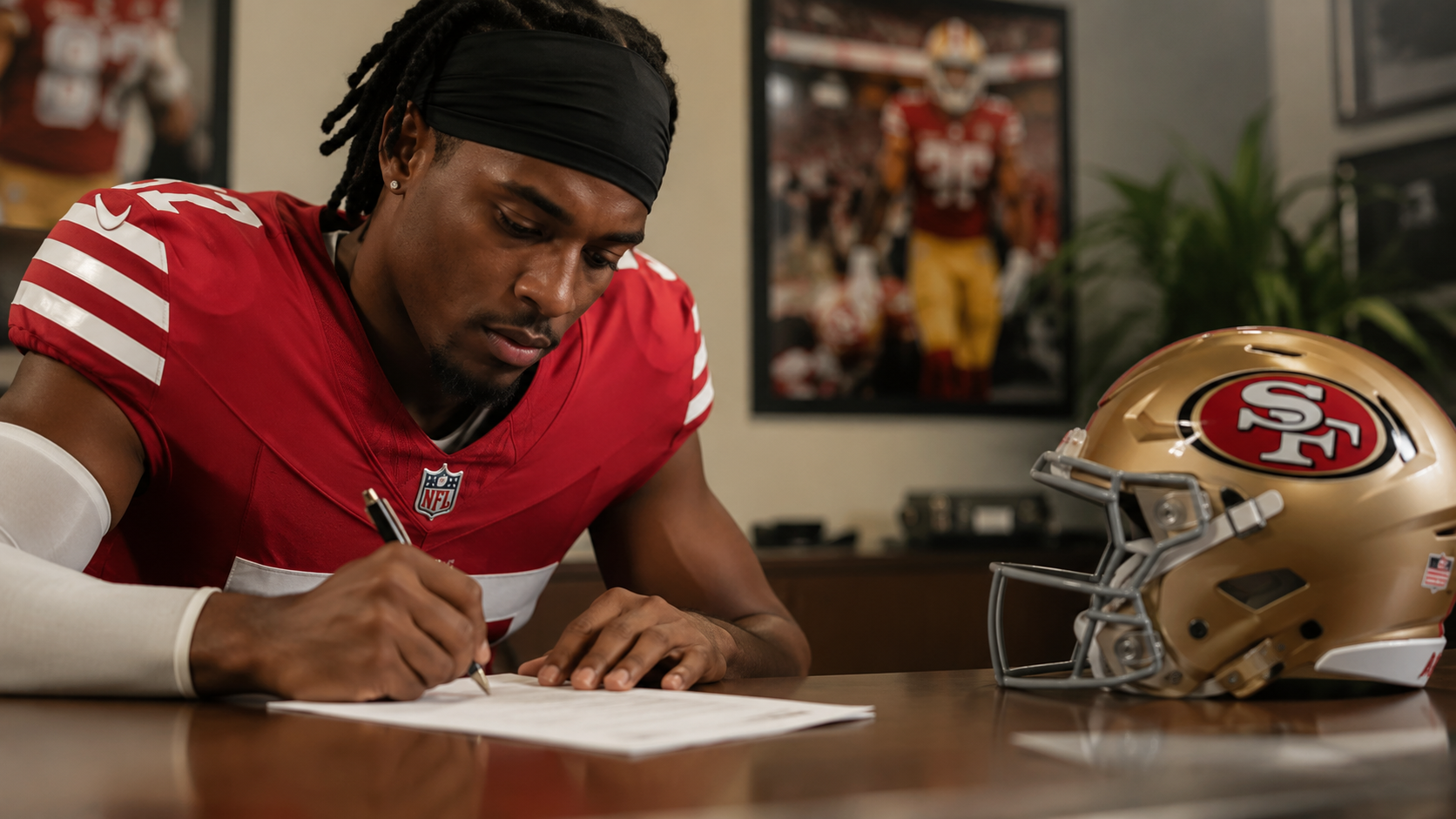
The 49ers Austen Pleasants ERFA tender is a one-year, exclusive rights contract the San Francisco 49ers extended to offensive tackle Austen Pleasants for the 2026 season, worth approximately $1.075 million. Because Pleasants has only one accrued NFL season, the team could lock him in at a low, minimum-based salary without competition from other teams. Signing the tender keeps him with San Francisco through the 2026 season.
Who Is Austen Pleasants?
Austen Pleasants is an offensive tackle who plays for the San Francisco 49ers. He was born on August 22, 1997, in Ironton, Ohio, and played his college football at Ohio University, where he earned Second-team All-MAC honors in 2019. At 6-foot-7 and 330 pounds, he has the frame teams look for in a backup tackle who can step in when starters go down.
Pleasants went undrafted in the 2020 NFL Draft. What followed was a long, winding path through the league. He signed with the Jacksonville Jaguars, got waived, landed back on their practice squad, and eventually moved on. From there he spent time with the Carolina Panthers, the Los Angeles Chargers, the Chicago Bears, and the Arizona Cardinals, often bouncing between practice squads and offseason rosters rather than settling into one place. That kind of journey is common for offensive linemen who show promise but haven’t found the right fit.
He finally landed with the 49ers in December 2024, and that’s where his career started to take a firmer shape.
Why the 49ers Turned to Pleasants
The 2024 season put real strain on San Francisco’s offensive line. Injuries to key starters, including left tackle Trent Williams and guard Aaron Banks, forced the team to lean on its depth pieces far more than any coaching staff would prefer. Pleasants stepped into that gap late in the year, appearing in three games and playing 67 offensive snaps. He didn’t allow a sack or a quarterback hit in that stretch, even though he gave up a handful of pressures. For a player who had spent years fighting for a roster spot, that was a meaningful audition.
The 49ers liked what they saw enough to tender him as an exclusive rights free agent going into 2025, alongside tight end Jake Tonges. Both players signed their tenders in April 2025, which kept them under contract heading into that season.
Pleasants built on that opportunity. During the 2025 season, he made 15 appearances and logged 125 offensive snaps, both career highs for him. That kind of progress is exactly why the 49ers Austen Pleasants ERFA tender for 2026 became such an easy call for the front office.
What Does an ERFA Tender Actually Mean?
ERFA stands for Exclusive Rights Free Agent. It’s a specific category in the NFL’s roster rules, and understanding it helps explain why the 49ers Austen Pleasants ERFA tender works the way it does.
A player becomes an exclusive rights free agent when his contract expires but he has fewer than three accrued NFL seasons. An accrued season generally means a player spent at least six games on the active roster, including injured reserve, during that year. Because Pleasants has only accrued one season so far, despite being in the league since 2020, he falls into this category.
Here’s the key part: when a team tenders an exclusive rights free agent, that player cannot negotiate with any other team. He has two choices — sign the tender with his current team, or sit out. There’s no open market, no competing offers, and no leverage to push for a bigger contract. The tender amount is set largely by the players’ accrued seasons and the league’s minimum salary scale for that season.
This differs sharply from restricted free agency, where a team can match or decline to match an offer from another club, and from unrestricted free agency, where a veteran player can sign with anyone. The ERFA rule exists mainly to protect teams’ investments in younger players who haven’t accumulated enough service time to shop themselves around the league.
The Terms of the 2026 Tender
According to Over The Cap, the 49ers extended Pleasants an ERFA tender worth just over $1.075 million for the 2026 season. That figure lines up with the veteran minimum scale adjusted for a player with one accrued season. It’s a modest number by NFL standards, but it reflects the nature of exclusive rights deals — they’re built around minimums, not market value.
For San Francisco, the appeal is straightforward. Pleasants gives the roster proven depth at a low cost against the salary cap. For Pleasants, the trade-off is job security. Signing the 49ers Austen Pleasants ERFA tender guarantees him a roster spot conversation and a chance to keep building his role, rather than testing an open market where, as an unrestricted free agent with limited experience, he might not draw much interest anyway.
How the Tender Process Typically Unfolds
- Contract expiration. Pleasants’ previous one-year deal with the 49ers ran through the 2025 season and expired at its end.
- Team evaluation. The coaching staff and front office reviewed his 2025 performance, including his increased playing time and steady blocking.
- Tender decision. Because Pleasants qualified as an exclusive rights free agent, San Francisco chose to tender him rather than let him become an unrestricted free agent (which wouldn’t have applied anyway given his accrued seasons) or release him outright.
- Offer extended. The tender, reported at roughly $1.075 million, was extended in February 2026.
- Player signature. Pleasants needs to sign the tender to formally return to the roster for 2026, which is the standard next step for players in his situation.
Common Mistakes and Misconceptions
Mistake: Confusing ERFA with restricted free agency. These are two different tiers. Restricted free agents (three accrued seasons) can receive offer sheets from other teams, subject to their original team’s right to match. Exclusive rights free agents (fewer than three accrued seasons) cannot receive outside offers at all.
Mistake: Assuming the tender salary reflects the player’s true value. ERFA tenders are tied to a minimum salary scale, not to performance-based market value. A player having a breakout year can still be tendered at a modest number simply because of his accrued-season status.
Mistake: Thinking a tender is optional for the team to walk away from later. Once extended, the tender is a formal offer. The team can still release the player afterward, but the tender itself locks in the terms if the player signs.
Misconception: A tender means a player is a lock to make the final roster. Signing a tender secures a contract for the season, but final roster spots still depend on training camp, preseason performance, and roster needs. Tendered players can still be released before or during the season.
Real-World Example: How This Plays Out Elsewhere
The 49ers used this same tool with other players heading into 2025, tendering defensive linemen Evan Anderson, Alex Barrett, and Sam Okuayinonu, along with linebacker Jalen Graham, in addition to Pleasants. Every one of those moves followed the identical pattern: each player had fewer than three accrued seasons, each was valuable enough to keep, and each received a tender rather than being allowed to test the market. This is standard operating procedure across the league every offseason, not something unique to Pleasants’ situation.
Key Facts
- Austen Pleasants plays offensive tackle for the San Francisco 49ers, wearing No. 62.
- He is 6-foot-7 and 330 pounds, born August 22, 1997, in Ironton, Ohio.
- He played college football at Ohio University and earned Second-team All-MAC honors in 2019.
- He went undrafted in 2020 and spent time with the Jaguars, Panthers, Chargers, Bears, and Cardinals before joining the 49ers in December 2024.
- He signed his first 49ers ERFA tender in April 2025 for that season.
- In 2025, he played in 15 games with 125 offensive snaps, both career highs.
- The 49ers Austen Pleasants ERFA tender for 2026 is worth roughly $1.075 million, per Over The Cap.
- The tender ensures Pleasants stays with San Francisco for the 2026 season, pending his signature.
FAQ
What is the 49ers Austen Pleasants ERFA tender?
It’s a one-year exclusive rights contract offer from the San Francisco 49ers to offensive tackle Austen Pleasants for the 2026 season, reportedly worth about $1.075 million.
How does an ERFA tender work?
A team extends a tender to a player with fewer than three accrued NFL seasons whose contract has expired. The player can only sign with that team or choose not to play; no other team can make him an offer.
Why did the 49ers tender Pleasants instead of letting him test free agency?
As an exclusive rights free agent, Pleasants wasn’t eligible to negotiate with other teams anyway. Tendering him was the standard, low-cost way for the 49ers to retain a player who improved steadily through the 2025 season.
Is signing an ERFA tender guaranteed money?
The tender sets the salary terms for the season, but like most non-guaranteed NFL contracts, a team can still release a player before the money is fully paid out, depending on league and contract rules.
Does the tender guarantee Pleasants a roster spot in 2026?
No. Signing the tender secures his contract for the year, but he still has to earn his roster spot through training camp and preseason performance, the same as any other player.
What position does Pleasants play, and what’s his role?
He plays offensive tackle, primarily as a depth and backup option who can step in when starters are injured or need rest.
Where can I find the exact tender amount?
Reports citing Over The Cap and Pro Football Rumors have the number at roughly $1.075 million for the 2026 season, based on Pleasants’ one accrued season.
Key Takeaways
- The 49ers Austen Pleasants ERFA tender is a one-year, roughly $1.075 million contract offer for the 2026 season.
- ERFA status applies to players with fewer than three accrued NFL seasons whose deals have expired.
- Exclusive rights free agents cannot negotiate with other teams; they either sign with their current team or don’t play.
- Pleasants earned this tender after career-high numbers in 2025: 15 games played and 125 offensive snaps.
- He previously signed a similar tender in April 2025 after a strong finish to the 2024 season.
- Signing the tender doesn’t guarantee a final roster spot; it guarantees a contract for the season.
Conclusion
The 49ers Austen Pleasants ERFA tender reflects a simple, recurring piece of NFL roster management: a team retaining a young, improving player at minimum cost because the rules allow it. For Pleasants, a lineman who spent years bouncing between practice squads before finding steady work in San Francisco, it’s another step toward a more secure role. For the 49ers, it’s a low-risk way to keep depth on the offensive line heading into 2026.
Direct Answer
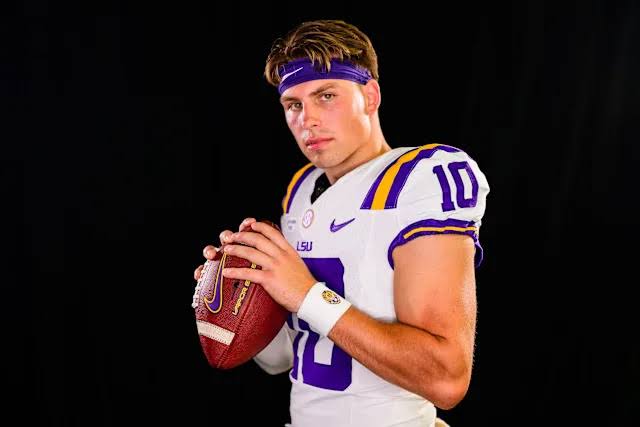
The biggest story in LSU football news right now is a full coaching change: LSU fired Brian Kelly in October 2025 after a 5-3 start and hired Lane Kiffin away from Ole Miss the following month. Kiffin enters 2026 as head coach with a heavily rebuilt roster, including more than 40 transfer additions. He’ll lead the Tigers through SEC Media Days in late July and fall camp before their season opener.
Why LSU Football News Moves So Fast Right Now
LSU football sits in the middle of one of the biggest offseasons the program has had in years. A midseason coaching firing, a coaching search, a new hire with a massive contract, and a roster overhaul driven by the transfer portal all happened within a matter of months. That’s a lot of change to track, and it explains why searches for lsu football news spike so often — fans aren’t just checking scores, they’re trying to keep up with a program in the middle of a reset.
If you’re new to following the team or just catching up after a busy stretch, this article walks through what actually happened, why it happened, and what to expect heading into the 2026 season.
The Coaching Change: Brian Kelly Out, Lane Kiffin In
LSU dismissed head coach Brian Kelly in October 2025, one day after a 49-25 home loss to Texas A&M dropped the team to 5-3 on the season. Kelly had been at LSU since 2022 and finished with a 34-14 overall record, two 10-win seasons, and an SEC West division title, but he never reached the College Football Playoff or won an SEC championship — the standard LSU’s administration had set for the job. The school later confirmed the firing was without cause, which triggered a $54 million contractual buyout.
About five weeks later, LSU hired Lane Kiffin away from Ole Miss on a seven-year, $91 million contract. The timing drew national attention because Kiffin left Ole Miss just as the Rebels were on the verge of their first College Football Playoff appearance. Kiffin had built Ole Miss into a consistent winner over six seasons, including a 55-19 overall record and multiple bowl wins, and LSU viewed him as the coach who could turn the program’s talent into championship-level results.
Why This Matters for the Program
A midseason coaching change is disruptive by nature. It affects recruiting, transfer portal decisions, staff continuity, and how returning players view their future at the school. Kiffin’s hire came with a large financial commitment specifically because LSU wanted a coach capable of moving fast in the current landscape of player transfers and name, image, and likeness (NIL) compensation — areas where Kiffin built a reputation at Ole Miss.
The 2026 Roster: A Near-Total Overhaul
Kiffin’s first LSU roster looks very different from the one Kelly left behind. Reports heading into the 2026 season describe the roster as including around 59 newcomers, with more than 40 of them arriving through the transfer portal. That kind of turnover is unusual even by modern college football standards, where transfer movement has become common since players gained more freedom to change schools.
Some of the notable additions and returners include:
- Sam Leavitt, a transfer quarterback from Arizona State who spent part of the offseason recovering from foot surgery. He’s expected to be the starting quarterback if healthy.
- Princewill Umanmielen, an edge rusher who followed Kiffin from Ole Miss after finishing tied for third in the SEC in sacks the previous season.
- TJ Dottery, a linebacker who also transferred from Ole Miss after leading the SEC in tackles.
- Ty Benefield, a safety from Boise State expected to step into a starting role immediately.
- Whit Weeks, a returning linebacker who was working back from a broken ankle.
- DJ Pickett, a returning cornerback expected to take over as the team’s top defensive back.
- Blake Baker, the defensive coordinator retained from the previous staff, providing some continuity on that side of the ball.
That mix of transfer talent and key returners is typical of how programs rebuild quickly under a new coach, but it also means the team will need time to gel as a unit, regardless of individual talent level.
What to Expect Heading Into the Season
SEC Media Days
Kiffin and a handful of LSU players are scheduled to represent the program at SEC Media Days in Tampa, Florida, in late July, an annual event where coaches and players from each conference team answer questions about the upcoming season. It’s typically one of the first big public previews of how a team is shaping up before fall camp begins.
Fall Camp
Fall camp follows shortly after media days and is where coaching staffs finalize their depth chart, evaluate new transfers in a team setting for the first time, and get the roster ready for the regular season opener. For a team with this much roster turnover, fall camp carries extra weight, since many new players haven’t practiced together before.
Schedule and Non-Conference Additions
Separately from the coaching change, LSU has also been adjusting its future non-conference schedules. In July 2026, the program announced it had added four Louisiana-based opponents to future schedules, beginning with a game against Northwestern State in 2027. LSU also confirmed that a previously planned home-and-home series with Arizona State would not move forward. These scheduling moves don’t affect the 2026 season directly, but they shape what Tigers fans can expect to see in future years.
Common Misconceptions in LSU Football News
Misconception: Brian Kelly was fired because he had a losing record. He didn’t. Kelly finished 34-14 at LSU, a strong record by most programs’ standards. The issue, according to the administration and Kelly himself, was that LSU’s expectations are built around championship contention, not just winning seasons.
Misconception: Lane Kiffin left Ole Miss because the program wasn’t succeeding. The opposite is true. Kiffin left while Ole Miss was on the brink of its first-ever College Football Playoff berth. His departure was seen as unusual specifically because he was leaving a team performing well, not escaping a struggling one.
Misconception: A big transfer class guarantees on-field success. Roster overhauls generate excitement, but chemistry, coaching schemes, and health all play a role in how a team performs. A large number of new players, even talented ones, doesn’t automatically translate into wins in year one.
Misconception: All the coaching turmoil is unique to LSU. Coaching changes tied to buyouts and transfer portal strategy have become increasingly common across major college football programs. LSU’s situation is notable for its scale and cost, but the pattern of firing a coach after strong-but-not-championship-level results is playing out at other schools too.
Key Facts
- Brian Kelly was fired as LSU head coach in October 2025 after a 5-3 start, with the firing confirmed as without cause and a $54 million buyout.
- Lane Kiffin was hired in November 2025 on a seven-year, $91 million contract.
- Kiffin previously coached at Ole Miss for six seasons, finishing 55-19 there.
- LSU’s 2026 roster includes roughly 59 newcomers, more than 40 of them transfers.
- Defensive coordinator Blake Baker was retained from the previous coaching staff.
- LSU last made the College Football Playoff and won a national championship in the 2019 season.
- SEC Media Days for 2026 run through late July, with LSU represented by Kiffin and several players.
Frequently Asked Questions
Who is LSU’s head football coach right now?
Lane Kiffin, hired in November 2025 after LSU fired Brian Kelly.
Why was Brian Kelly fired?
LSU fired him after a 5-3 start to the 2025 season. He compiled a 34-14 overall record over his tenure but never reached the SEC Championship Game or the College Football Playoff, which fell short of the program’s stated expectations.
Who is LSU’s starting quarterback for 2026?
Sam Leavitt, a transfer from Arizona State, is expected to start if he’s fully recovered from offseason foot surgery.
How many new players does LSU have for 2026?
Reports describe the roster as including around 59 newcomers, with more than 40 arriving through the transfer portal.
When did LSU last make the College Football Playoff?
LSU’s most recent national championship came after the 2019 season. The program has not reached the Playoff since.
Where can I follow LSU football news day to day?
LSU’s official athletics site and established local and national college football outlets that cover the SEC are typically the most reliable sources for roster moves, injury updates, and schedule changes.
Key Takeaways
- LSU fired Brian Kelly in October 2025 and hired Lane Kiffin from Ole Miss about five weeks later.
- Kiffin’s first roster features a near-total overhaul, with dozens of transfer additions alongside key returning players.
- Sam Leavitt is the expected starting quarterback, pending his recovery from foot surgery.
- LSU is also adjusting future non-conference schedules separately from the coaching change.
- The program’s biggest storyline heading into 2026 is whether a rebuilt roster and new coaching staff can get LSU back into College Football Playoff contention.
Conclusion
LSU football news right now is dominated by one story: a coaching change that reshaped almost everything about the program in a matter of months. Brian Kelly’s firing, Lane Kiffin’s hire, and a roster rebuilt largely through the transfer portal all point toward a 2026 season that will be closely watched, both for how the new pieces fit together and for whether the investment translates into the kind of results LSU has been chasing since its last national championship.


TFW Meaning: What This Internet Abbreviation Really Means

Gina Carano Movies and TV Shows: A Complete Look at Her Acting Career

CNN Anchor Rahel Solomon Departure: What Happened and Why

USA Today Comics: What They Are, How to Read Them, and Why They Still Matter

Venezuela Ladies: Understanding Venezuelan Women, Their Culture, and What to Know Before Connecting With Them

Trump D.C.: What’s Happening With the President’s Washington Policies
-
 Travel1 month ago
USA Today Comics: What They Are, How to Read Them, and Why They Still Matter
-
 Lifestyle1 month ago
Venezuela Ladies: Understanding Venezuelan Women, Their Culture, and What to Know Before Connecting With Them
-
 Business1 month ago
Trump D.C.: What’s Happening With the President’s Washington Policies
-

 News4 weeks ago
White House CBS Legal Warning: What Happened With the Trump Interview Dispute
-

 Lifestyle4 weeks ago
Red Wings Trade Rumors: What’s Happening With Detroit’s Roster Right Now
-
 Lifestyle4 weeks ago
NYT Strands Archive: How to Find and Play Past Strands Puzzles
-

 News1 month ago
Why Is Grammy Awards Trending? Here’s What’s Behind the Buzz
-
 News2 months ago
Mike Leach: The Coach Who Changed College Football Forever