Architecture
Exploding Trees: What’s Really Happening in Extreme Cold

Quick Answer
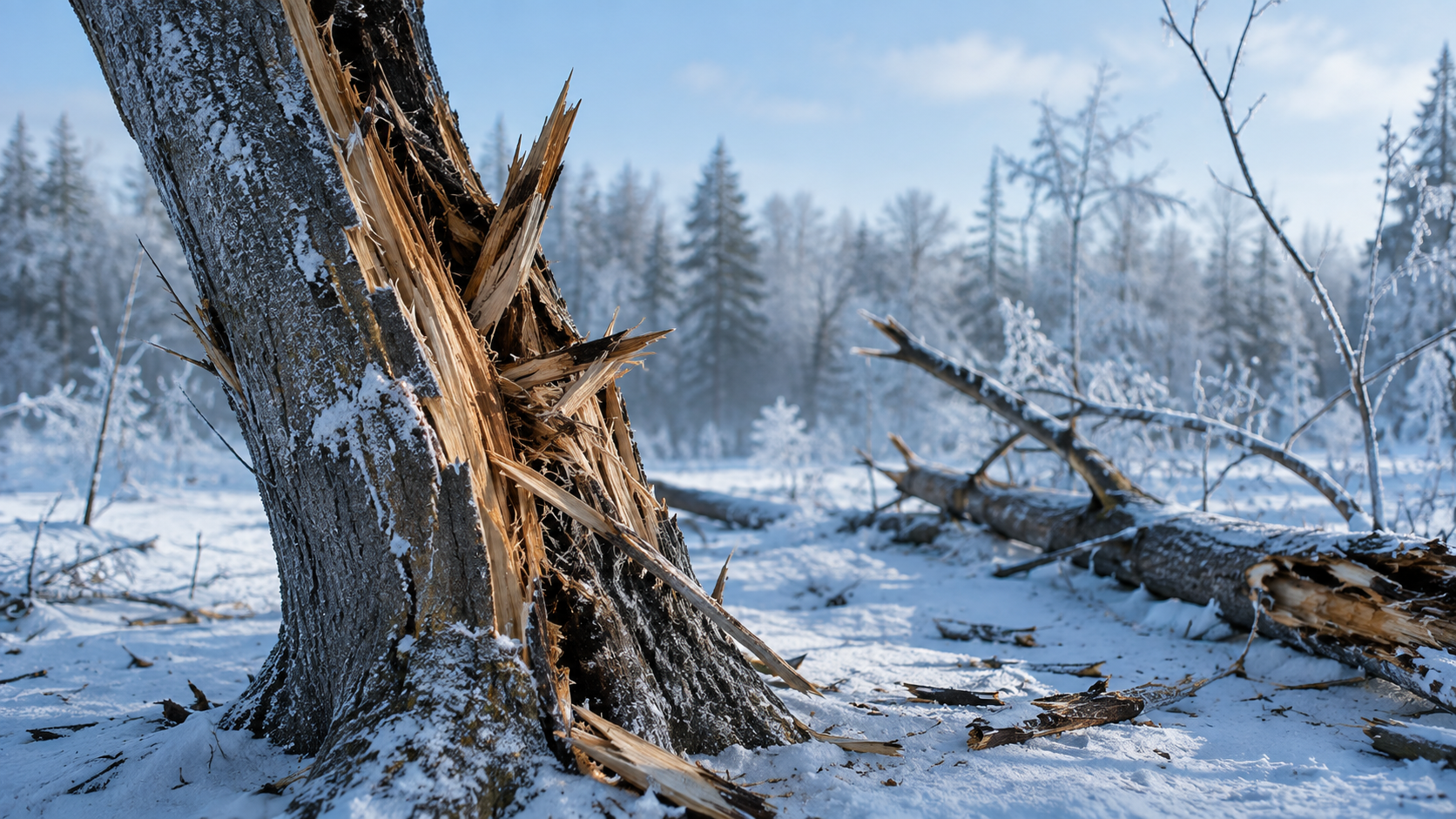
“Exploding trees” is a nickname for frost cracks, a real cold-weather phenomenon where sudden, extreme temperature drops cause water and sap inside a tree to freeze and expand rapidly. The pressure builds until the wood splits, producing a loud crack or bang that sounds like a gunshot. Despite the dramatic name, trees don’t actually explode or send debris flying, and the phenomenon is generally not dangerous to people nearby.
What Are “Exploding Trees,” Really?
Videos and warnings about “exploding trees” tend to go viral every time a major winter storm rolls through the northern United States or Canada. The phrase makes it sound like trees are shattering into pieces, but tree experts and foresters describe something less dramatic: a frost crack.
A frost crack is a sudden vertical split in a tree’s trunk caused by rapid freezing. The event can be loud enough to sound like a gunshot or a car backfiring, which is why it’s earned such a dramatic nickname. But according to arborists and forestry researchers, actual tree tissue doesn’t fly apart the way an explosion would suggest.
Why Does This Happen?
Trees contain sap and water in their trunks, particularly in the layers just beneath the bark known as the phloem and xylem. When temperatures drop suddenly and severely, especially after a period of relative warmth, the outer layers of the trunk cool and contract much faster than the wood further inside.
Water expands as it freezes. As the water and sap inside the tree begin to freeze under a rapid temperature drop, that expansion creates intense internal pressure. When the stress becomes too much for the wood and bark to handle, the trunk splits, often along a vertical line, releasing that pressure all at once. That sudden release is what produces the loud cracking sound people describe.
Why Rapid Temperature Swings Matter More Than Just Cold
It’s not simply how cold it gets that causes frost cracks, it’s how fast the temperature changes. A tree that gradually adjusts to falling temperatures over several days is less likely to crack than one exposed to a sudden, sharp plunge, sometimes 20 degrees or more below zero within a short window. Frost cracks are also more likely to appear on the side of the trunk that had been warmed by direct sunlight during the day, since that side experiences a bigger temperature swing once the sun sets and cold air moves in.
Is This Actually Dangerous?
For the most part, no. Multiple tree experts have emphasized that frost cracking doesn’t send wood flying and isn’t considered a safety hazard for people standing nearby. The sound can be startling, and it’s understandably alarming to hear something that loud coming from a tree in your yard, but the event itself is a structural crack, not a burst or blast.
That said, frost cracks aren’t entirely harmless for the tree itself. Once bark splits open, the exposed wood becomes more vulnerable to insects, fungus, and bacterial infection, which can cause long-term damage even though the initial crack itself typically doesn’t kill the tree. Whether a tree recovers fully often depends on the location and severity of the crack:
- If the crack occurs in a single branch, that branch may die while the rest of the tree survives.
- If the crack affects the base of the trunk severely, the entire above-ground tree could die, though many species can regrow new stems from buds at the base or roots.
- Most frost cracks are moderate and heal over time as the tree forms new bark and wood around the wound in subsequent growing seasons.
Which Trees Are Most at Risk?
Thin-barked tree species tend to be more vulnerable to frost cracking than trees with thicker, more insulating bark. Species commonly cited as more susceptible include certain maples, along with other thin-barked hardwoods, though the exact risk varies by region, tree age, and how exposed a given tree is to direct sun and wind.
Younger trees and trees that have been recently transplanted or stressed by drought, disease, or previous injury may also be more prone to frost cracking, since they often have less resilience to sudden environmental stress.
Is “Exploding Trees” a New Phenomenon?
No. Frost cracking has been documented for centuries, referenced in historical writings about extreme frost events long before social media turned it into a viral topic. What’s changed is visibility: video clips and social media posts during major winter storms have brought new attention to a phenomenon that foresters and arborists have observed and studied for a long time. Some meteorologists have specifically pushed back on the word “exploding,” preferring the more accurate term “frost cracking” to avoid overstating what’s actually happening.
Common Misconceptions
Misconception: Trees literally shatter and send debris flying. In reality, the trunk develops a crack or split under internal pressure. Wood doesn’t fly through the air the way the word “exploding” implies.
Misconception: This only happens in record-breaking cold. The key factor is the speed of the temperature drop, not just how low the temperature goes. A rapid plunge, even to temperatures that aren’t historically extreme for a region, can trigger frost cracking if it happens quickly enough.
Misconception: A cracked tree will definitely die. Many trees survive frost cracks and recover over subsequent growing seasons, especially if the crack isn’t severe or located at the base of the trunk. Long-term risk comes more from secondary infection or insect damage than from the crack itself.
Misconception: This is dangerous for people outdoors. Experts consistently describe frost cracking as loud but not hazardous to bystanders. It’s a structural event inside the wood, not an explosive release of debris.
Key Facts
- The scientific term for “exploding trees” is frost cracking.
- Frost cracks are caused by water and sap freezing and expanding rapidly inside a tree trunk.
- The phenomenon is triggered more by the speed of a temperature drop than by the absolute cold temperature itself.
- Frost cracks can produce a sound similar to a gunshot but do not send wood flying.
- Thin-barked tree species are generally more susceptible than thick-barked species.
- Frost cracks are not typically dangerous to people, though they can leave a tree vulnerable to disease or insect damage afterward.
FAQ
Do trees actually explode in cold weather?
Not in the literal sense. What people call “exploding trees” is a frost crack, where rapid freezing causes internal pressure that splits the trunk with a loud cracking sound, but the wood doesn’t fly apart.
Why do trees make a loud noise in extreme cold?
The noise comes from the sudden release of internal pressure as water and sap inside the tree freeze and expand, cracking the wood and bark.
Can frost cracks kill a tree?
Usually not on their own, but a tree can be weakened or eventually killed if the crack becomes infected by fungus or bacteria, or if insects get into the exposed wood.
Which trees are most likely to develop frost cracks?
Thin-barked species, along with younger or previously stressed trees, tend to be more susceptible to frost cracking during sudden cold snaps.
Is it safe to be near a tree during a frost crack?
Generally yes. Tree experts describe frost cracking as loud but not a safety hazard, since it doesn’t involve flying debris the way the word “exploding” suggests.
Key Takeaways
- “Exploding trees” is a nickname for frost cracking, a real but non-explosive winter phenomenon.
- Frost cracks happen when sap and water inside a tree freeze and expand rapidly during sudden temperature drops.
- The resulting sound can resemble a gunshot, but the trunk doesn’t send debris flying.
- Frost cracks can leave trees vulnerable to disease or pests, though most trees survive and recover over time.
- Thin-barked and previously stressed trees are more susceptible to this kind of cold-weather damage.
Conclusion
“Exploding trees” makes for a dramatic headline, but the science behind it is more about structural stress than actual explosions. Frost cracking is a well-documented, naturally occurring response to sudden extreme cold, loud and startling, but generally not dangerous to people, and usually survivable for the tree itself. Understanding the real mechanism behind the noise can help put those viral winter storm warnings into perspective.



Masgonzola: What It Is, Ingredients, Taste, Uses, and How It Differs From Gorgonzola

Neworldsmagazine: What It Is, Topics, Website, Content, and What Readers Should Know

Nidia del Carmen Ripoll Torrado: Biography, Family, Shakira Connection, and Life

Kane Brown: The Life and Career of Country Music’s Genre-Blending Star

Lionel Messi: Career, Records, and Where He Stands in 2026

Jason Beck: Detroit Tigers Beat Reporter and One of Baseball’s Most Trusted Voices
-
 Business3 months ago
Kane Brown: The Life and Career of Country Music’s Genre-Blending Star
-
 Sports3 months ago
Lionel Messi: Career, Records, and Where He Stands in 2026
-
 Lifestyle4 months ago
Jason Beck: Detroit Tigers Beat Reporter and One of Baseball’s Most Trusted Voices
-

 Sports3 months ago
Gordon Ramsay’s Brother: Everything Known About Ronnie Ramsay
-

 News3 months ago
NCIS: What the Show Is About, How It Works, and Why It’s Still On the Air
-

 News3 months ago
Amber Heard: Career, Legal History, and Where She Is Today
-

 News3 months ago
Trump Tariffs Explained: What They Are, How They Work, and What They Mean for Prices in 2026
-

 News3 months ago
Patrick Muldoon: The Life and Career of the Days of Our Lives and Starship Troopers Actor