Technology
Government Agencies Are Finally Getting Smart About Hiring and Tracking Work


Public sector hiring stays a nightmare. You’ve seen it if you’ve dealt with government jobs. One opening pulls in thousands of applications. Managers drown in them. Decisions stretch for months. Remote work made everything messier after 2020. People scattered to home offices. Managers wondered how to tell real work from busywork. That tension didn’t fade. It sharpened.
The tools finally caught up by 2026. And agencies that use them see real differences.
Why AI hiring tools actually matter here
Agencies like USCIS, HHS, and local election offices still get buried. A single posting can draw 500 qualified people or more. Manual screening eats weeks. AI cuts it to days.
These systems scan resumes, flag issues, and rank candidates. Some run initial video interviews and score answers. The goal isn’t replacing humans. It’s clearing the pile so humans focus on people, not paper.
Speed wins big. Filling a data analyst or epidemiologist role in two weeks beats three months. Budgets don’t idle. Work moves.
The monitoring side of remote work
Remote setups need accountability. Some agencies now use activity tracking software. It’s not brand new, but the detail level jumped.
Not every tool feels right. Some cross into heavy surveillance. Others stay measured. For agencies wanting responsible options, https://controlio.net/employee-monitoring.html gives insights while respecting boundaries.
Transparency changes everything. Tell employees upfront what gets tracked and why. Pushback drops. Secrecy destroys trust fast.
The sneaky problem nobody admits out loud
Employees game the systems. Mouse jigglers. Automation scripts. They create the appearance of work without doing it. This happens more than agencies want to admit.
Fake data ruins decisions on staffing, reviews, or workloads. https://controlio.net/blog/activity-falsification-is-skewing-your-productivity-data.html breaks down how modern systems spot unusual mouse patterns, robotic clicks, and scripted behavior.
Controlio software stands out here because it flags these tricks without turning every desk into a spy movie.
Where this plays out in real agencies
Election offices ramp up monitoring during crunch times to protect sensitive systems. Makes sense when votes are on the line.
Health departments lean on AI hiring for specialists. Need lab techs or analysts fast? Speed saves lives in outbreaks.
Smart agencies avoid all-day blanket tracking. They focus on critical tasks. Full surveillance tanks morale. Targeted checks work better.
Trust beats tools every time
You can install fancy software or keep people bought in. Secretive approaches make both impossible.
Best agencies spell it out. They use AI because it’s quicker and often fairer. They monitor remote work for accountability. But they don’t sugarcoat it.
Some states now write rules around this: transparency mandates, tracking limits, regular audits. Smart move.
What actually works right now in 2026
Use AI for the hiring grind. Deploy monitoring where it fits. Stay honest about both. Let staff ask questions. Fix falsification so your numbers mean something.
Agencies pulling ahead treat tech as a helper, not a boss. They get better results when people understand the setup and buy into the why.
The shift feels real. Less theater. More practical fixes. Actual progress on problems that dragged for years.

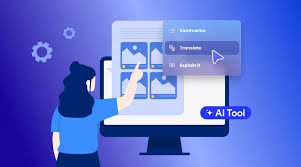
If you’ve ever needed to extract text from a photo, screenshot, or scanned document, you already know how valuable a good image to a text converter can be. The good news? You don’t need to spend a single rupee or dollar to get professional-quality results. Two of the best free tools available today are OCR.ac and Image-to-Text.net both powered by artificial intelligence and completely free to use.
But which one is better? In this comparison guest post, we’ll break down both tools side by side so you can choose the right AI image to text solution for your needs.
What Is OCR.ac?
OCR.ac is a free, browser-based image to text converter that uses advanced AI and OCR (Optical Character Recognition) technology to extract text from images instantly. It is designed to be simple, fast, and accurate, no sign-up, no installation, and no hidden charges.
You simply visit the website, upload your image, and within seconds the tool returns clean, editable text. It supports popular formats including JPG, PNG, BMP, GIF, and PDF, making it flexible for almost any use case.
Key Features of OCR.ac:
- 100% free with no registration required
- AI-powered text recognition engine
- Supports multiple image formats
- Clean and distraction-free interface
- Fast processing speed
- Supports multiple languages
- Works on desktop and mobile browsers
OCR.ac is especially popular among students and professionals who need a quick and reliable photo to text converter without dealing with complicated settings or paywalls.
What Is Image-to-Text.net?
Image-to-Text.net is another excellent free picture to text converter that has gained a strong reputation for its accuracy and ease of use. Like OCR.ac, it is powered by AI technology and requires no account creation or software download.
The tool allows users to upload an image or even paste a URL directly, and it will extract all readable text from the image within moments. It is built with a user-friendly interface and is designed to handle everything from simple screenshots to complex scanned documents.
Key Features of Image-to-Text.net:
- Free to use with no login needed
- AI-based OCR for high accuracy
- Supports image upload and URL input
- Handles JPG, PNG, WEBP, and PDF files
- Multi-language text recognition
- Editable text output with copy and download options
- Mobile-friendly design
Image-to-Text.net is a go-to tool for anyone who needs to regularly convert an image to text and wants a reliable, no-nonsense experience.
Head-to-Head Comparison: OCR.ac vs Image-to-Text.net
Now let’s compare both tools across the most important features to help you decide which AI image to text converter suits you best.
1. Ease of Use
Both tools are incredibly easy to use. Neither requires registration or technical knowledge. You visit the site, upload your image, and click convert. However, Image-to-Text.net offers the added convenience of a URL input option, which means you can extract text directly from an image hosted online without even downloading it first. This gives it a slight edge in convenience.
- Accuracy of Text Recognition
Accuracy is the most important factor in any image to text converter. Both OCR.ac and Image-to-Text.net use AI-powered OCR engines that deliver strong results on clear, high-quality images.
OCR.ac performs exceptionally well on scanned documents and typed text. Image-to-Text.net also shows impressive accuracy and handles a wider variety of image qualities, including slightly blurry or low-resolution photos.
For handwritten text and stylized fonts, both tools perform adequately, though neither is perfect. Overall, both deliver professional-grade accuracy for standard use cases.
- Speed of Processing
No one wants to wait around for text extraction. Both tools are fast, typically returning results in under 10–15 seconds for standard image sizes.
OCR.ac tends to feel slightly snappier for smaller images. Image-to-Text.net handles larger files and PDFs at a consistently good speed. For regular users who frequently need to convert image to text, both tools perform admirably without frustrating delays.
- Supported File Formats
When it comes to supported formats:
- OCR.ac supports JPG, PNG, BMP, GIF, and PDF
- Image-to-Text.net supports JPG, PNG, WEBP, and PDF
OCR.ac supports BMP and GIF formats which makes it more versatile for older or less common image types. On the other hand, Image-to-Text.net’s WEBP support is useful for modern web screenshots.
- Language Support
Both tools support multiple languages, which is essential for international users. Whether your image contains English, Urdu, Arabic, French, Spanish, or another language, both platforms handle multilingual content well.
This is where AI-driven tools truly shine: traditional OCR struggled with non-Latin scripts, but both of these AI image to text converters handle them with much greater accuracy.
- Output Options
After the text is extracted, you need to be able to use it easily. Both tools let you copy the output text directly to your clipboard. Image-to-Text.net also provides a clear download option, making it easier to save results as a text file for later use.
- Privacy and Security
For anyone processing sensitive documents, privacy matters. Both OCR.ac and Image-to-Text.net state that uploaded files are processed and then deleted from their servers. Neither tool requires personal information to operate, which adds a layer of trust.
Which Tool Should You Choose?
Here’s a simple guide to help you decide:
Choose OCR.ac if:
- You work with BMP or GIF image formats
- You want a slightly faster experience for small images
- You prefer a minimalist, distraction-free interface
- You need a solid, reliable photo to text converter for daily use
Choose Image-to-Text.net if:
- You want to extract text from online images using a URL
- You frequently download your results as text files
- You work with WEBP images from modern websites
- You want an all-around polished picture to text converter
Final Verdict
Both OCR.ac and Image-to-Text.net are excellent free AI image to text tools that deliver real value without costing anything. For most users, either tool will handle everyday text extraction tasks perfectly.
If you’re a student, writer, researcher, or professional who regularly needs to convert images to text, both of these platforms are worth bookmarking. Try both and see which interface feels more comfortable because at the end of the day, the best image to text converter is the one that fits smoothly into your workflow.
The era of manually retyping text from images is over. With free, AI-powered tools like OCR.ac and Image-to-Text.net, extracting text from any photo, screenshot, or scanned document takes just seconds and it costs absolutely nothing.


How Cosmetic Dentistry Improves Confidence For Every Generation

OCR.ac vs Image-to-Text.net: Which Free AI Image to Text Converter Is Better?

Government Agencies Are Finally Getting Smart About Hiring and Tracking Work
Welcome bentsmagazine
How Cosmetic Dentistry Improves Confidence For Every Generation

Sp5der: The Streetwear Label Turning Bold Graphics Into a Cultural Statement
-
Lifestyle3 weeks ago
Welcome bentsmagazine
-
 Health1 week ago
How Cosmetic Dentistry Improves Confidence For Every Generation
-
 Fashion1 week ago
Sp5der: The Streetwear Label Turning Bold Graphics Into a Cultural Statement
-
Technology1 week ago
OCR.ac vs Image-to-Text.net: Which Free AI Image to Text Converter Is Better?